
The biennial Grassroots Justice Prize is the world’s only competition recognizing grassroots organizations and institutions that are working to put the power of law into people’s hands. And now you have the chance to choose one of the winners!
We received nearly 200 applications from around the world for the Grassroots Justice Prize. A panel of judges shortlisted five candidates for the public vote award. These pioneering organizations use legal empowerment to tackle some of the most pressing issues of our time—land rights, women’s rights, children’s rights, and migrant rights. They work every day to narrow the justice gap that has left billions of people behind. Which one will win is up to you.
Learn about the five candidates below, and vote for your favorite to win!
We’ll announce the winner of the public vote—along with the winners of the Grassroots Justice Prize’s three main awards—at a special event on July 15, 2019, during the High-Level Political Forum in New York. The public vote winner will also receive an award of $1000 USD and a seat at the 2019 Legal Empowerment Leadership Course.
Country or region
Central America/North America
A quick look
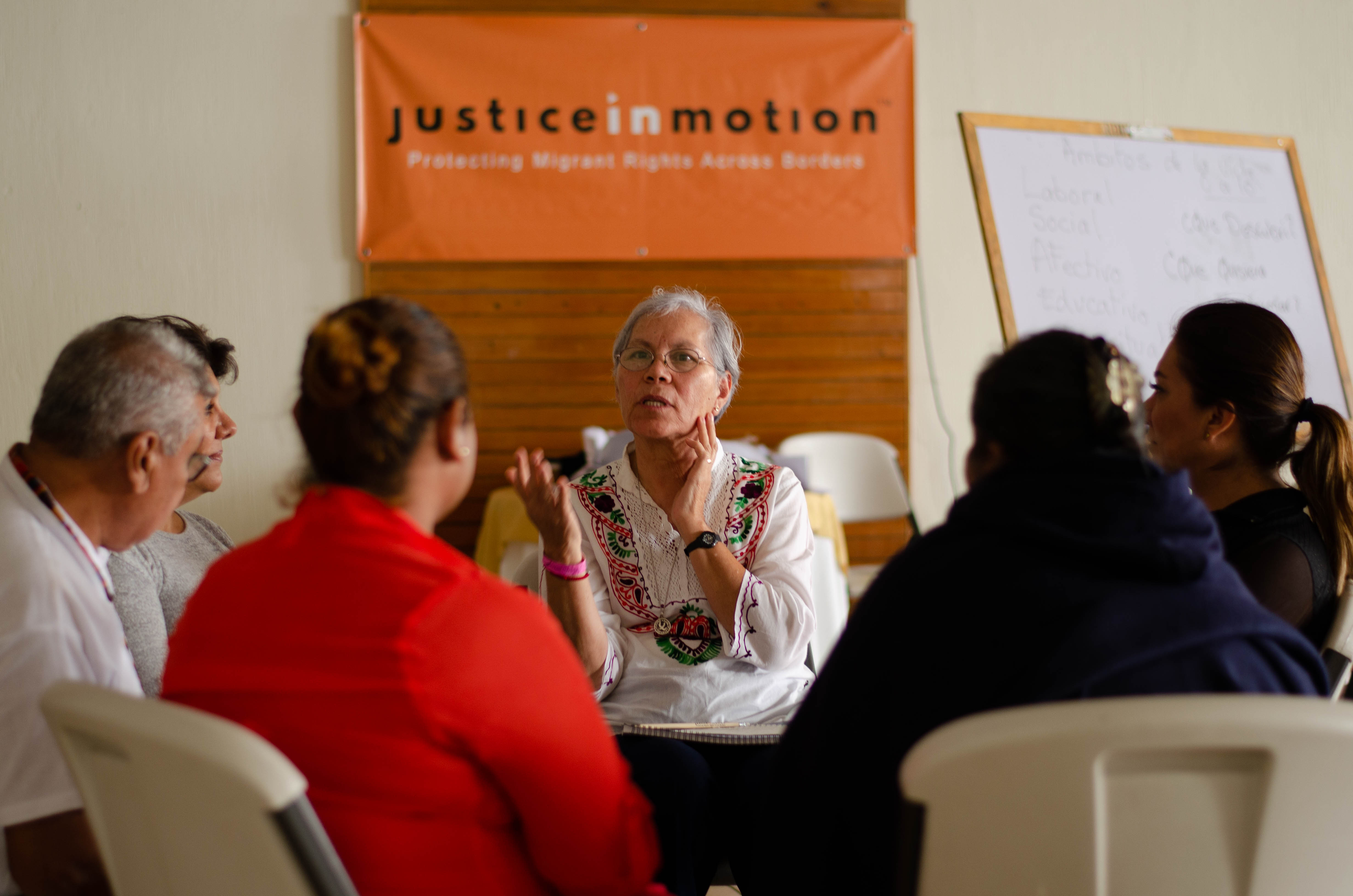
In this 90-second video, founder and executive director, Cathleen Caron, explains why and how Justice in Motion is empowering migrants to defend their rights.
The justice challenge
In the face of overwhelming legal and practical barriers, many migrants who have suffered exploitation or abuse at the hands of employers or government officials give up their rights after leaving the United States. Other migrants who flee abuse, violence, and persecution are unable to remain in safety due to lack of evidence to support their claims. These migrants need “portable justice”: the right and ability to access justice across borders.
Organization and/or project’s mission
Justice in Motion (JiM) is dedicated to securing portable justice through legal, educational, and policy initiatives in the U.S., Canada, Mexico, and Central America. Essential to this transnational model is their Defender Network, a unique partnership of on-the-ground human rights organizations in Mexico and Central America. Justice in Motion makes sure that wherever migrants go their rights will follow.
How legal empowerment is used to address the injustice
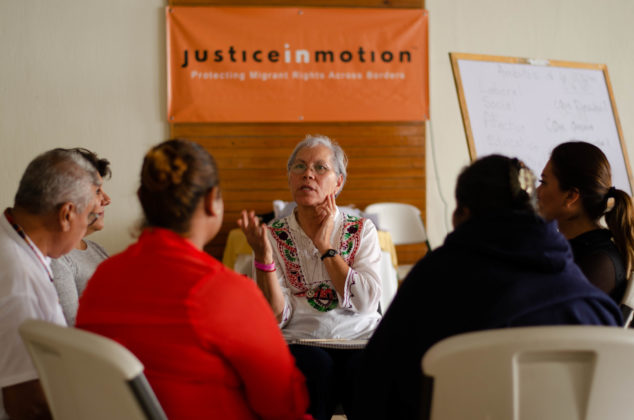
Legal empowerment has been core to Justice in Motion’s mission since it’s founding 14 years ago. Our Defender Network, an alliance of 43 human rights organizations across Mexico and Central America, is now the primary vehicle for this work.
We support Defenders—on-the-ground lawyers and community—by providing them with in-depth trainings and resources on U.S. and Canadian legal frameworks. Defenders then provide accurate information and refer legal cases for people in their communities, whether they are evaluating the legitimacy of a work visa offer, or seeking justice for a civil rights violation during detention or deportation. Defenders work closely with these migrants to equip them with the knowledge, resources, and connections to defend their rights, no matter the borders they have crossed.

Project’s impact
In 2018, the U.S. separated more than 2,000 migrant families at the U.S. border. They deported more than 400 parents without their children and had no plan to reunite them, declaring the parents “ineligible” for reunification because they were no longer in the U.S. JiM’s cross-border model and Defender Network uniquely positioned us to respond to the crisis. Through a massive mobilization of the network and other allies, all 400 parents were found. The parents could decide if they wanted their children to return to their country of origin or stay in the U.S.
JiM accompanied 28 families as they reunified with their children and helped more than 24 parents denied a fair asylum process to connect with U.S. lawyers, document their claims, and submit them to the government. Now, Defenders are working with U.S. lawyers on civil rights claims for the families, and we are exploring advocacy projects to make sure the policy is never repeated.
“[The service provided by Justice in Motion] is invaluable. Without in-country contacts who know the system and understand the conditions on the ground, we wouldn’t be able to obtain evidence that we need to seek the relief our clients are looking for. It’s key. It’s important that actors based in the U.S. have relationships with human rights actors in Central America because our clients are migrants and folks who are engaged in traveling across borders, and our representation has to reflect that experience and history.” – Laura Rivera, Southern Poverty Law Center, United States

Country or region
Kenya
A quick look
In this 90-second video, program officer Lengoisa John Samorai provides a brief description of the Ogiek People’s Development Program’s work and recent achievements.
The justice challenge
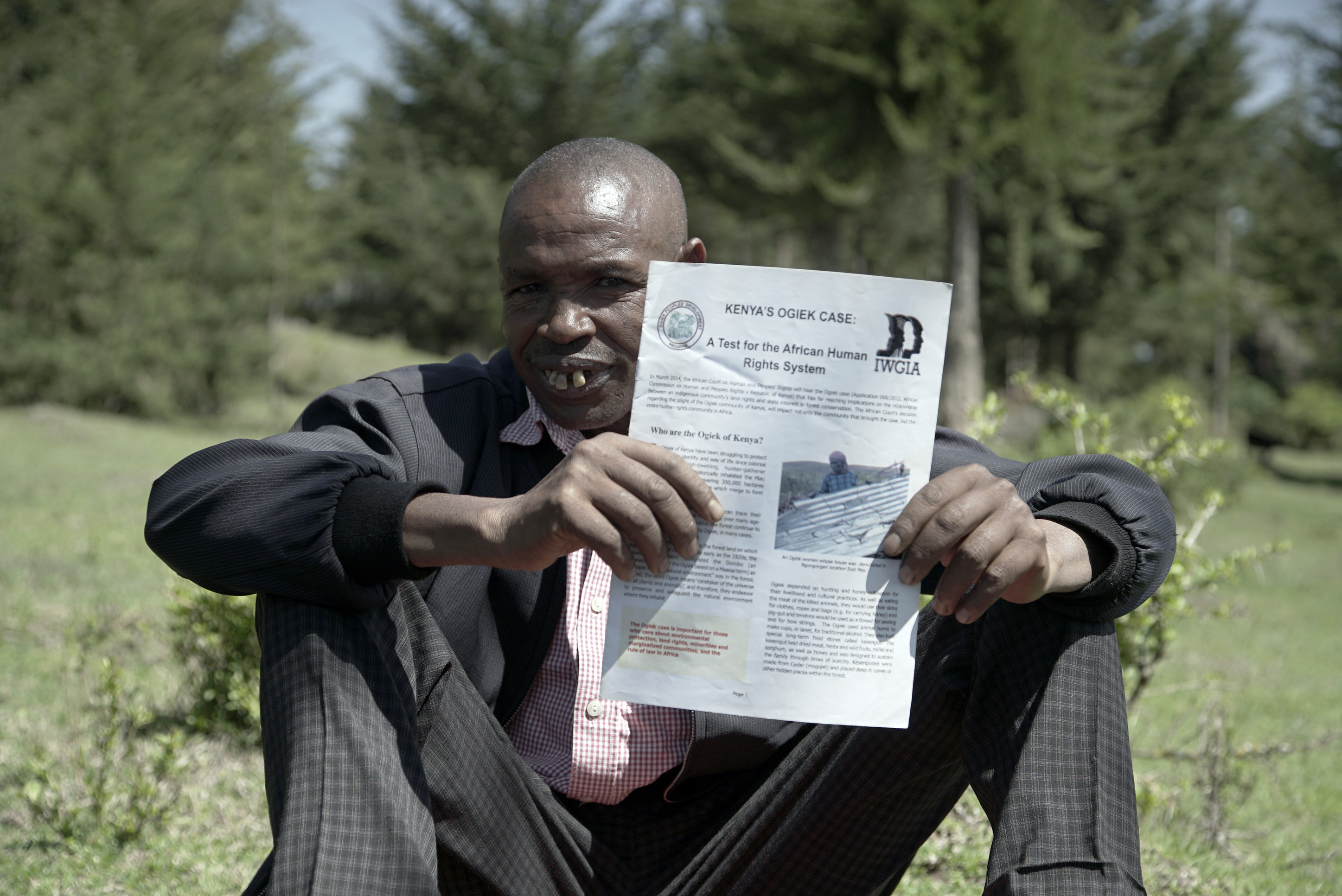
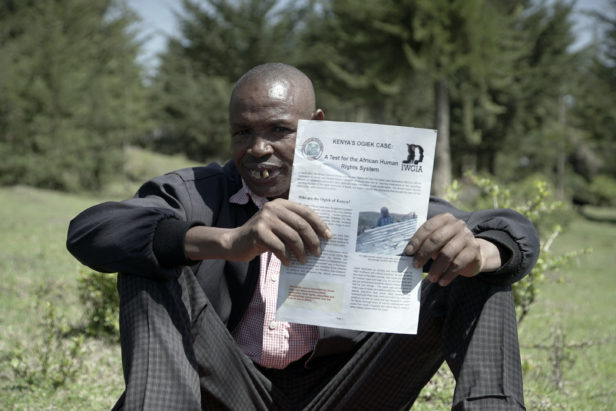
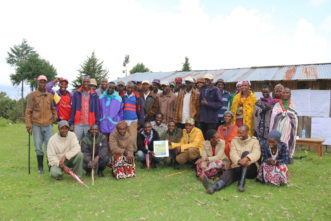
The land rights of Kenya Ogiek community have been violated over time through dispossessions and ejection from the Mau Forest Complex for conservation purposes. The communities impacted have sought to resist through activism and litigation as this was going to deny them access to resources such as water, pastures for grazing their livestock, and the denial of their cultural practices. Despite a court ruling in their favor, members of the Ogiek community still face land grabs and related challenges which include threats of eviction, harassment, arrest, court charges, and destruction and loss of property and lives in the event of evictions.
Organization and/or project’s mission
To empower the Ogiek community in a Kenyan society that embraces equality and diversity, Ogiek Peoples’ Development Program (OPDP) strives to promote and advocate for the participation, self-determination, and improved human rights through enhanced inclusivity and of equal opportunity in the economic, social, cultural, and political spheres.
How legal empowerment is used to address the injustice
The Ogiek have been using legal means to challenge their denial of rights and access to resources. In 2009, following a mass eviction notice by Kenya Forest Service, the Ogiek community, with support from OPDP, lodged a case with the African Commission on Human and Peoples Rights (ACHPR) arguing that the intended eviction will have far-reaching consequences on the political, social, and economic survival of the Ogiek community. In 2012, the ACHPR referred the Ogiek’s case to the African Court on Human and Peoples Rights (ACtHPR), on the basis that it demonstrated serious and mass human rights violations.
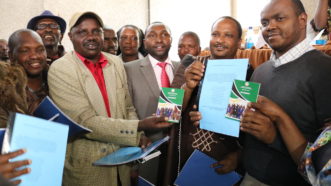
On 26 May 2017, the ACtHPR finally delivered its landmark judgment in the case. The Court found the Kenyan Government had violated articles of the African Charter on Human and People’s Rights, with the violations amounting to a persistent denial of Ogiek land rights and their religious freedoms.
OPDP has been conducting community-level awareness, sensitization, and training to support the Ogiek community’s understanding of the human rights issues as well as mechanisms to protect their human rights including the constitution, laws and policies. This has helped the community to prevent as well as report violations meted on them. Further, OPDP’s capacity building has enhanced the community’s dialogue with the government in making appropriate demands in regards to resources and government opportunities.
About 50 community paralegals have been trained between 2012 and 2018. They play the role of human rights monitors and community mobilizers, giving legal education and documenting violations as well as reporting on community issues. Between 2015 and 2016, they supported two communities to map their land in parts of the Mau forest.
Project’s impact
To over 40,000 Ogiek in Kenya, the favorable 2017 case ruling provides a mechanism for the recognition and restoration of their ancestral lands of the Mau forest. However, the ruling is also significant to thousands other minority and indigenous peoples in Kenya and in Africa as it provides them with a unique platform to seek recognition of their rights as well as to advocate for changes in the law, policy, and practice governing the rights of indigenous peoples.
The government of Kenya formed a task force mandated to look into the issues of the Ogiek and other indigenous peoples. The task force will also research and conduct country sensitization about indigenous peoples.

Country or region
Liberia
A quick look
In this 90+-second video, Daniel Wehyee describes Sustainable Development Institute’s mission and how it has advanced land rights in Liberia.
The justice challenge
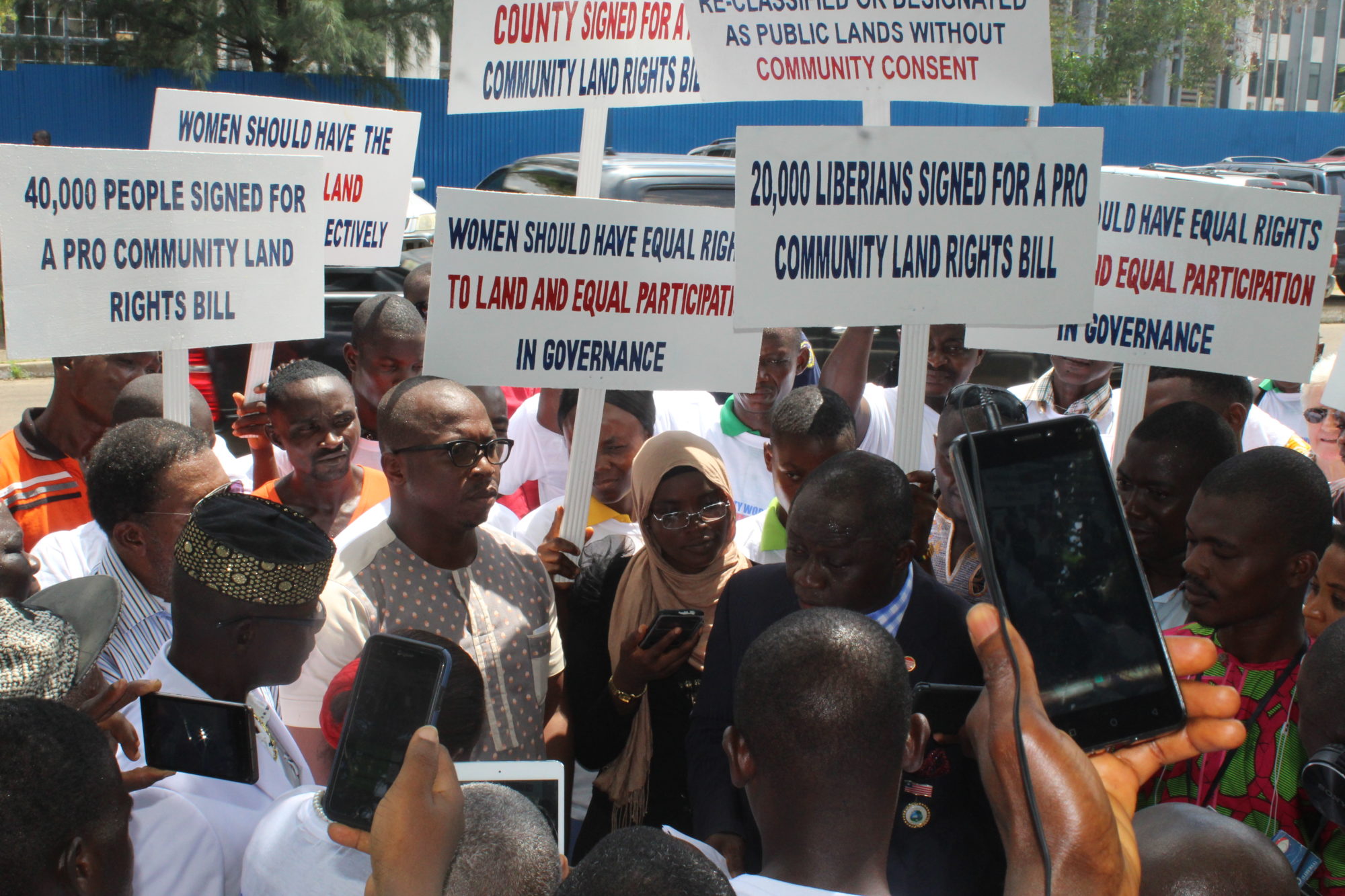
Liberia is a predominantly agrarian nation; most families make their livelihoods as rural small-scale farmers. However, most rural communities do not have a formal title to their customary land. At the same time, the Liberian government regards all land that is not deeded to be public land, thereby further weakening the customary land tenure rights of most of the citizens who live and work on these lands.
Meanwhile, the government’s economic growth agenda, outlined in a number of policy documents including the Poverty Reduction Strategy Paper and the President’s National Vision, is based on private-sector-driven investment in the natural resource sector, specifically forestry, agriculture, and mining. This system has enabled large-scale land acquisitions to occur, which has contributed to the dispossession of communities through the long-term transfer of user rights, and sometimes ownership rights, to foreign investors or local elites. This has, in turn, led to greater competition for fewer resources and a breakdown of the customary rules that have governed the equitable and sustainable use of common resources.
Organization and/or project’s mission
The Sustainable Development Institute (SDI) works to transform decision-making processes in relation to natural resources and to promote equity in the sharing of benefits derived from natural resource management in Liberia. Its activities cover a range of cross-cutting issues including governance and management; the environment; state and corporate social responsibility; economic and social justice for rural populations; and the democratic participation of ordinary people in government management of natural resources.
The organization’s vision is a Liberia in which natural resource management is guided by the principles of sustainability and good governance and benefits all Liberians.
How legal empowerment is used to address the injustice
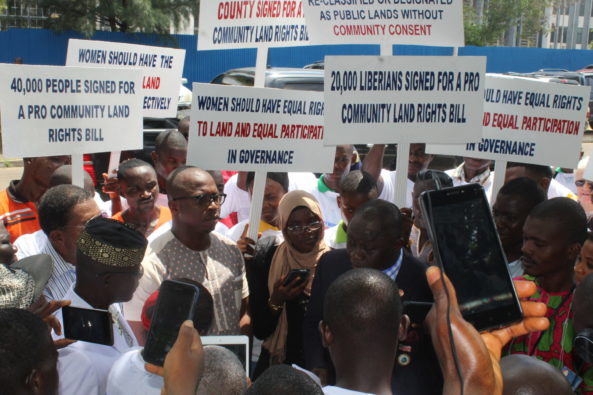
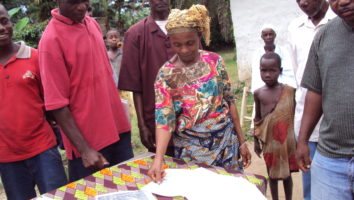
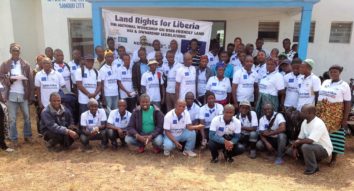
To address Liberia’s weak land tenure system and resulting land-based conflicts, SDI supports communities, civil society organizations (CSOs), and national and local government to recognize and protect customary land rights. More specifically, SDI has been engaged with the following activities:
Project’s impact
SDI received the Goldman Environmental Prize, the world’s largest prize honoring grassroots environmentalists for outstanding environmental achievements, in 2006.
SDI’s work has meaningfully contributed to the forest and land reform processes of the country. For example, SDI played a leading role in ensuring the passage of the Land Law which secures the rights of over 3 million Liberians to own and manage their land, particularly those in rural areas that have been historically marginalized and denied formal legal recognition of their customary land and resources.
SDI has supported over 60 communities across 500 towns and villages to identify and map their customary and natural resources, including setting land use and management systems (bylaws and land management committees). These communities have met the necessary requirements to legal recognition.
SDI has also empowered communities to manage and protect their customary land against external threats. For example, through SDI’s Early Warning and Response System (a system that provides real-time on phone support to communities), some communities are now taking actions to ensure the protection of their customary land.
In addition, through SDI’s work, many fraudulent land transactions have been exposed, including the infamous Private Use Permits (PuP) scandal, in which commercial forestry stakeholders, the national elite, and high-level government officials colluded on a massive scale with local leaders to defraud the country of over 40 percent of its rich forest land to commercial logging interest.
Country or region
Cambodia
A quick look
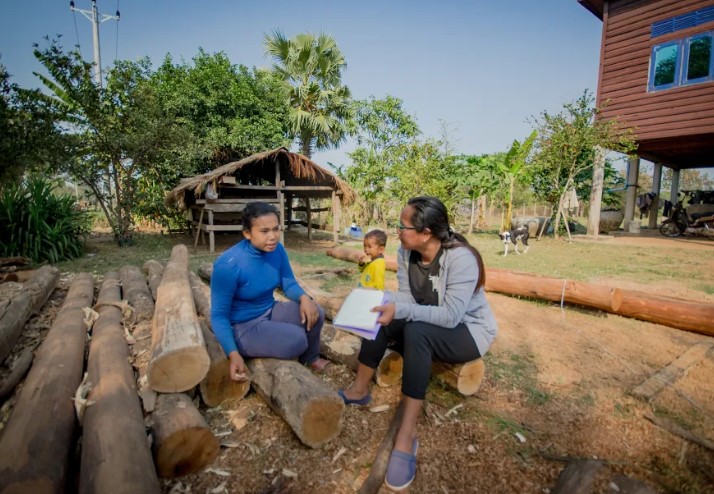
In this 2-minute video, This Life Cambodia explains the context and need for their domestic violence work, and why they deserve your support in the Grassroots Justice Prize public vote.
The justice challenge
While we provide a range of legal empowerment services and advice, our main focus for this award is our legal empowerment of women and children facing domestic violence.
Domestic violence is a profound problem in Cambodia. At least 1 in 5 women experience violence from a spouse or partner, while 50% of children report violence from adults in their lives. The problem is compounded by social attitudes which make people believe this to be normal – indeed, until recently, the “Chbab Srey” (or “Women’s Law”) was taught in Cambodian schools, and demanded subservience and obedience from women towards their husbands. While this practice has now ended, the attitudes linger. This is one reason why only 1 in 4 women who experience violence seek any help: 40% of those who do not say it is because they consider the violence “normal”.
Organization and/or project’s mission
This Life Cambodia’s vision is for vulnerable children, families, and communities in Cambodia to be supported to access and create opportunities in this life. Our mission is to listen to, engage with and advocate alongside children, families, and communities as they define and act on their own solutions to complex social challenges.
How legal empowerment is used to address the injustice
Our legal empowerment work is split into two areas: public campaigning at a national level and direct, grassroots action at a local level.
Nationally, we launched a major campaign raising awareness of the law in November 2018. We created a set of online legal resources including a readable copy of the law, the first audio version of the law for people who could not read, and a list of places to go to seek intervention, help, and support. We believe this to be the best legal resource on domestic violence in Cambodia. We promoted these resources through a creative short film and a 16-day online campaign of endorsements and messages against domestic violence from highly influential and famous Cambodians. This campaign included creative elements such as a digital protective helmet full of legal advice for people to download and save to their smartphones. The campaign was backed by widespread media coverage in newspapers and events in the community, helping reach women who are not online.
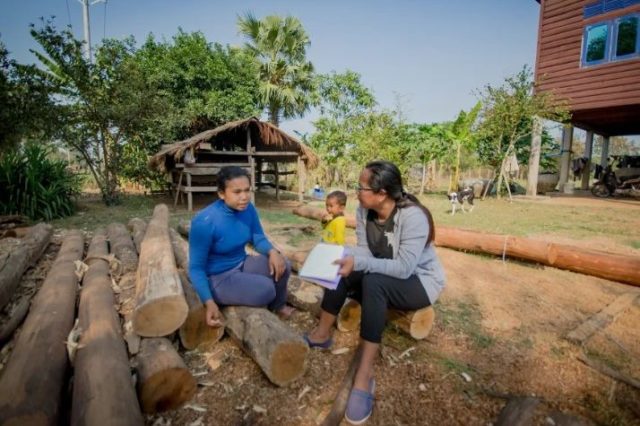
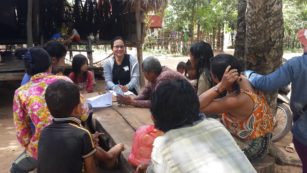
At the grassroots level, we have worked informally over many years to advise women on their legal rights as part of our community-based work to strengthen families facing difficulties including poverty, criminal activity, and violence. We began properly researching the issue of domestic violence and how to tackle it in 2014 and published a report exploring the problem in depth. Following the research, we piloted a program which included legal empowerment as a key component, and the results were so successful that in 2018 we rolled out a full program called ‘This Life Without Violence.’
Our ‘This Life Without Violence’ program works on several levels to provide legal advice and support to women, including monthly meetings attended by hundreds where advice and information are offered, training on violence and the law for local authorities including police, and work with secondary school students to teach them about the law and gender equality at an early age.
Project’s impact
For our national campaign, the scale of the impact was vast. Our video informing people of the law was seen by more than 1 million Cambodians, and the campaign materials were shared on Facebook more than 9,000 times. In all, the Facebook campaign alone reached over 1,800,000 people—which is more than 1 in 10 of the population. Most importantly, more than 13,000 people visited our web page of legal advice and resources. All of this will have led to greatly increased awareness of the law, which we will continue to measure this year through formal surveys. In addition, we received messages publicly and privately from people who said they had been inspired by the information to take action.
At the grassroots level, more than 900 women have now attended our monthly meetings and received legal advice, though we believe our work to educate 100 local authority members will mean that many thousands of women stand to benefit from authorities who understand their legal obligations to protect them. We know of many women who were facing violence and did not seek any kind of intervention who, upon learning their rights, went on to do so, and are now living free of violence as a result. Our program has just been expanded thanks to the success of what has been achieved so far and we now have the funding to reach 7,389 direct beneficiaries over the next 3 years.
Sabay News, perhaps Cambodia’s most popular news outlet, wrote: “This campaign can raise awareness of laws and save Cambodians from the suffering caused by violence.”
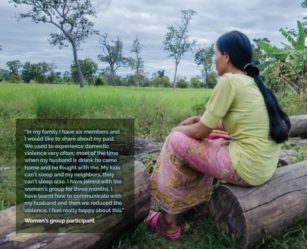
“We used to experience domestic violence very often; most of the time when my husband is drunk he came home and he fought with me. My kids can’t sleep and my neighbors, they can’t sleep also. I have joined with the women’s group for three months. I have learnt how to communicate with my husband and then we reduced the violence. I feel really happy about this.” – Women’s group participant
We have [received] a letter from the District Governor of Soutr Nikom requesting the expansion of ‘This Life Without Violence’ to encompass the whole district, an additional eight communes.
The Department of Women’s Affairs is very supportive of the ‘This Life Without Violence’ program in its current operations and has stated in discussions with TLC that they would like to see an increase in scale to support a larger number of local communities to deal with this pervasive issue.
Country or region
Guatemala
A quick look
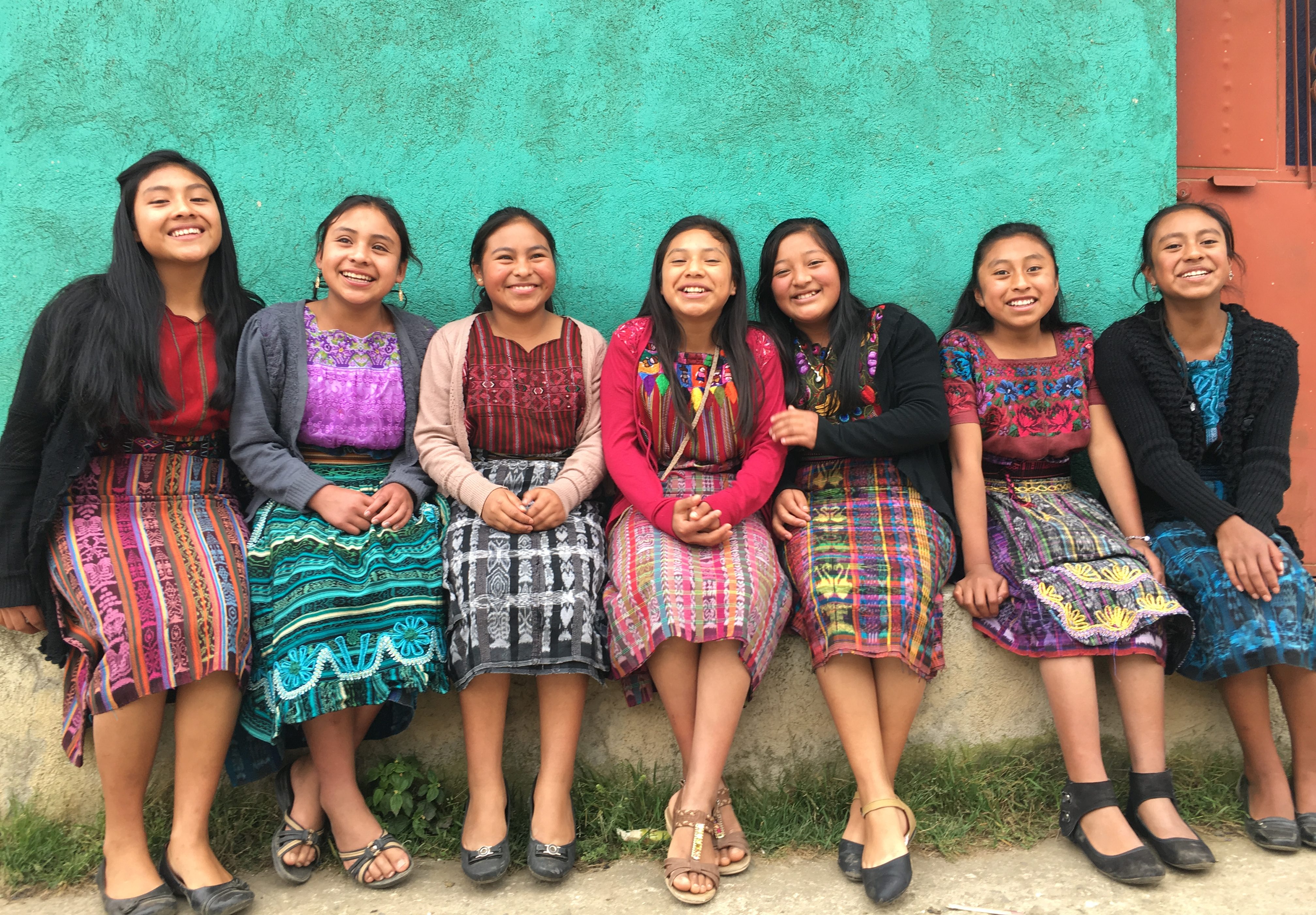
In this 2-minute video, Women’s Justice Initiative outlines its mission and methods for reducing violence against women and girls, and why they deserve your support in the Grassroots Justice Prize public vote.
.
The justice challenge
Guatemala faces some of the highest levels of violence against women and girls (VAWG) in the world: 27.9% of women suffer from intimate partner violence in their lifetime and the country has the third highest femicide rate globally.
Rural, indigenous women are disproportionately impacted due in part to their social isolation and limited access to resources. Social services and government institutions are concentrated in Guatemala’s cities; they rarely reach indigenous women living in rural areas.
Those women who leave their communities to seek assistance often face discrimination due to their ethnicity in addition to the challenge of navigating a system that does not offer bilingual services. Administrative and geographic barriers are further compounded by social norms that view violence against women and girls as acceptable.
Organization and/or project’s mission
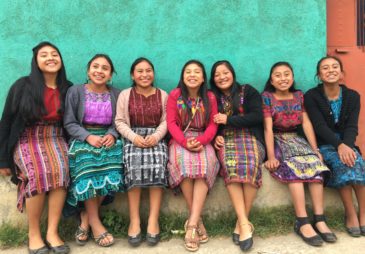
Women’s Justice Initiative (WJI) works in rural Maya communities in Guatemala where women face extreme poverty and have little or no access to social services, making them especially vulnerable to violence, inequality, and discrimination.
Their mission is to improve the lives of indigenous Guatemalan women and girls through education, access to legal services, and gender-based violence prevention.
WJI envisions a Guatemala in which women:
How legal empowerment is used to address the injustice
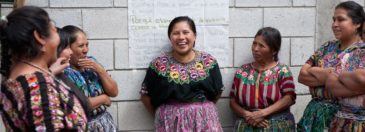
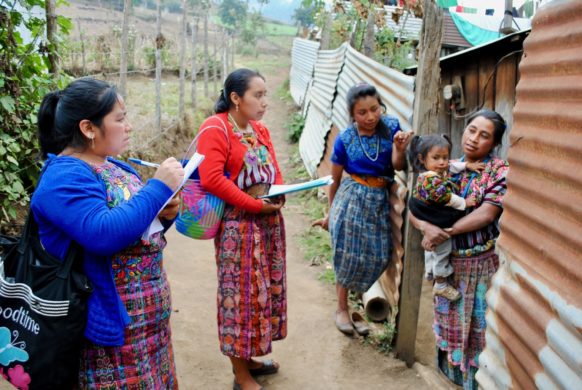
WJI addresses the challenges indigenous Maya-Kaqchikel women face by providing free, culturally-grounded, legal support; bilingual legal education; and leadership training in 32 communities in rural Guatemala through its 4 programs: Women’s Rights Education, Legal Services, Community Advocates, and Adolescent Girls.
The Women’s Rights Education Program is a six-month legal empowerment course that educates women about their rights, including the right to live free from violence, sexual and reproductive rights, and property and inheritance rights. The program also fosters the women’s leadership, decision-making, and communication skills so they can better assert their rights.
The Community Advocates Program is a grassroots legal advocacy program that provides intensive human rights and leadership training to graduates of the Women’s Rights Education Program, enabling them to become local leaders and grassroots legal advocates for women and girls in their communities. These Community Advocates support WJI in facilitating legal literacy workshops and providing accompaniment to women seeking legal services.
The Legal Services Program provides free legal aid directly to women in need by bringing lawyers and paralegals to their communities and providing bilingual Maya Kaqchikel-Spanish resources.
The Adolescent Girls Program supports girls ages 10 to 17 in asserting their rights, delaying marriage, and achieving their personal goals.
Project’s impact
Women’s Justice Initiative has reached over 13,000 individuals since 2011. Annually, WJI directly benefits 2,500 indigenous women and girls between the ages of 10 and 65, who live in 32 rural communities.
Namati’s Community Land Protection Program and partners use a five-part approach that supports communities to: proactively document and map their lands, strengthen local governance, seek formal government recognition of their land rights, and plan for the future of their lands.
This guide is an online version of Namati’s step-by-step Community Land Protection Facilitator’s Guide, which is available to download here. This online version splits the guide into sections and includes links to related resources. There is also a French version of the guide here.
Each piece of the guide exists because of hard-won lessons from implementation. We recommend reading the entire guide before beginning community land protection efforts because each step is inter-related. Namati encourages adaptation of this process – please share your experiences with us! If you have questions or comments about using the Community Land Protection approach, email communitylandprotection@namati.org
Background: What is a community paralegal?
Community paralegals are dedicated to legal empowerment: they help people to understand, use, and shape the law. These advocates are called different names in different places – including “grassroots legal advocate,” “barefoot lawyer,” “community legal worker,” or a host of other titles. They are trained in law and policy and in skills like mediation, organizing, and advocacy.
Although they often are called “community paralegals,” they are not the kind of paralegals who primarily serve as lawyers’ assistants. These paralegals work with clients to seek concrete solutions to instances of injustice, often at the community or administrative levels. They form a dynamic, creative frontline that can engage formal and traditional institutions alike. Moreover, Just as primary health workers are connected to doctors, community paralegals are often connected to lawyers who may help pursue litigation or high-level advocacy if frontline methods fail.
About this resource guide
The guide below is a collection of national paralegal research briefs that reviews the nature of the work undertaken by community paralegals in different countries, and how that work is recognized and funded by the government. The research briefs are accompanied by supporting national-level resources and laws related to community paralegals.
The briefs in this series focus on the types of community paralegals who have been formally recognized either in law or policy. We acknowledge that this is just a small part of a much larger picture: a broader, dynamic ecosystem of community paralegals operates effectively without state recognition in many countries. We aim to one day expand our research to offer a more comprehensive analysis of this larger universe. For now, however, our research briefs are limited to community paralegals who have been formally recognized by law or policy.
By better understanding national recognition and financing of paralegals across various contexts, practitioners can gain valuable insight to build and strengthen legal empowerment programs elsewhere. Legal empowerment expands meaningful, people-centered access to justice across the globe. This guide offers comparative analysis to support practitioners to strengthen and innovate on their existing efforts.
Contributions to the guide
Each of these briefs is a living document– if you have an update, addition or a correction, please contact us at community@namati.org. You can also submit national research on community paralegals by country or region to add to each section below. New briefs will be added on an on-going basis as they are researched, revised, and published.
The original desk research for each research brief was provided by the international law firm, White & Case LLP. Every brief has also been written with consultation and input from national experts who are directly involved with grassroots legal advocates in their country.
In recent years, governments across Africa, Asia and Latin America have been granting vast land concessions to foreign and domestic investors for agro-industrial enterprises and resource extraction. Often, governments make concessions with a view to furthering development and strengthening the national economy. Yet in many cases, these land concessions dispossess rural communities and deprive them of access to natural resources vital to their livelihoods and economic survival. Even when communities welcome private investment, projects are often undertaken in ways that lead to environmental degradation, human rights violations, loss of access to livelihoods, and inequity.
Communities generally have little power to contest such land grants or advocate for terms more favorable to local prosperity, particularly where they operate under customary law and do not have formal legal title to their lands. In this context, communities need strong legal protections for their lands and natural resources, as well as expedient government implementation of clear, simple, and easy-to-follow legal procedures for the documentation of customary land rights.
Various nations have passed laws that make it possible for rural communities to register their lands as a single legal entity and act as decentralized land administration and management bodies (referred to herein as “community land titling” or “community land documentation”). These laws have the power to protect community lands according to customary paradigms and boundaries — including all family land, forests, grazing lands, water bodies, and other common areas critical to community survival. However, due to various political, financial and capacity constraints, these laws are often not widely or successfully implemented.
To investigate how to best support implementation of such laws, the International Development Law Organization (IDLO) launched a randomized controlled trial in Liberia, Uganda and Mozambique from 2009 to 2011, entitled the “Community Land Titing Initiative.” Together with the Sustainable Development Institute (SDI) in Liberia, the Land and Equity Movement in Uganda (LEMU) in Uganda, and Centro Terra Viva (CTV) in Mozambique, IDLO supported communities to follow their nation’s community land registration laws, taking note of the challenges and successes that transpired in the course of these efforts. The first study of its kind worldwide, the intervention’s goal was to better understand both the type and level of support that communities require to successfully complete community land documentation processes as well as how to best facilitate intracommunity protections for the land rights of vulnerable groups.
The study’s primary objectives were to:
1. Facilitate the documentation and protection of customarily held community lands through legally established community land titling processes;
2. Understand how to best and most efficiently support communities to successfully protect their lands and determine the types and level of support required to support communities in these processes; and
3. Devise and pilot strategies to guard against intra-community injustice and discrimination during community land titling processes, and to protect the land interests of vulnerable groups.
Findings and Recommendations:
This report details the communities’ various experiences undertaking the land documentation activities and summarizes the initial impacts of these efforts under the following subject headings: conflict resolution and prevention (encompassing boundary harmonization and demarcation); intra-community governance (encompassing by-laws/constitution drafting); and conservation and sustainable natural resources management (encompassing land and natural resource management plan drafting). It then briefly reviews the obstacles confronted relative to the administrative components of the process.
The report next outlines findings relative to the optimal level of legal intervention necessary to support communities’ successful completion of community land documentation processes as well as what endogenous factors may impact a community’s success. The report then details findings concerning how best to facilitate intra-community protections for the rights of women and other vulnerable groups during the land documentation process. It concludes by setting forth findings and recommendations intended to inform policy dialogue, help nations to refine and improve the implementation of existing community land documentation processes, and provide useful insights for countries seeking to develop laws and policies for community land documentation.
The report also concludes that community land documentation may be a more efficient method of land protection than individual and family titling, and should be prioritized in the short term.
ISBN: 978-0-9858151-0-3
Namati’s Community Land Protection Facilitators Guide is a step-by-step, practical “how to” manual for grassroots advocates working to help communities protect their customary claims and rights to land and natural resources.
Download the complete Guide PDF from this page. Or access the Guide as an online Toolkit to download individual chapters.
After years of working with partner organizations around the world to support communities to protect their land rights, Namati has developed a comprehensive, five-part approach that supports communities to: build unity and internal capacity for community land protection, proactively document and map their land claims, strengthen local governance, seek formal government recognition of their land rights, and plan for their own flourishing future. The goal is not just to protect land, but to leverage community land protection efforts to build:
The Facilitators Guide details Namati’s five-part process for protecting community lands and examines questions such as: “Who is included or excluded when defining a ‘community’?”, “How to resolve longstanding boundary disputes?”, and “How can communities prepare for interactions with potential investors?” The Guide goes beyond documentation to address issues of women’s land rights, inclusive governance, cultural revitalization, ecosystem regeneration, and more. Each chapter includes exercises, sample forms, and tips from veteran land protection advocates. All activities are easily adaptable to a range of cultures, contexts, and community goals. The guide is accompanied by short animated videos that demonstrate the community land protection process visually.
This Guide is intended for the directors and staff of local, community-based organizations, national civil society organizations, faith-based organizations, government actors, and other community land protection advocates and activists. The Guide refers to these groups as “facilitating organizations,” and their field staff as “facilitators.”
Namati recommends reading the entire Guide at least once before beginning community land protection efforts. Facilitators can then review specific sections of the Guide as they support communities to move through the process. However, because all the activities within each “step” are inter-related, it is best to be familiar with all the land protection activities before beginning facilitation.
If you are interested in implementing or adapting Namati’s community land protection approach, or to order a printed copy of the Facilitators Guide, please contact communitylandprotection@namati.org.
This guide has also been translated into French.
This resource, Guide des Facilitateurs de la Protection des Terres Communautaires, is the French version of the Community Land Protection Facilitator’s Guide. The English version can be found here.
Namati’s Community Land Protection Facilitators Guide is a step-by-step, practical “how to” manual for grassroots advocates working to help communities protect their customary claims and rights to land and natural resources.
After years of working with partner organizations around the world to support communities to protect their land rights, Namati has developed a comprehensive, five-part approach that supports communities to: build unity and internal capacity for community land protection, proactively document and map their land claims, strengthen local governance, seek formal government recognition of their land rights, and plan for their own flourishing future. The goal is not just to protect land, but to leverage community land protection efforts to build:
The Facilitators Guide details Namati’s five-part process for protecting community lands and examines questions such as: “Who is included or excluded when defining a ‘community’?”, “How to resolve longstanding boundary disputes?”, and “How can communities prepare for interactions with potential investors?” The Guide goes beyond documentation to address issues of women’s land rights, inclusive governance, cultural revitalization, ecosystem regeneration, and more. Each chapter includes exercises, sample forms, and tips from veteran land protection advocates. All activities are easily adaptable to a range of cultures, contexts, and community goals. The guide is accompanied by short animated videos that demonstrate the community land protection process visually.
This Guide is intended for the directors and staff of local, community-based organizations, national civil society organizations, faith-based organizations, government actors, and other community land protection advocates and activists. The Guide refers to these groups as “facilitating organizations,” and their field staff as “facilitators.”
Namati recommends reading the entire Guide at least once before beginning community land protection efforts. Facilitators can then review specific sections of the Guide as they support communities to move through the process. However, because all the activities within each “step” are inter-related, it is best to be familiar with all the land protection activities before beginning facilitation.
If you are interested in implementing or adapting Namati’s community land protection approach, or to order a printed copy of the Facilitators Guide, please contact communitylandprotection@namati.org.
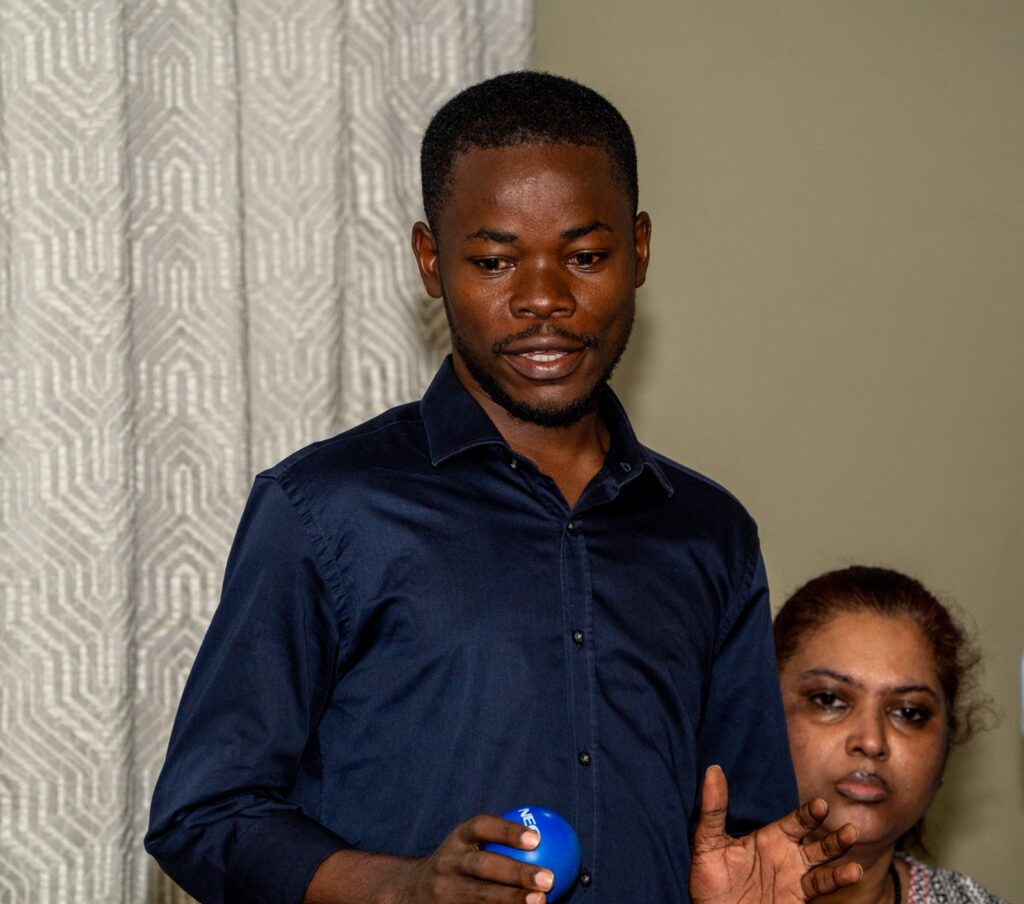
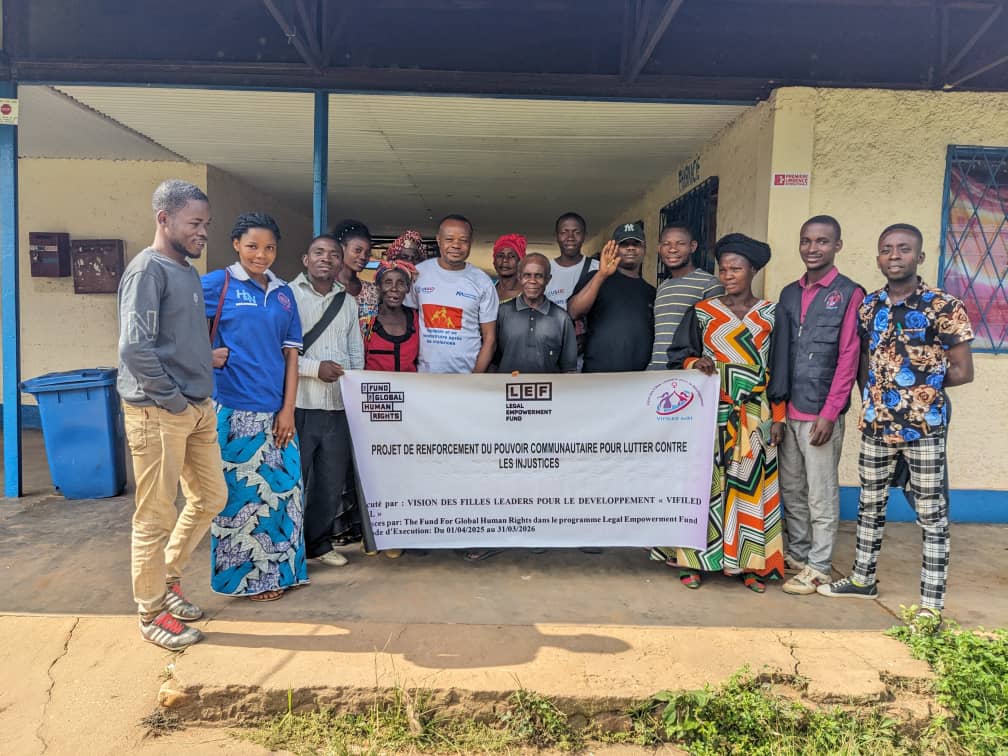
Mtendela Ngena Danny is a young leader from the Mbuti Pygmy community in Eastern DRC, where civic restrictions and conflict threaten indigenous survival. He serves as project manager at Vision des Filles Leaders pour le Développement (VIFILED ASBL), an organization led by Pygmy girls and women advancing human rights, gender equality, and climate justice.
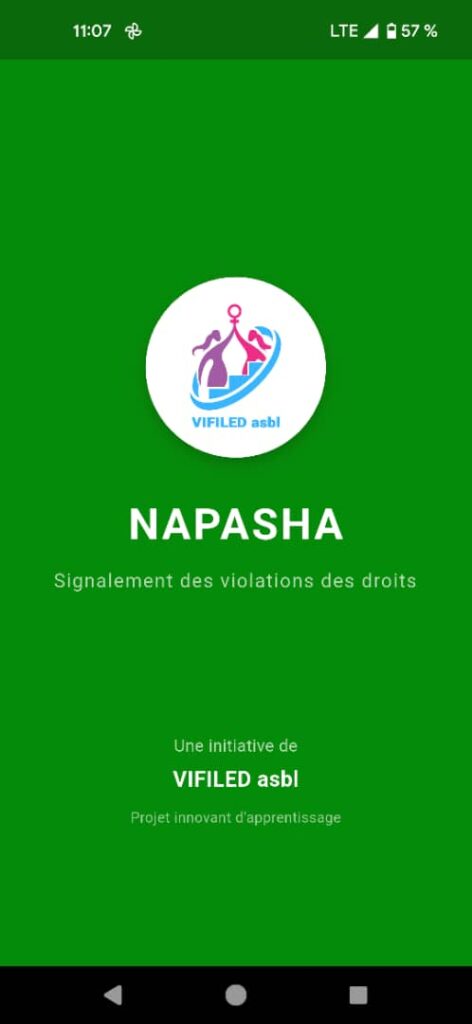
VIFILED is pioneering approaches like community forestry to secure land rights while protecting biodiversity and building climate resilience. The organization also champions innovative tools such as the NAPASHA app, which helps survivors of violence safely report cases and seek justice.
In this interview, Danny shares VIFILED’s journey, the challenges of organizing under conflict, and the power of collective leadership in fighting for dignity and inclusion.
 Hi, Danny, it’s great to connect and understand how you are progressing in relation to the political situation , the conflict in DRC. How are you doing?
It is a crucial moment to shed light on our current situation, what we have learnt, what we are implementing, and our adaptations to the security situation currently in Eastern DRC. Since our inception, we have never experienced such a terrible period. However, despite the challenges, human rights defenders continue to defend the rights of the community, indigenous people and victims of violence.
As an organization we have analyzed, and re-strategised to adapt to the situation, but it remains extremely difficult.Personally, the support from family, community roots, and network mentors has strengthened my emotional and psychological resilience.
Yes, free movement and gathering have been restricted. In addition to frequent constraints and election-related tensions between political players, the civic space in the DRC has become unstable. This has caused a detrimental effect on our joint efforts, advocacy, and mobilization. As a human rights advocate and community leader, my organization shifted its attention to more discrete, effective strategies
Using local radio stations to raise awareness, strengthening community networks, and enhancing paralegal capacity are some of our adaptable initiatives. In light of the arbitrary arrests and restrictions, we implemented security measures to document cases of violence while protecting the privacy and safety of the victims.
The creation and release of the mobile application NAPASHA, which stands for “support community,” is a significant advancement by VIFILED. Through NAPASHA, users can connect, report violent crimes, receive alerts, and acquire legal education.
 This is a great advancement for VIFILED! How is the community embracing and utilizing Napasha? What unique aspects does it offer to victims of violence?
Indeed it is! especially Gender Based Violence cases, which are concering, particularly those with an element of rape. Victims often hesitate to report this injustice because of the stigma and fear of retaliation from the reported offenders.
From where we are now, anyone can discretely report and share information about a GBV instance by using NAPASHA. Neither the officers, nor the perpetrators of this act would ever know the report’s source.
NAPASHA gives us a voice, and amplifies our message without any direct confrontation with authorities. As an organization, our paralegals’ work is safeguarded, and they are able to effectively collect data and evidence discretely.
Given the level of sensitive information we collect, yes! Interception is a possibility. However, the app functions with limited or no connection at all; it synchronises data, and submits it as soon as connectivity is established. During the design process, connection disruption was a factor we had in mind, thus including a function that allows paralegals to input and record data in the event of a connection failure .
The information security on the app is definitely a challenge using technology, but we have integrated a number of underlying factors into its design, to promote safety, community, learning and effective remedies.
What also drives me is legacy. I believe every initiative we plant today—in land rights, climate justice, and legal literacy—is a seed for the future Zambia we want. One where dignity isn’t debated, and justice isn’t selective.
Reflecting on my community’s situation before joining the Grassroots Justice Network, and where we are today, it’s difficult to narrate in a few words, because the impact is a lot. Its huge impact.
First, I learnt how to organize. How to organize my community on the ground to realize their potential and work towards a much greater goal.
The Building Community Power course has been beneficial in strengthening the capacity of our community leaders. Prior to this course, we did not know how to advocate for our rights. But after being integrated in working groups, and learning how other organizations are strengthening their leadership, we learnt how to support our community leaders, in forming strategic allies, and advocating for community rights.
At the organization level, the network widened our vision. We learnt how to grow and scale our work, and developed diverse skills that opened doors to other opportunities, and collaborations. Today, we have about 7 programs that we are working on with various global partners including; The Legal Empowerment Fund, and Global Human Rights Forum. These collaborations were made possible by the experiences gathered from the network, their guidance in the design of our projects, and in the mobilization of resources to finance our actions on the ground.
All these projects are a result of engagements with the network. After each training, I would organize my team and institute the learnings. Together, we started to build a variety of projects that we are now in the process of implementing.
For example, during the recent exchange in Nairobi, we explored injustices around nationality and documentation across regions, and how to legally advocate for these injustices.We learnt of various strategies adopted when a community is in a difficult situation, i.e considering collaborative measures with authorities through strategic networking.
For Dakar, we were enlightened on what community power is, how to obtain community power, and how the power of law combined with community power can destabilize pillars of injustice.
Aside from these learnings, the network WhatsApp group allows us to be part of a community, to learn and orient our actions on the ground. I have learnt how to organize on the WhatsApp platform, how to approach a community that is facing injustice, and how to support community leaders. The learnings have been instrumental in knowing what the law is, how to identify an injustice, and how to move from injustice to justice.
Aside from these learnings, the network WhatsApp group allows us to be part of a community, to learn and orient our actions on the ground. I have learnt how to organize on the WhatsApp platform, how to approach a community that is facing injustice, and how to support community leaders. The learnings have been instrumental in knowing what the law is, how to identify an injustice, and how to move from injustice to justice.
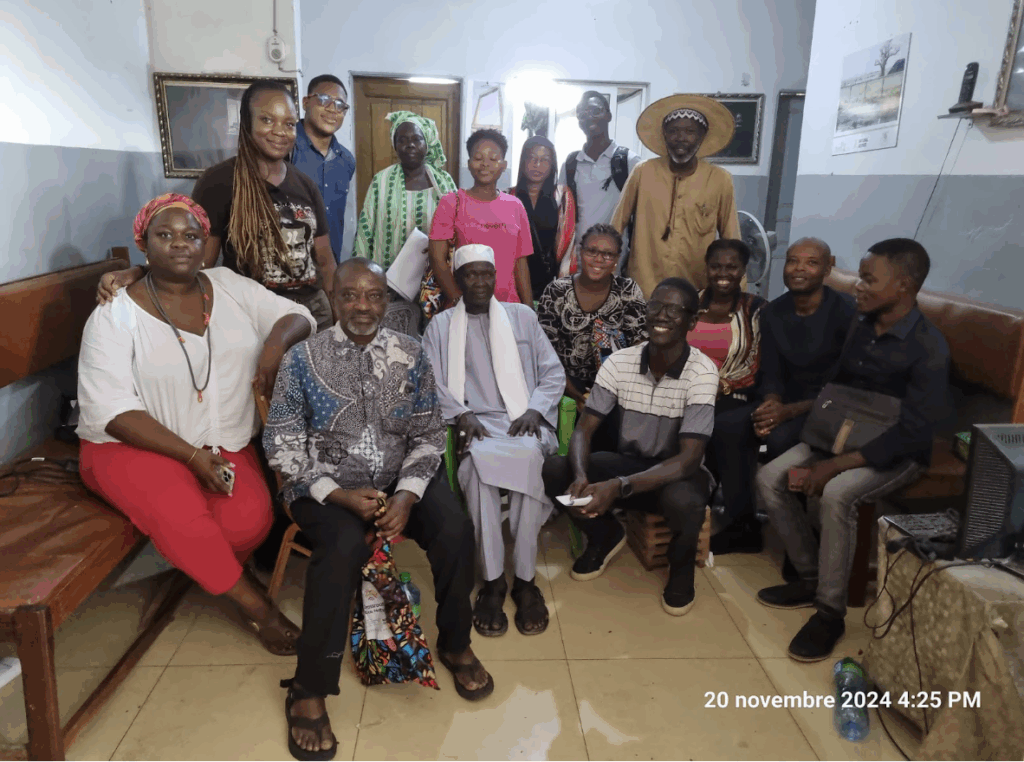
Yes! Especially from the friends I have in Nairobi. I successfully applied for an online training on storytelling, took part in the program activities and was selected to participate in an in-person program in the United States scheduled for October, 2025. The benefits are many!
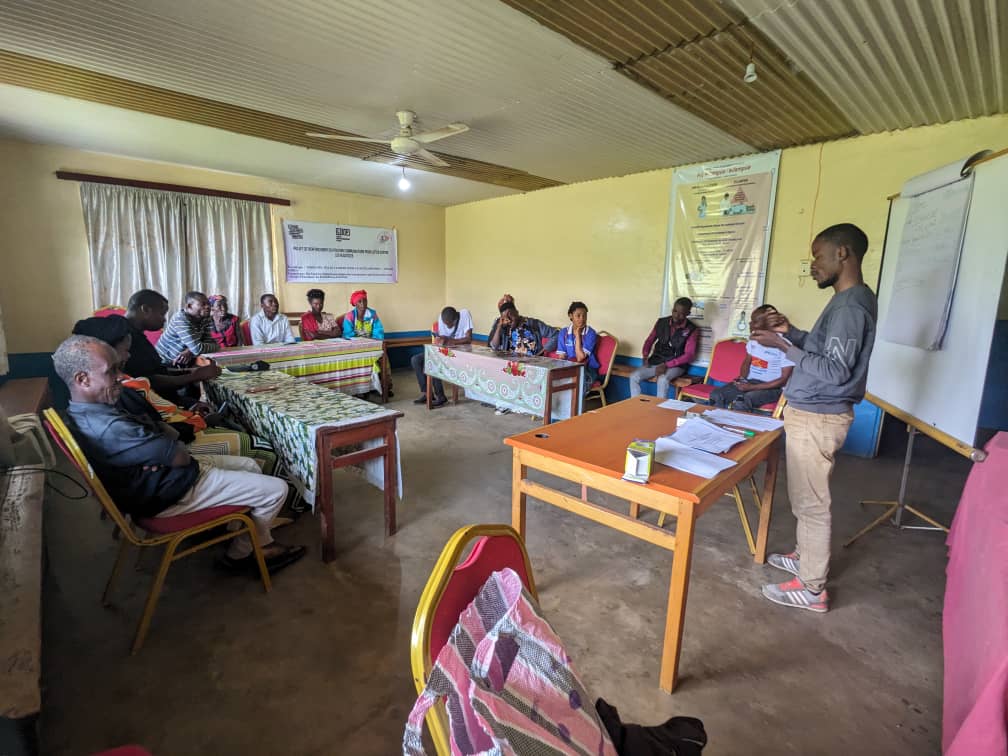 Definitely how to organize. When I left Nairobi, and came back to DRC, I understood that I had to bring my community together, to understand the exact problems we are facing. The problem is already in our community, so it is the community that is in danger. This was the first thing I learnt; successfully organizing the community around a cause
The second, was the idea of community ambassadors. We were unaware of this strategy, and we did not have this in our community. But after the exchange, we explored certain concepts in greater depth, selected certain leaders as community ambassadors and introduced them to our activities.
The community ambassadors have been very helpful, because they originate from the community and understand how to approach and empower their communities. By developing leadership at the grassroots level, the community ambassadors become committed to the cause.
Today we have more than 35 ambassadors who act as a link between the organization and the community. We strengthen their capacity through legal empowerment education, and guide them as they work in the community. Previously, the community did not have power to denounce the injustices they face, but now with this support system the community is empowered to denounce injustices. Our engagement has deepened and we now have 30 paralegals from a count of 15.
At the community level members were reluctant to report cases- out of fear, or lack of accurate information regarding redress. Community ambassadors have been beneficial in this process; from identifying injustices, to educating provisions of the law against injustices, and guiding victims to report cases of injustice.
The ambassadors and paralegals are also victims of the injustices they advocate for, building trust and understanding when approaching communities. In the case of advocacy on land injustices, communities were not equipped with the right ownership documents to stop mining companies from stealing their land.
In such cases, community led advocacy efforts have successfully led to discussions on land rights between communities and the Ministry of Land affairs. The community ambassadors now work directly with the office of land affairs, producing evidence on land injustices, land cases, and supporting members in registration of land titles.
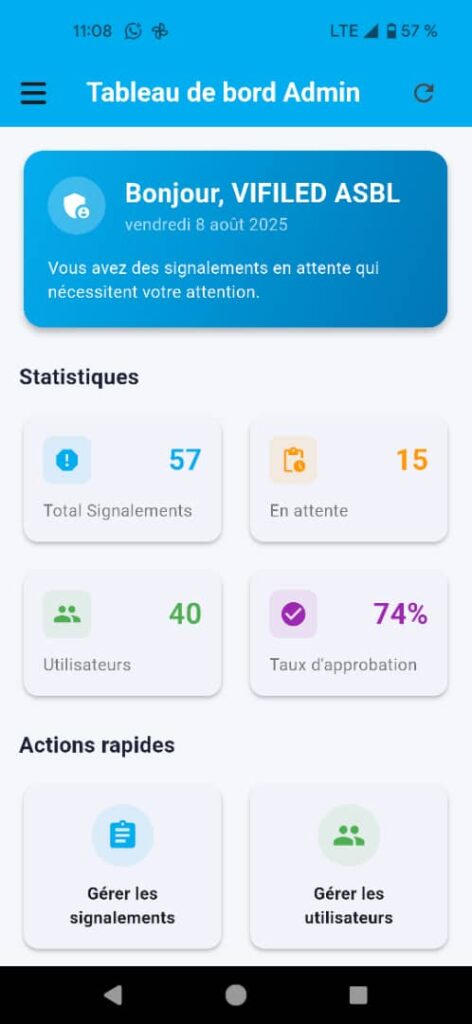 How many cases have been forwarded to the Ministry of Lands so far?
At this stage, due to lack of proper information on the criteria of collecting cases, we have managed to report 57 cases; 34 are land title issuance, while 23 are on land violations. These cases are coming through from community ambassadors working in the community, and about 20 from NAPASHA.
To bridge the information gap, we organized a capacity-building workshop between paralegals, ambassadors and authorities from the land office, on proper data collection, documentation , application of land registration, and process of reporting land violations.
The app combined with skilled ambassadors has been a great recipe to counter land injustices and seek redress.
Yes, during the awareness campaign, the officials inquired if we had done the preliminary work to initiate setting up of an office in the community, and if the people had the capacity to register their land. Our response was yes, since this was an ask by the community itself- asking for their territories to be registered, and our role was to amplify that message.
You see, when the Ministry of Mines and the Ministry of the Environment sends people to the land to exploit it, and to mine it, we are the ones who suffer. And if our land doesn’t have title deeds, we’ll always be victims. So it’s important at the least to send a representative to their offices so that our land can be registered.
The greatest impact has really been on scaling our work; not only through technology, but also through more paralegals, and a whole group of community ambassadors. We are also engaging the national government to try to find a resolution for a large number of cases. The community also has an easier time reporting violations through these ambassadors.
In each village, the community ambassadors are organised in groups, and these groups are led and guided by paralegals. Depending on the severity, some cases are handled at the community level, by the local committee, while others are forwarded to judicial bodies.
I would like to share that we in DRC are dealing with restrictions at the community level. But this should not be considered a limitation.
We had to think beyond that, because as leaders, we must adapt to whatever situation arises with the organization. We have to be prepared. The political situation in many countries is changing day by day, but the resilience gets stronger, and we have to develop tools that will allow us to work, even if we do not have freedom to gather.
Additionally, organizations should not be content with working alone, but to involve other local actors in institutions of power. Learning from other organizations and actors is key to knowing how to achieve your goals. It helps us understand the reality- what is achievable.
What inspires me, especially in these times, is witnessing success even in the smallest ways- a woman reporting a case at the organization center, community ambassadors finding solutions, and getting along with community members. The experience doing this work is also inspiring.
This interview has been edited for clarity
Too often, we feel that the power to make decisions about the future of our communities has been taken away. But we do not have to feel powerless. There are steps we can take to reclaim control and identify our own priorities for development in our communities. Community-led ideas and expertise can lead the way to a development that respects people and protects the environment. Conducting community-led research is one effective way for communities to respond to development challenges, and to voice their development priorities.
Community-led research is a process through which a community relies on its own local knowledge to identify an issue, think deeply about it, and propose an answer.
Communities can conduct their own research with or without support from allies such as civil society groups, academics, or the government. While these allies can help in facilitating the process, providing tips, or assisting in analyzing results, it is the community that leads the research and is in charge of making decisions. Community-led research is both the means and ends to the model of development that communities want – a process where powers are shared and everyone’s voice is heard.
In fact, when community members do their own research, they may uncover findings that outsiders would not. Communities possess knowledge about their surroundings and environment that decision-makers and planners may not know. Often, the research process itself helps communities better understand the problems they face, build confidence in their knowledge and ideas, strengthen solidarity and accountability amongst community members, and learn necessary skills for community organizing. Together, the skills and findings gained from the research process can be useful for mounting community-led campaigns.
The results of community-led research show that alternatives are possible, and that the entire development process can be transformed so that communities claim their power. When communities put themselves and their visions at the center of the development process, community-led research can become a powerful tool!
This guide contains activities and tools to plan and conduct community-led research. You will also learn tips and strategies from the stories of community organizers who have facilitated this research all around the world. With this booklet, you will find a Checklist to Support Community-led Research to use as a reminder of the different lessons in this Guide, and a Survey Template for Community-led Research that you can use and adapt to your own community.
In northern Uganda, common grazing lands are central to village life. While nominally used for grazing livestock, communities also depend on their grazing lands to collect basic household necessities such as fuel, water, food, building materials for their homes, and traditional medicines. Yet growing population density, increasing land scarcity, weak rule of law, and the 1998 Land Act’s legalization of a land market have created a situation of intense competition for land in northern Uganda. The growing land scarcity has contributed to higher rates of land grabbing, boundary encroachments onto neighbours’ lands, intra- and inter-family land disputes, and rampant appropriation of common lands. As a result of these trends, there is a high rate of tenure insecurity in northern Uganda, a prevalence of intra-community land conflict, and a rapid loss of the common grazing lands that community members rely upon for their subsistence and survival.
To understand how to best address these trends, the Land and Equity Movement in Uganda (LEMU) and the International Development Law Organization (IDLO) set out to investigate how best to support communities to successfully follow legal procedures to formally document and protect their customary land claims. This effort, the Community Land Protection Initiative, was carried out in Oyam District in northern Uganda from 2009 to 2011.
The first study of its kind worldwide, the intervention’s goal was to better understand the type and level of support that communities require to successfully complete community land documentation processes, as well as how to best facilitate intra-community protections for the land rights of women and other vulnerable groups.
The intervention’s primary objectives were to:
To undertake these objectives, LEMU conducted a randomized controlled trial in Oyam District in northern Uganda. As per the study’s design, LEMU randomly selected 20 communities that actively expressed a desire to seek documentation for their community land rights and then randomly assigned these communities to one of four different “legal services” treatment groups: (1) full legal and technical support; (2) paralegal support and monthly legal education; (3) monthly legal education only; and (4) control/minimal information dissemination. As it provided these supports, LEMU observed and recorded each community’s progress through the requisite steps of the Communal Land Association formation and land documentation processes, as set out in Uganda’s Land Act of 1998 (Ch. 227). These steps include:
1. Community land documentation process introduction, including: legal education and awareness raising; and creating an “intermediary group” to coordinate community process.
2. Mapping, boundary harmonization, and demarcation including: mapping the boundaries of the communal lands; negotiating the boundaries of the communal lands; resolving land conflicts; and planting boundary trees along the land’s agreed limits.
3. Drafting a Communal Land Association constitution and land management plan, including: cataloguing all existing community rules, norms, and practices for local land and natural resource management; debating, discussing, and amending these rules to align them with current realities; ensuring that the agreed community rules do not contravene Ugandan law; and adopting a final Communal Land Association constitution and land management plan to govern the lands being documented.
4. Filing an application to become a Communal Land Association and electing officers, including: submitting an application for the formation of a Communal Land Association with the District Registrar; and convening a community meeting attended by the Registrar, at which time the community formally agrees to incorporate as an association and elects three to nine Communal Land Association officers.
5. Formally documenting community lands, including: surveying or taking GPS measurements of the community land; and submitting an application for either a Certificate of Customary Ownership (CCO) or a Freehold Title.
As it supported communities to complete these processes, LEMU noted all obstacles confronted, all intra- and inter-community land conflicts and their resolutions, and all internal community debates and discussions. A pre- and post-service survey of over 600 individuals and more than 100 structured focus group discussions supplemented LEMU’s observations and allowed for quantitative analysis of all short-term impacts. Unfortunately, due to various obstacles, most significantly the lack of a District Registrar for Oyam District, none of the study communities have yet received a freehold title or CCO for their customary lands. Phase II of the Initiative, to be carried out jointly by LEMU and Namati as part of Namati’s Community Land Protection Program, will continue to support the study communities until their lands have been formally documented and protected.
This report details the study communities’ experiences undertaking the land documentation activities and summarizes the initial impacts of these efforts under the following subject headings: conflict resolution and prevention (describing the boundary harmonization and demarcation process); intracommunity governance (describing the Communal Land Association constitution drafting process); and conservation and sustainable natural resource management (describing the land and natural resource management plan drafting process). It then briefly reviews the obstacles confronted and describes conclusions relative to the optimal level of legal intervention necessary to support communities’ successful completion of community land documentation efforts. The report next details findings concerning how best to facilitate intra-community protections for the rights of women and other vulnerable groups during the land documentation process.
The report concludes by setting forth findings and recommendations intended to inform policy dialogue and support the widespread implementation of Uganda’s Land Act 1998. The findings are offered with the understanding that continued research is necessary to determine the long-term social and economic impacts of documenting community land claims, and that continued community engagement is required to understand how to best ensure that documented community lands are fully protected over the long-term.
Want to learn more about the podcast and explore more episodes? Click here to check out our podcast homepage!
Change is inevitable. However, who gets to experience change when poverty is the accepted status quo? How can the tides of change move in favor of the poor? And what keeps everything from going back to the way things were before?
In Nairobi’s informal settlement of Mukuru, Jane Weru and Patrick Njoroge of Akiba Mashinani Trust must find answers to these questions while working alongside a community of 300,000 people living in poverty, without access to basic services and teetering on the brink of eviction.
Special thanks to Jane Weru, Patrick Njoroge and AMT- Akiba Mashinani Trust in Nairobi, Kenya.
Support for “A Common Pot” is provided by IDRC Canada.
Follow the Grassroots Justice Network on Twitter, Facebook and YouTube @grassrootsjn, and share your thoughts with us by emailing community@namati.org.
Dorice Bosibori (Archival Tape) [00:00:01] My name is Dorice Bosibori. I live in Mukuru. I’ve lived in Mukuru now for 14 years. I joined Muungano wa Wanavijiji-
Jane Weru, AMT [00:00:12] Dorice hadn’t lived for long in Mukuru. She had come from her home village in Kisii. So she had come to Nairobi, almost like a new migrant from Kisii, which is more towards the western part of Kenya. So Doris comes to Nairobi and she is surprised by the living conditions in Nairobi because where she comes from, there may be many problems, but the problem is really not sanitation. So she comes and she finds that in this big city of many lights, sanitation is a big, big issue. And she is faced with indignities of being a woman in this area. And one of the things I remember Doris telling me is how when her family came to visit her from upcountry- And of course, they thought they are coming to Nairobi where things are bright and clean and new. And they came to her home and she had prepared, and she had cooked a beautiful meal for them. But after they had eaten, like is likely to happened to all of us, you need to go to the small room. And so they asked her, “Doris, can we use your small room?” So then she walked them through the settlement to the common bathroom that she had to pay for for every use. Now at nighttime, it is not possible to go to these paid toilets, because many times they close early. And even if you wanted to go, it is very unsafe for a woman to go. So, many women told us that they keep buckets or tin cans under the bed. And during the night, those are the tin cans they use. A Mukuru home is only one room and this room is small. It’s only ten by ten feet for a family of 3 or 4 people. So what does that mean? So as a woman, you really have to use your tin pot, your tin can in front of your children and your husband. It is a very humiliating experience, especially as a woman when you have your periods.
Poorvi Chitalkar, Host [00:02:56] Many of us don’t think twice when we go to the bathroom. And to talk about going to the bathroom can be taboo. But in the informal settlement of Mukuru in Kenya’s capital of Nairobi, it’s something that people, women especially, must think about constantly. Things like sanitation and access to water- the basic services that so many of us take for granted – that is where our story begins. In this episode, we go on a journey with the grassroots justice organization AMT- Akiba Mashinani Trust. What begins as an effort to prevent evictions and to keep people in their homes, soon grows into a massive participatory grassroots movement- an entire settlement of over 300,000 people organizing themselves and participating in a fight. Not only for their basic rights and services, but also for dignity and justice. I’m your host, Poorvi Chitalkar.
[INTRO STING]
Poorvi Chitalkar, Host [00:04:07] This is A Common Pot, a podcast where we explore stories and recipes for social justice and systems change from around the world.
Jane Weru, AMT [00:04:27] I’m sorry. I keep forgetting. I keep forgetting to unmute.
Poorvi Chitalkar, Host [00:04:33] This is Jane.
Jane Weru, AMT [00:04:34] My name is Jane Weru. I work for Akiba Mashinani Trust, and I’m the executive director of the Trust.
Poorvi Chitalkar, Host [00:04:42] Akiba Mashinani Trust is located in Kenya. Their focus is on informal settlements. AMT has been working with the informal settlement of Mukuru in Nairobi for years now. They work closely with the larger social movement in Kenya called Muungano wa Wanavijiji. The movement emerged in the mid 1990s after a spike in forced evictions of informal settlements.
Patrick Njoroge, AMT [00:05:07] My name is a Patrick Njoroge. I work with Akiba Mashinani Trust. I am the deputy director.
Poorvi Chitalkar, Host [00:05:13] That’s Patrick. Jane and Patrick are a powerhouse team. And when they talk about Mukuru, you can hear how closely they’ve both come to know the community.
Jane Weru, AMT [00:05:24] Mukuru is a very dense settlement. It has about 100,000 households living in about 689 acres of land. It is very dense and it has very few services. The road network is made up of mostly footpaths that connect with very, very few motorable roads. And one of the most amazing things is that a road is not always just a road. So if you go to Mukuru at around 6 p.m. in the evening, Mukuru is abuzz. It is abuzz with mothers coming from work stopping by the food kiosks to buy vegetables. Young bachelor men buying cooked chapati along Chapati Road. And you can imagine the aroma of chapatis cooking on the street. It is full of children as they come home from school. They are playing- they are playing ball. Others are cycling along the newly paved roads that are in Mukuru. Some are even skating. So the roads in Mukuru are not just a place where public transport moves from place to place. They are a public space in which children play and they’re used in different ways, at different times. So as it gets darker in the evening, you find old men moving out of their houses with their chairs, which they place in the middle of the road because nobody uses the roads at night. Nobody has their own private vehicles. So immediately the public transport stops moving. The road becomes the evening sitting room for the old. And they talk and they chant. And the children continue talking. And as you sit there, you can hear people cheering, “Man[chester] United on the other side and the clapping of hands. And you can also smell the whiff of unclean drains. So it’s a mixture of good and bad. But it is home to the people of Mukuru. It is a vibrant- it is a living settlement that is full of hope.
Poorvi Chitalkar, Host [00:07:38] Mukuru was initially government owned land. It was supposed to be used for industrial purposes. And so the land was leased out on a type of long term lease. These leases were given to favored industrialists and other people who had connections to power. The terms were clear. Develop the land within two years, or give it back to the government so someone else can develop it. However, the land never got developed, but those who had the long term leases held on to them. Meanwhile, semipermanent structures were built instead and landlords began to make money off residents moving in. Today, the 689 acres of Mukuru is filled with over 100,000 households. And then, in 2012, a group of men came to the AMT office in Nairobi. Jane was there and remembers the day.
Jane Weru, AMT [00:08:32] And they came and they told us that they had been informed that if they did not buy the land in which they lived, they would have to leave. So they asked us whether we could lend them, because we run a small fund- whether we could lend them some money to buy the land. And we said, “Yeah, probably.” So we started negotiations.
Poorvi Chitalkar, Host [00:08:55] However, before they could finalize the deal…
Jane Weru, AMT [00:08:58] We had another and another group of people coming to us with the same request from the same area. So we realized we had a structural problem on our hands and that we really needed first to work with the residents to prevent evictions. We mobilized people to demonstrate against evictions. And eventually we managed to get an order- a temporary injunction- against the evictions, working closely with Katiba Institute.
Poorvi Chitalkar, Host [00:09:30] But this was just a bandaid on a much larger issue, because Mukuru isn’t just a vibrant community. It is also a valuable piece of land.
Jane Weru, AMT [00:09:40] The value of the land in Mukuru has gone up exceedingly. Today, an acre of land costs at least about $1 million. That’s not a little money, especially in Africa. And so there’s high demand to push the people who live in Mukuru out of the land. And for many years we’ve been fighting for this land to remain in the hands of the poor.
Poorvi Chitalkar, Host [00:10:08] So imagine this: you’re experiencing poverty and you’re currently living on a piece of land where you’re constantly being threatened with eviction from your landlord. Meanwhile, you still have to keep the lights on and pay your bills, and to make sure that you don’t give anyone any further excuses to kick you out. And on top of that, your fellow citizens and your own government have some pretty big misconceptions about who you are and your value to society.
Jane Weru, AMT [00:10:36] I think many people think that informal settlement dwellers just sponge off the city and that they do not pay for services. But this is not true. Informal settlement dwellers pay way more for way less and much poorer quality than everybody else does within the city of Nairobi. What happens, and the reason why they pay way more than everybody else, is that the state is absent. This vacuum is filled by middlemen. In Nairobi, we call them cartels.
Poorvi Chitalkar, Host [00:11:13] These cartels steal services from the state, including utilities such as water and electricity. Then they sell those utilities to people living in informal settlements at prices that are roughly twice as much as what the rest of Nairobi’s residents pay. It’s what they call-
Patrick Njoroge, AMT [00:11:31] The poverty penalty.
Poorvi Chitalkar, Host [00:11:34] Patrick breaks down just how this poverty penalty works.
Patrick Njoroge, AMT [00:11:39] For instance, water. Water in Mukuru is normally sold in 20 liter jerrycans. So a jerrycan of water in Mukuru will sell for about 5 to 20 shillings, for the 20-litre jerrycan. If you are to buy the same amount from the utility company, the same quantity for the 20 litres, you’ll pay about $0.60. So that means they pay in Mukuru are paying between about four shillings to about 19 shillings more than the rest of the city.
Poorvi Chitalkar, Host [00:12:20] Jane, Patrick and the team at AMT realized that they had a larger question to ask themselves, if they were going to take on the poverty penalty that so many people in Mukuru had fallen prey to.
Jane Weru, AMT [00:12:31] Who actually owns Mukuru? Who runs this place? How is the place governed? And how is it linked to both state agencies and informal leaders?
Poorvi Chitalkar, Host [00:12:48] Jane and Patrick are members of the Grassroots Justice Network. In this network, practitioners use research to answer such questions and use the evidence to drive change. Through their research, they came up with all this information on how the cartels’ schemes were siphoning utilities from the state, and how it wasn’t just the residents of Mukuru who were losing money. The Nairobi city government was also losing money.
Jane Weru, AMT [00:13:13] Using this research, we approached the Nairobi City County, and we told Nairobi City County, “Are you aware that this happens within the city?” And they said, “No.” And when we shared the data about the poverty penalty than the residents of Mukuru face, they were shocked because they believe that informal settlement dwellers don’t pay for services. So that’s when they asked us, “So what can we do to resolve this challenge?”
Patrick Njoroge, AMT [00:13:45] Then, I think luckily, Jane, having the legal background, said, “Let’s go and figure out something and we’ll come and give you an answer.” And we then proposed: we went Mukuru to be declared a Special Planning Area.
Jane Weru, AMT [00:13:58] And that if they declared Mukuru as a Special Planning Area, we would begin the journey of working with the residents to look for common solutions to the challenges that they faced.
Patrick Njoroge, AMT [00:14:11] And the county said, “Okay, then let’s do that.”
Poorvi Chitalkar, Host [00:14:14] This is the crux of legal empowerment: combining the power of law with the power of people. In this case, AMT used a legal provision that was already on the books to declare a Special Planning Area. And the coupled that with community organizing. But what is a Special Planning Area?
Jane Weru, AMT [00:14:32] In Kenyan law, county governments can declare an area that has special development opportunities or challenges as a Special Planning Area. Once declared as a Special Planning Area, county governments are required to develop plans for the redevelopment of that area that take into consideration the unique opportunities and challenges that that particular area faces.
Poorvi Chitalkar, Host [00:15:00] And so, it was up to AMT and their partners to convince the government that not only should Mukuru be declared an SPA, it should be declared an SPA for the purposes of developing the land for the existing residents, a majority of whom were living in poverty. How did AMT convince the government to pay attention?
Jane Weru, AMT [00:15:20] I think, first of all, was the realization that- of the numbers. I think they were surprised that so many people lived in this area. And then the realization that you cannot evict 100,000 households. You can’t just wake up one morning and bulldoze 100,000 households. So this was kind of like a done deal. This problem wasn’t going to go away. And they needed to begin to resolve it. I think the second also were the public health risks to the city, because almost every year, Mukuru would have an outbreak of cholera. And Mukuru is situated very near the airport. And so it was- I think the government realized that it was a huge reputational risk waiting to happen.
Poorvi Chitalkar, Host [00:16:22] AMT also knew the value of Mukuru, economically speaking, from the research and calculations that they had done on how much these cartels and so-called slumlords were making off the residents living there.
Jane Weru, AMT [00:16:35] I think, you know, just the idea when you see an informal settlement, you just think poverty! No money! But they realize, no, this is a vibrant area. This has a vibrant economy. And we just shared 94% of the people who live in Mukuru are tenants and they pay rent to slumlords. And in Mukuru at that time, they were paying around 2000 shillings per a ten-by-ten shack…with no services. So if you do your math, the slumlords were collecting tax-free almost at that time, $2 million every month in rents.
Poorvi Chitalkar, Host [00:17:17] Essentially instead of cartels and slumlords making money, the government realized that they could be making that money instead. But AMT wasn’t holding meetings with government officials in back offices to make these arguments. Although they used their legal knowledge and training wherever possible to propose ideas, they also wanted to make sure that this was a fight led by the people of Mukuru.
Patrick Njoroge, AMT [00:17:41] I think also was something that also- that also helped, is the persistence that the community and the organizations supporting the community had in their quest for changes. We would do every other day a demo, whether to the county or to the ministry, and would walk from- from Mukuru to the central business district where the county offices are. It’s about like six kilometers. They would walk, come and share their demands.
Poorvi Chitalkar, Host [00:18:15] And they even had a song.
Patrick Njoroge, AMT [00:18:18] They see as and closed the doors because they were- we have a Swahili song that, “If you see them, please close the doors!” You know, I won’t sing because I’m bad at singing. Jane, remind me the tune! What the kids used to say?
Jane Weru, AMT [00:18:35] [Singing in Swahili]
Patrick Njoroge, AMT [00:18:41] Oh, yeah, yeah, yeah.
Jane Weru, AMT [00:18:44] [Singing in Swahili] Funga milango wanakuja.
Patrick Njoroge, AMT [00:18:49] Yeah!
Jane Weru, AMT [00:18:51] It means, “Close the doors. They’re coming!”
Poorvi Chitalkar, Host [00:18:58] In 2017, Mukuru was declared a Special Planning Area. It was a big win and the result of a multi-pronged approach. But in the world of grassroots justice advocacy, big wins are often just the start. From here, a planning process had to be drawn up. And in order to make decisions on how the conditions in Mukuru would be improved, people themselves needed to get involved and stay involved. AMT didn’t want passive participation from the people of Mukuru. Instead, they saw this as an opportunity to transform the way that community participation was done and decisions were made. And so they got to work.
Jane Weru, AMT [00:19:44] One of the things that happened after Mukuru was declared a Special Planning Area is that we realized that we needed data and information as a basis for planning. And so we worked closely with the residents of Mukuru to count every single house and to map every single toilet and to identify every single water point. And from this research, we established that there were only 3,500 pit latrines in Mukuru, serving a population over three- of over 300,000 people. So roughly about a thousand people per toilets. And so we started talking to the women and asking them, So what does it really mean to not have a toilet?
Poorvi Chitalkar, Host [00:20:47] And this is where Doris comes in. The same woman from earlier who Jane knew, the woman who had to break the news to her houseguests that there was no bathroom that was remotely close to her house. Doris was a community activist and a leader in Mukuru. She was a member of a women’s collective that rallied together long before the SPA process even began.
Patrick Njoroge, AMT [00:21:10] So we said, let’s walk with women. Let’s mobilize women. When a woman speaks to some people, we always listen.
Jane Weru, AMT [00:21:18] And the women to start with were quite shy. They didn’t want to talk about this openly. But over time we said: you know something? If there’s a failing, it is not our failing. It is not our fault that we have this problem. And so we must begin to talk openly about these issues. And the women said to not have a toilet that is accessible as a woman is a big challenge, because the only toilets that that were available to most of the women were paid toilets where you- you have to go and pay for every use. It also provides dignity- dignity and just a sense of self-worth, because there are things you should never be forced to do in front of others. So they said they wanted- because not all plots had toilets. Very few, in fact, had toilets. So they said they wanted a toilet that is connected to the sewer in every plot, so that they are able to go to the toilet if and where they needed to go. So that is what the women said. And that’s why we said this is something that cannot wait. And the women said, “We are too pressed to wait.”
Poorvi Chitalkar, Host [00:22:38] The “Too Pressed to Wait” campaign targeted the Kenyan government’s public health department. The women demanded two things. One, that an inquiry be set up on the public health conditions in Mukuru. And two, that a planning process be put in place to address these public health challenges. The wheels of community participation were now in motion. And AMT was paving the way.
Patrick Njoroge, AMT [00:23:02] The declaration happened. The county said, we have to- to do integrated development plans and these development plans have to be anchored along the county departments and the different thematic areas along the county departments.
Poorvi Chitalkar, Host [00:23:16] Eight consortia were created. Seven to focus on big issue areas: education, health, environment, water, sanitation, land and also issues of planning and infrastructure. The eighth consortium developed the community organizing structure and started training community members. Muungano Alliance, which included AMT, Muungano wa Wanavijiji and Slum Dwellers International, worked closely with this consortium.
Jane Weru, AMT [00:23:48] I think many times we ask ourselves, how do we organize in a big amorphous area like Mukuru? And for us, I think just the realization is that you must begin to organize based on how people are already living and how people are already structured, because there’s a certain logic that exists in the way people even plan their homes and the way they organize their living spaces. So that the basis for organizing within work is therefore based on the way people have built their settlement, the plot, the household and the plot. And this means that even at your plot level, through this organizing system, you begin to know your neighbor. Your neighbor is no longer for a foreigner, it’s somebody that you discuss and you work with, because you have to discuss about who cleans the toilet tomorrow, because it is one toilet being shared by ten people. Who will clean the toilet tomorrow?
Poorvi Chitalkar, Host [00:24:58] It’s also important to note here, AMT and their partners weren’t just working with one large informal settlement. Technically, Mukuru is made up of three settlements.
Patrick Njoroge, AMT [00:25:09] So you have Mukuru Kwa Njenga, Mukuru Kwa Reuben, and Mukuru Viwandani.
Poorvi Chitalkar, Host [00:25:15] Okay, you are now about to hear a bunch of numbers. What’s important to remember is the scale. AMT is working with 100,000 households and 300,000 people and they want to make sure that everyone can participate meaningfully. That requires creating a system. To create an organized system with equal distribution among the villages, AMT divided the whole of Mukuru into 13 segments, each segment holding about 8000 households.
Patrick Njoroge, AMT [00:25:47] How do you then, within that segment, then develop a structure that then is able to create representation for people who can’t speak on behalf of the rest of the communities? So then we started again within each segment, we’d go back to the household level. So in Mukuru, as Jane had mentioned, it’s- we have courtyards of ten houses on average. So that what you call, if you go to Mukuru, you find people saying that’s a plot of ten houses. So we would take data of all the people within those courtyards. And courtyard members of households there would select someone who can be their representative. Then these courtyards, ten of them, will join together and form a cluster of 100 households. So these clusters were areas where communities would come together and start discussing the issues that affect them.
Poorvi Chitalkar, Host [00:26:45] So for every 100 households also known as a “cluster,” there were ten representatives attending meetings to discuss issues. And then one representative would be chosen to go further up to the segment level and represent the cluster. And the community mobilizers- the people we talked about earlier who were receiving training- they would help implement this whole organized approach.
Patrick Njoroge, AMT [00:27:10] So that is how then the community was able to feel they participated in this process, because they structured it to give everyone an opportunity to contribute. And the views that were given at the segment level were not individual views, but views of the community at the cluster level had discussed and agreed upon.
Poorvi Chitalkar, Host [00:27:31] It was exciting to see community members feel ownership and responsibility towards Mukuru, but this process was not without its roadblocks. The process disrupted the status quo for those who had held power for so long, in particular the cartels and the landlords who had charged exorbitant prices for services.
Patrick Njoroge, AMT [00:27:52] Yeah, it was not easy, especially because you’re dealing with a lot of people. So when the Declaration happened, I think to some people, to a majority of the people, it was a good thing. But to some that felt that we need to not celebrate, we need to fight it. And I think the first challenge that was in this process was the misinformation.
Poorvi Chitalkar, Host [00:28:15] For example, to facilitate data collection, community mobilizers would help paint numbers on each of the doors to track houses. But then structure owners would get their own paint and paint over these numbers, trying to thwart the data collection process. But then…
Patrick Njoroge, AMT [00:28:32] Then after like three months, the same structure owners called us and told us- says, “Patrick and Kimani- and Kim.” They used to call him Kim. “So, I know we painted over the numbers that you had given to our households, and we have really thought about this in SPA idea. Now we think it’s a good thing. Can you come back in to do the numbers for us so that we don’t feel like-” because they thought that maybe they would lose. So can you come re-do the numbers?” So, it was a process.
Poorvi Chitalkar, Host [00:29:04] But not all challenges worked themselves out as naturally. Sometimes there were real risks to people’s safety.
Patrick Njoroge, AMT [00:29:11] For instance, there was one meeting we held in one of the settlements- called the Viwandani settlement. And we are holding our meetings, with the mobilizers. And as we’re doing that, a group of guys from the community led by youths came and stormed the meeting and started saying, “You guys have to leave this place and we don’t want to see you again.” I even got text messages from one of the leaders saying, “We have heard what you are doing. Take this as a warning. I don’t want to see you back in Mukuru.”
Poorvi Chitalkar, Host [00:29:47] But the stakes were too high and the community wasn’t going to give up the fight. They knew that there was power in numbers and they stood together. They also drew inspiration from historic struggles for freedom and justice in Kenya, which bolstered their courage for this one.
Patrick Njoroge, AMT [00:30:04] Really, because we had- we had majority of the community on our side, and we would brainstorm with the community mobilizers. We know it’s- this is going to be risky. But what we’d say, of course, the other person would have a bit of fear, but what we all agreed is that, “Let’s all come together.” So they would even say- give examples like in the Kenyan struggle for independence. “We had a very small group of Mau Mau fighters. So let us also be like that group. I want to be remembered as a person who made a change.” So I think that kind of group support really helped us and everyone to continue. You give each other motivation and encouragement that it’s all going to be fine if we stick together.
Poorvi Chitalkar, Host [00:30:51] And despite all of these challenges, Patrick and Jane started to see some real successes in Mukuru. They had managed to mobilize the community and get them invested in the planning process. They had also convinced the government that a community led planning process was the right way to go. These successes were hard fought, and they didn’t want the momentum to just fizzle out. They had to make sure that the community stayed invested and the government stuck to its promises.
Patrick Njoroge, AMT [00:31:20] Before the 2022 election, the community of Mukuru said that they need to hold their leaders accountable. They need to have to sign an agreement with them. And they asked us, Akiba Mashinani [Trust] – AMT – and they asked us to help them facilitate the discussions that can help them develop a manifesto. And the role of this manifesto was to ensure that the community can speak in one voice and can bring together all the issues that they wanted addressed by the incoming leaders. So the community held a meeting per segments, and they got views from the community. And then one of these views is then, most of them really wanted the plans that they developed that were touching on every area to be plans that can be continuously be implemented by the incoming leaders. And the people of Mukuru developed what we call the Mukuru People’s Manifesto that articulated all the issues. Then they held town hall meetings with all aspiring leaders, “You have to sign if you want us to work with you, you have to sign this manifesto and promise to work on these issues as highlighted in the manifesto.” And each leader signed the manifesto.
Poorvi Chitalkar, Host [00:32:42] Government leaders at all levels were feeling the pressure to sign on and support Mukuru’s community-led development plans.
Patrick Njoroge, AMT [00:32:50] And the moment that the implementation started, and you see the President coming to Mukuru almost on a daily basis, during COVID-
Poorvi Chitalkar, Host [00:32:57] Just to be clear, we’re talking about the President of Kenya.
Patrick Njoroge, AMT [00:33:01] So the President would go there every other week to check the progress. And the fact that the President said, “Let us start implementing Mukuru, and have it as an example that can be used for the rest of the informal settlements in the country. I think then you feel after the struggle, after a lot of years of working, at least something has happened finally that is able to impact the community and at least community can start getting what they had- they are requesting.
Jane Weru, AMT [00:33:34] Yeah, definitely. I think the Mukuru SPA is something that is talked about a lot here in Kenya, an appreciation that this is a different way of doing things.
Poorvi Chitalkar, Host [00:33:50] And remember Dorice, the beginning of our story?
Jane Weru, AMT [00:33:54] So today I am happy to say that Dorice, who was one of the pioneers of this movement, has a toilet. She is one of the beneficiaries of water and sanitation campaign. And today she does have a toilet.
Poorvi Chitalkar, Host [00:34:13] And it helps that AMT continues to maintain a sense of urgency with a clear vision for the future. Even though the people of Mukuru now have more access to basic services, there are many other issues that remain. Issues that, if they’re left unaddressed, will continue to impose a penalty for those experiencing poverty.
Jane Weru, AMT [00:34:33] Yeah, I think the Mukuru people- the land question, the land challenge in Mukuru still needs to be resolved. And I think it needs to be resolved quickly. And so that- because there are some things that the Mukuru people will find difficult to access. Mukuru has six schools, six public schools, against 150 informal schools. And these public schools only take 10,000 kids. And there are about 50,000 kids that are not accounted for. Nobody knows whether they’re going to school, or they’re not. So it is imperative that the land question is resolved and the schools are put in place. Otherwise, we are really caught in intergenerational poverty. A big, big challenge to Kenya.
Poorvi Chitalkar, Host [00:35:32] At its core, this whole story is about building power within the community. And AMT has learned that the agency and power that the community has built during this process not only stays with them, but multiplies over time.
Patrick Njoroge, AMT [00:35:47] What we did was, for instance, the training of the community mobilizers and the community mobilizers then use the information they have to reach out to their fellow communities and share that. And that goes on mulitplying. And we have seen that how that works with how communities are able to mobilize resources to do things on their own, because of the information and experience they got. You have community then working for organizations, out of being a community mobilizer to someone at our organization saying, “We want to work with you.” And I’ve even seen also government, like, for instance, during the census, the community mobilizers were the ones who the government would say, “These are the guys who used to collect data.” They become the enumerators for government during census. I think for me, one of the strategies is where you support the communities to empower them to take action on their own. So you create the community agency that helps them to understand their issues and through that understanding, be able to help them organize and help them mobilize and organize their- their fellow community members. And together develop a shared vision that together, all of them can rally around. I think for me, because at the end of the day, an organization is just an outsider. At the end of the day, the people who should push for the changes they seek at the end of the day, is the community.
Poorvi Chitalkar, Host [00:37:21] This podcast is about stories and recipes for systems change. And so we asked Jane and Patrick if you had to choose a real recipe, a dish that represents the essence of the struggle for social justice and community participation in Mukuru, what would it be?
Patrick Njoroge, AMT [00:37:37] I think the dish that represents our story is githeri, and githeri is a food that is a mixture of beans and maize. And why githeri? It’s because githeri takes time to cook. So, you have to boil beans and maize. It can even take four hours, five hours, six hours before it cooks. But when it cooks, you also need to- that’s not the end of it. You can eat githeri just as you boil it. Once you boil it, you can just eat it. But you can continuously make it nice. And add other ingredients, spices to make it better. So as it is, you can eat it, but you can always improve it and make different dishes out of it. That makes it- you can add like cabbages, carrots. If you have some meat, you can add it to it. So, I think that’s why we feel that, because the struggle takes time. When you’re cooking githeri, most people will sometimes use firewood, so it’s smoky.
Poorvi Chitalkar, Host [00:38:44] Patrick says that the githeri can cause people to cry, because as it cooks over the fire, the smoke from the burning wood will cause you to tear up. But at the end of the day, you have a hearty meal that’s not just for yourself. All that time cooking over the fire, all the adjustments of ingredients. It’s all worth it. Because the beauty of githeri is that it’s a meal to enjoy with your family, with your community.
Poorvi Chitalkar, Host [00:39:41] This episode was hosted by me Poorvi Chitalkar. Our managing producer is Jackie Sofia. Audio engineering and sound design by Mohamad Khreizat. Editorial support by Marta Almela Menjón and the Namati Communications team. Additional support by Anuradha Joshi. A very special thanks to Jane Weru, Patrick Njoroge, and the Akiba Mashinani Trust for sharing their story. Thanks also to Canada’s International Development Research Centre, whose support makes this work possible. A Common Pot: Stories and Recipes of Grassroots Justice, is a production of Namati and the Grassroots Justice Network. To join the network head to w-w-w dot GrassrootsJusticeNetwork dot org and follow us on social media: on YouTube, X (formerly Twitter) and Facebook @GrassrootsJN.