
This research brief is part of a series that reviews the nature of the work undertaken by community paralegals, and the extent to which that work is recognized or funded by government. In Ontario, Canada, community paralegals are recognized in administrative documents in connection with Legal Aid Ontario’s funding of Community Legal Clinics (CLCs). They are referred to formally as “community legal workers.”
The first briefs published for this series focus on the types of community paralegals who have been formally recognized either in law or policy. We acknowledge that this is just a small part of a much larger picture. Beyond the government-recognized paralegals discussed in these briefs, a broader, dynamic ecosystem of community paralegals operates effectively without state recognition in many countries. We aim to one day expand our research to offer a more comprehensive analysis of this larger universe. For now, however, our research briefs are limited to offering summary information and illustrative examples of the community paralegals who have been formally recognized by law or policy.
Each of these briefs is a living document– if you have an update, addition, or a correction, please contact us at community@namati.org.
This research brief is part of a broader resource guide on community paralegal recognition and financing that includes additional community paralegal research briefs, a list of supplemental laws and resources for each country, and other supporting materials on the subject.
In northern Uganda, common grazing lands are central to village life. While nominally used for grazing livestock, communities also depend on their grazing lands to collect basic household necessities such as fuel, water, food, building materials for their homes, and traditional medicines. Yet growing population density, increasing land scarcity, weak rule of law, and the 1998 Land Act’s legalization of a land market have created a situation of intense competition for land in northern Uganda. The growing land scarcity has contributed to higher rates of land grabbing, boundary encroachments onto neighbours’ lands, intra- and inter-family land disputes, and rampant appropriation of common lands. As a result of these trends, there is a high rate of tenure insecurity in northern Uganda, a prevalence of intra-community land conflict, and a rapid loss of the common grazing lands that community members rely upon for their subsistence and survival.
To understand how to best address these trends, the Land and Equity Movement in Uganda (LEMU) and the International Development Law Organization (IDLO) set out to investigate how best to support communities to successfully follow legal procedures to formally document and protect their customary land claims. This effort, the Community Land Protection Initiative, was carried out in Oyam District in northern Uganda from 2009 to 2011.
The first study of its kind worldwide, the intervention’s goal was to better understand the type and level of support that communities require to successfully complete community land documentation processes, as well as how to best facilitate intra-community protections for the land rights of women and other vulnerable groups.
The intervention’s primary objectives were to:
To undertake these objectives, LEMU conducted a randomized controlled trial in Oyam District in northern Uganda. As per the study’s design, LEMU randomly selected 20 communities that actively expressed a desire to seek documentation for their community land rights and then randomly assigned these communities to one of four different “legal services” treatment groups: (1) full legal and technical support; (2) paralegal support and monthly legal education; (3) monthly legal education only; and (4) control/minimal information dissemination. As it provided these supports, LEMU observed and recorded each community’s progress through the requisite steps of the Communal Land Association formation and land documentation processes, as set out in Uganda’s Land Act of 1998 (Ch. 227). These steps include:
1. Community land documentation process introduction, including: legal education and awareness raising; and creating an “intermediary group” to coordinate community process.
2. Mapping, boundary harmonization, and demarcation including: mapping the boundaries of the communal lands; negotiating the boundaries of the communal lands; resolving land conflicts; and planting boundary trees along the land’s agreed limits.
3. Drafting a Communal Land Association constitution and land management plan, including: cataloguing all existing community rules, norms, and practices for local land and natural resource management; debating, discussing, and amending these rules to align them with current realities; ensuring that the agreed community rules do not contravene Ugandan law; and adopting a final Communal Land Association constitution and land management plan to govern the lands being documented.
4. Filing an application to become a Communal Land Association and electing officers, including: submitting an application for the formation of a Communal Land Association with the District Registrar; and convening a community meeting attended by the Registrar, at which time the community formally agrees to incorporate as an association and elects three to nine Communal Land Association officers.
5. Formally documenting community lands, including: surveying or taking GPS measurements of the community land; and submitting an application for either a Certificate of Customary Ownership (CCO) or a Freehold Title.
As it supported communities to complete these processes, LEMU noted all obstacles confronted, all intra- and inter-community land conflicts and their resolutions, and all internal community debates and discussions. A pre- and post-service survey of over 600 individuals and more than 100 structured focus group discussions supplemented LEMU’s observations and allowed for quantitative analysis of all short-term impacts. Unfortunately, due to various obstacles, most significantly the lack of a District Registrar for Oyam District, none of the study communities have yet received a freehold title or CCO for their customary lands. Phase II of the Initiative, to be carried out jointly by LEMU and Namati as part of Namati’s Community Land Protection Program, will continue to support the study communities until their lands have been formally documented and protected.
This report details the study communities’ experiences undertaking the land documentation activities and summarizes the initial impacts of these efforts under the following subject headings: conflict resolution and prevention (describing the boundary harmonization and demarcation process); intracommunity governance (describing the Communal Land Association constitution drafting process); and conservation and sustainable natural resource management (describing the land and natural resource management plan drafting process). It then briefly reviews the obstacles confronted and describes conclusions relative to the optimal level of legal intervention necessary to support communities’ successful completion of community land documentation efforts. The report next details findings concerning how best to facilitate intra-community protections for the rights of women and other vulnerable groups during the land documentation process.
The report concludes by setting forth findings and recommendations intended to inform policy dialogue and support the widespread implementation of Uganda’s Land Act 1998. The findings are offered with the understanding that continued research is necessary to determine the long-term social and economic impacts of documenting community land claims, and that continued community engagement is required to understand how to best ensure that documented community lands are fully protected over the long-term.
In recent years, governments across Africa, Asia and Latin America have been granting vast land concessions to foreign investors for agro-industrial enterprises and resource extraction. Often, governments make concessions with a view to furthering development and strengthening the national economy. Yet in many cases, these land concessions dispossess rural communities and deprive them of access to natural resources vital to their livelihoods and economic survival. Even when communities welcome private investment, projects are often undertaken in ways that lead to environmental degradation, human rights violations, loss of access to livelihoods, and inequity.
Liberia currently has one of the highest land concession rates in Africa. Between 2004 and 2009, the Liberian government either granted or re- negotiated land and forestry concessions totaling 1.6 million hectares – over 7% of the total national land area. Today, even with a moratorium on public land sale in place, private investors continue to seek and acquire land concessions throughout the country: in 2010 alone, more than 661,000 hectares were granted to two foreign corporations for palm oil production. A recent 2012 report finds that currently, “Land allocated to rubber, oil palm and forestry concessions covers approximately 2,546,406 hectares, or approximately 25% of the country.”
In the coming years, if concession grants are not carefully controlled, the amount of land still held and managed by rural Liberians will significantly decrease. This will have adverse impacts on already impoverished rural communities. In Liberia, strong legal protections for community lands and natural resources and a clear, simple, and easy-to-follow legal process for the documentation of customary community land rights are urgently necessary.
Community land titling processes, which document the perimeter of the community according to customary boundaries, are a low-cost, efficient, and equitable way of protecting communities’ customary land claims. Such efforts protect large numbers of families’ lands at once, as well as the common lands and forests that are often the first to be allocated to investors, claimed by elites, and appropriated for state development projects. Importantly, formal recognition of their customary land claims gives communities critical leverage in negotiations with potential investors.
To support the Liberian Land Commission’s efforts to strengthen the tenure security of customary land rights, the Sustainable Development Institute (SDI) and the International Development Law Organization (IDLO) undertook a two- year study entitled the “Community Land Titling Initiative” in Rivercess County, Liberia.5 The first study of its kind worldwide, the intervention’s goal was to better understand both the type and level of support that communities require to successfully complete community land documentation processes, as well as how to best facilitate intra-community protections for the land rights of vulnerable groups.
The intervention’s primary objectives were to:
Due to the President’s moratorium on public land sale and the suspension of all public land sale processes (as set out in the Public Lands Act 1972-1973), the 20 study communities followed a skeletal documentation process set out in a Memorandum of Understanding (MOU) signed between IDLO, SDI and the Land Commission of Liberia. These steps included:
SDI’s field team observed and recorded the communities’ progress through the requisite steps, noting: all obstacles confronted and their resolutions; all intra- and inter-community land conflicts and their resolutions; and all internal community debates and discussions. A pre- and post-service survey of over 700 individuals and more than 100 structured focus group discussions supplemented the field team’s observations.
This report details the communities’ experiences undertaking the land documentation activities and summarizes the initial impacts of these efforts under the following subject headings: conflict resolution and prevention (encompassing boundary harmonization and demarcation); intra-community governance (encompassing by-laws/constitution drafting); and conservation and sustainable natural resource management (encompassing land and natural resource management plan drafting). It briefly reviews the obstacles and hurdles confronted during the community land documentation the process, and then describes conclusions relative to the optimal level of legal intervention necessary to support communities’ successful completion of community land documentation efforts. The report also details findings concerning how best to facilitate intra-community protections for the rights of women and other vulnerable groups during the land documentation process.
The report concludes by setting forth findings and recommendations intended to inform policy dialogue and to provide useful information for the Land Commission, the government of Liberia, and all interested stakeholders seeking to develop laws and policies for community land documentation.
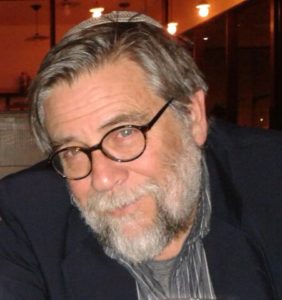
Eliahu Abram has worked since 1991 as a human rights lawyer in Israel. He served as a staff lawyer dealing with the rights of Palestinians in the Occupied Territories at the Association for Civil Rights in Israel; as a Director of the Legal Department at HaMoked: Center for the Defence of the Individual, dealing primarily with the residency rights of Palestinians in East Jerusalem and the Occupied Territories; and as Legal Director of the Public Committee Against Torture in Israel. In these capacities, he participated in arguing major human rights cases before Israel’s Supreme Court. He also served as Chairman of Defence of Children International – Israel Section. Since 2013 he has been active in Kav LaOved – Workers Hotline. In his private practice, he engages in criminal law and the defense of the rights of the mentally ill.

Maja Daruwala is currently Senior Advisor at Commonwealth Human Rights Initiative (CHRI), particularly focussing on the Access to Justice Programme. She was Director of CHRI for twenty years, until September 2016.
Maya has been working to advocate for rights and social justice for over thirty-five years. A barrister by training, she is actively engaged in numerous human rights initiatives, and concentrates on civil liberties including police reform, prison reform, right to information, legal literacy, non-discrimination, women’s rights, freedom of expression, and human rights advocacy capacity building. Maja’s interests lie particularly in the area of systemic reforms. She works tirelessly to demystify human rights and simplify technical issues of law and policy, for a variety of audiences. She focuses on mechanisms to reduce the distance between the standard and the practice.
Maja has lived and worked in India, England, Singapore, and Sri Lanka. She sits on several charitable boards including the International Women’s Health Coalition, Namati, International Record Management Trust, Public Affairs Centre (PAC) Bangalore, The Multiple Action Research Group and the Media Foundation.
She is a recipient of the Nani Palkiwala Award for protection and preservation of civil liberties in India. Maja believes the only way to be optimistic about the future is to invent it!
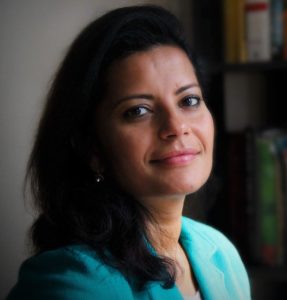
Sukti Dhital is a human rights lawyer and the Deputy Director of the Bernstein Institute for Human Rights at NYU School of Law, a cutting-edge center dedicated to research, education, and advocacy on human rights issues around the world, with a focus on legal empowerment. Previously, Sukti was the Executive Director and Co-Founder of Nazdeek, an award-winning legal empowerment organization committed to bringing access to justice closer to marginalized communities in India. At Nazdeek, Sukti worked closely with affected community members and social movements to advance labor, food, health, and housing rights through a community-driven approach.
Prior to Nazdeek, Sukti was the Director of the Reproductive Rights Unit at the Human Rights Law Network, India where she assisted in securing landmark social and economic rights judgments including Laxmi Mandal v. Deen Dayal Harinagar Hospital & ORS, W.P.(C) 8853/2008, the first decision by a national court to recognize maternal mortality as a human rights violation and the right to survive pregnancy a fundamental right protected by the Indian Constitution. Sukti has also worked at the American Civil Liberties Union’s Reproductive Freedom Project and the firm of Bingham McCutchen LLP. Sukti was born in Kathmandu, Nepal and lives in New York City.
Follow Sukti on Twitter: @sfdhital

Enrica is a project director at Nossas, a civic engagement laboratory in Brazil. Nossas has led projects on human rights, participatory politics and women empowerment through initiatives such as DefeZap, Meu Rio, Mapa do Acolhimento and Beta. Enrica is a political scientist with a degree from the New School. She has lived and worked in Brazil, South Africa, Japan, and Belgium before joining the organization in 2014.
Professor David McQuoid-Mason established the first law clinic at the University of KwaZulu-Natal in 1973, and the first Street Law program in South Africa in 1986. He has conducted clinical legal education training programmes for law teachers and clinicians in South Africa, West Africa, and East Africa. David has taught in continuing legal education courses for the legal profession across Africa. He has been a member of the International Bar Association’s continuing legal education panel for developing countries and has taught negotiation and mediation skills to law teachers, legal practitioners, and paralegals in Africa, the Middle East, Eastern Europe, and South America. He is an advocate of the High Court of South Africa and has authored and co-authored 21 books.
 Maria Generosa Mislang
Genee Mislang obtained her juris doctor degree from the Ateneo de Manila University in 1997 and passed the Philippine Bar Examinations in 1998. She obtained her undergraduate degree in Bachelor of Science in Physics from the same University in 1992. In 2002, she obtained her Master of Laws in Public Service Law degree from the New York University School of Law. She spent her internship at the Ateneo Human Rights Center assigned to Environmental Legal Assistance Center (Palawan) and PANLIPI (an indigenous peoples’ rights NGO). She joined Tanggol Kalikasan (Defense of Nature, a public interest environmental law office) in 1999 providing direct legal services to community clients (fisherfolk, farmers, upland dwellers, urban poor, and indigenous peoples) affected by various environmental issues, and conducts community paralegal training and environmental legal education for communities, law enforcers, government agency and local government officials, lawyers, judges and prosecutors. In July 2018, she joined the Alternative Law Groups (ALG), a coalition of non-government organizations with legal program components that adhere to the principles and values of alternative or developmental law, as National Coordinator. She is also a lecturer on Environment and Natural Resources Law at the Ateneo de Manila University School of Law, Philippines.
Manolo Morales is executive director of ECOLEX, an environmental law organization based in Quito, Ecuador. His training includes a Master’s degree in Environmental Law from the University of the Basque Country in Spain and an S.J.D. from the Central University of Ecuador, as well as other specialization courses on the environment in France, Israel and the United States. He served as President of the Committee of Environmental NGOs (CEDENMA) for two periods (2005-2009). He is also a member of the Environmental Law Alliance Worldwide (ELAW), of the IUCN Environmental Law Commission, President of the Inter-American Association for the Defense of the Environment (AIDA), part of the Advisory Board of Namati (Global Legal Empowerment Network), and part of IDB – External Consultative Group (MICI). He has worked with public and non-governmental entities at a national and international level in activities related to the management of agrarian and environmental conflicts, legalization of land and political influence. Manolo has expertise in the empowerment of indigenous and other marginalized communities so they may participate the in legal processes that affect their future. He has also pioneered a movement to train community paralegals within Ecuador.

Dr. Faustina Pereira is a Bangladeshi Human Rights lawyer and Development Specialist. She is Director (on leave), Human Rights and Legal Aid Services, BRAC; and Senior Advisor, Strategy and Programs, IDLO (International Development Law Organisation), based in The Netherlands. She played an active role in the advocacy for the inclusion of justice and the rule of law as development goals within the global development paradigm, which culminated in Goal 16 of the Sustainable Development Goals adopted by the United Nations.

Sebastián Pilo is Co-Director of ACIJ (Civil Association for Equality and Justice), a civil society organization that works to reverse inequality, defend the rights of disadvantaged populations and promote a better quality of democracy in Argentina.
He is a lawyer, graduated from the University of Buenos Aires (UBA). He has postgraduate studies on Administrative Law at the University of Palermo. He holds a Diploma on Transparency, Accountability and Anticorruption from the Human Rights Center of the University of Chile.
He has been working for more than 10 years on public interest law around constitutional issues and economic, social, cultural and environmental rights. He was a parliamentary advisor, university professor and he litigated numerous constitutional cases in Argentina. In ACIJ, he works on issues related to access to justice, community legal action, right to the city and right to housing.
Follow Sebastián on Twitter: @piloofkors
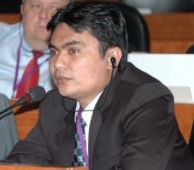
Uli Parulian Sihombing, a former public interest lawyer at the Legal Aid Office of Jakarta (LBH Jakarta), Executive Director of LBH Jakarta 2003-2006, Executive Director of Indonesian Legal Resource Center (ILRC). Obtaining a Bachelor Degree in Law (SH) at the University of Jenderal Sudirman in Purwokerto Indonesia, a Master of Law Degree (LLM) in Human Rights Central European University in Budapest Hungary, a Master of Law (MH) Degree in Law University of Pancasila in Jakarta Indonesia. Doctor in Law Candidate (Dr) Law School University of Brawijaya Indonesia.
Follow Uli on Twitter: @ulisihombing
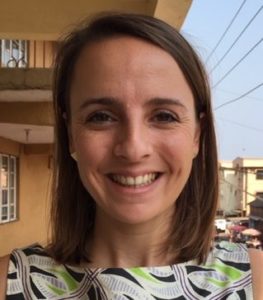
Rebecca Wood is the Executive Director of AdvocAid, a Sierra Leonean organization providing holistic support to women and girls in conflict with the law. Prior to joining AdvocAid in September 2018, Rebecca worked for BBC Media Action, the international development charity of the BBC. From 2013 – 2018 Rebecca was BBC Media Action’s Senior Projects Manager in Sierra Leone, managing a portfolio of national media and communication projects on a wide range of issues – from women’s rights and youth empowerment, to the Ebola responses and malaria behavior change. She holds a Master’s Degree in Conflict, Security and Development from the War Studies Department at King’s College London, and an undergraduate degree in Philosophy from the University of Edinburgh.

China’s Zhang Wanhong earned his Ph.D. in Law from Wuhan University School of Law, Wuhan, where he now holds the position of Professor of Jurisprudence. He has mainly been working on legal issues related to human rights, public interest, and civil society. The courses he offers include Jurisprudence, Comparative Law, Human Rights Law, Legal Empowerment Clinic, and others. He is the author and translator of a number of books, and has published articles in both international and Chinese publications. As the Director of Wuhan University Public Interest and Development Law Institute, Professor Zhang founded the Access to Justice in Rural China project. This project aims to provide citizens with access to relevant, effective, affordable, and independent legal advice and services all rural counties of Hubei province.
Community paralegal programs of different stripes exist throughout the world, and date back to at least the 1950s, when Black Sash and other organizations deployed paralegals to help non-white South Africans navigate and defend themselves against the apartheid regime in South Africa. In recent years, the paralegal approach has gained increasing attention from the international community. Despite this rise in attention, there has been very little systematic study of the workings of paralegal programs.
Namati is completing a six-country study of paralegal programs begun by the World Bank Justice for the Poor program. Our partners have completed research in Sierra Leone, Kenya, Indonesia, South Africa, Liberia and the Philippines. This study comparatively assesses paralegal programs’ impact on individuals, households, and patterns of local governance. It also assesses their scale, sustainability and their relationship to the state. The research draws on program case databases, interviews with paralegals, lawyers, program staff and other stakeholders.
The study is due to be finished soon, but three chapters are already complete, covering South Africa, Indonesia and The Philippines.
In the early 1980s Yayasan Lembaga Bantuan Hukum Indonesia / The Indonesia Legal Aid Foundation (YLBHI) began to train former clients, who were victims of human rights abuses under the New Order regime, to work as community paralegals. Additional civil society organizations began deploying paralegals in the 1990s, including Walhi, a major environmental network, and LBH Apik, Indonesia’s first legal aid organization focused on women. Today a coalition of organizations that includes these three is advocating for a legal aid act that would, among other things, recognize community paralegals as legal aid providers.
The World Bank Justice for the Poor program in Indonesia has engaged for several years in supporting and studying paralegals, and is our research partner for this country.
Paralegals first emerged here in the 1960s to assist non-white South Africans in navigating and defending themselves against the byzantine codes of the apartheid regime. Since 1994, South African paralegals have focused on areas such as pension benefits, the rights of people living with AIDS, employment issues, gender-based violence, and land restitution. In several ways paralegals in South Africa have progressed in the direction of professionalization and larger-scale organization: the National Alliance for the Development of Community Advice Offices (NADCAO) provides training and support to smaller paralegal programs; the University of Kwa Zulu Natal runs a degree program to train community paralegals; the national legal aid board extends resources, such as support from Legal Aid attorneys, to community-based paralegals. Legislation that would formally recognize the role community paralegals play had been tabled in parliament for several years and ultimately did not pass. A new framework for this legislation is being discussed by the NADCAO and the Department of Justice and Constitutional Development.
The Socio-Economic Rights Institute of South Africa (SERI) is our research partner in South Africa.
The “people power” movement that brought down Ferdinand Marcos in 1986 gave rise to “alternative law groups” that use the law to pursue social justice. Among these groups’ core strategies is providing training and support to community paralegals. Like Indonesia, many paralegals in the Philippines are members of farmers’, workers’, and other membership organizations; they provide services voluntarily to their fellow members.
Paralegals and alternative law groups have translated their grassroots experience into policy advocacy, and have succeeded in shaping the substance of agrarian and labor reforms. Paralegals are also now legally entitled to represent fellow citizens in some administrative tribunals.
Hector Solimon, Jenny Franco, and Maria Roda Cisnero comprise our research team. Participating organizations belong to the coalition Alternative Law Groups.
Timap for Justice is a Sierra Leonean community-based paralegal program founded in 2004. In 2009, Open Society Institute and the Government of Sierra Leone agreed to develop a national approach to justice services based in part on Timap’s methodology.
Justice for the Poor Sierra Leone is our research partner for Sierra Leone. In conducting our study, we are also laying the foundation for a lasting mechanism for monitoring and evaluating justice services: a research methodology, a strengthened case database, a cadre of trained researchers.
Kenyan NGOs and faith institutions have trained community paralegals since the early 1990s. Most paralegals in Kenya work as volunteers. They address a wide range of justice issues, including land claims, inheritance, labor rights, and monitoring of government expenditure.
Africa Institute for Health and Development is our research partner in Kenya.
The Catholic Justice and Peace Commission, a Liberian human rights organization, in partnership with The Carter Center, began the Community Legal Advisor program in 2007. In addition, local and international organizations including the Norwegian Refugee Council, Prison Fellowship Liberia, the Sustainable Development Institute and The Foundation for International Dignity, operate similar projects in Liberia.
The Liberia chapter is based on empirical research by Bilal Siddiqi of Stanford University and Justin Sandefur of the Center for Global Development.
Want to learn more about the podcast and explore more episodes? Click here to check out our podcast homepage!
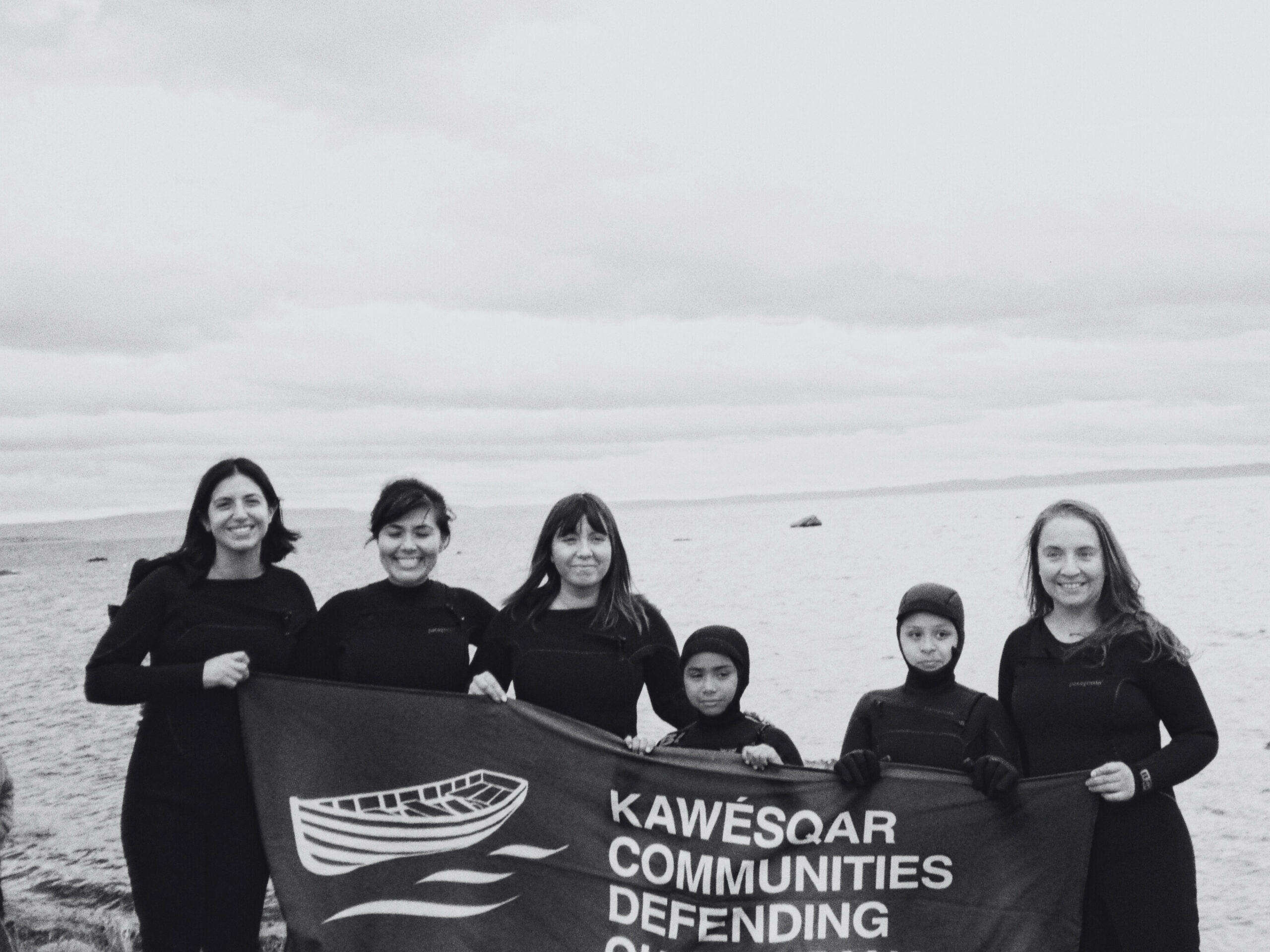
Members of FIMA and the Kawesqar community stand together in front of the ocean wearing wet suits and holding a banner that calls for defense of the sea. They are participating in a snorkeling workshop, as a way to encourage community participation and reclaim their ancestral waters in Chile. (Photo courtesy of: FIMA)
In 2020, a community activist by the name of Leticia Caro approached FIMA, a grassroots justice organization in Chile. Leticia, a member of the indigenous Kawésqar community in the Magallanes region, was worried about the environmental impact of companies that were moving into the fjords of the Kawésqar National Reserve.
In this episode, we’re going to take a dive into what lies beneath these fjords and their icy waters: Chile’s salmon farming industry. We’ll follow the story of FIMA and the community-led resistance that is defending the sea from this destructive industry. And we’ll find out what can happen when an indigenous community, grounded in deep traditions of communing with the natural world, combines the power of law and the power of organizing, to protect their sacred waters.
Special thanks to Macarena Martinic, Gabriela Simonetti Grez and FIMA.
This episode was produced by Jackie Sofia and Poorvi Chitalkar.
A Common Pot: Stories and Recipes for Grassroots Justice is a production of Namati and the Grassroots Justice Network. Support for “A Common Pot” is provided by IDRC Canada.
Follow the Grassroots Justice Network on Twitter, Facebook and YouTube @grassrootsjn, and share your thoughts with us by emailing community@namati.org.
A Common Pot: Stories and Recipes from Grassroots Justice
Episode 4: FIMA, “What Lies Beneath”
Macarena Martinic, FIMA [00:00:11] A fjord is like a mini island, lots of mini islands, one beside another, so it’s like a crackled territory. So Chile is very long, it’s very thin, and suddenly in its southern tail it becomes all of these crackled territories, so its like little islands one beside the other. And these fjords are not only special because they are islands, but the water between them- it’s really calm and it’s like this special mixture from marine water and also melted ice water from the mountains. So we have all of these species that can also have refuge here in the fjord. but there’s like marine wolves and a lot of bird types. And even there’s like marine elephants. A million years ago, Kawésqar communities also found refuge in those fjords.
Poorvi Chitalkar, Host [00:01:21] This is Macarena Martinic. She is the coordinator of empowerment and public participation at FIMA, a grassroots justice organization in Chile that works towards ensuring the right to a free and healthy environment. The cold and crackled region that Macarena is talking about is Magallanes, a region in Chilean Patagonia. In this episode, we’re gonna take a dive into what lies beneath these fjords and their icy waters: Chile’s salmon farming industry. We’ll follow the story of FIMA and the community led resistance that is defending the sea from this destructive industry. And we’ll find out what can happen when an indigenous community, grounded in deep traditions of communing with the natural world, combines the power of law and the power of organizing to protect their sacred waters. I’m your host, Poorvi Chitalkar. Stay with us.
Poorvi Chitalkar, Host [00:02:26] This is A Common Pot, a podcast where we explore stories and recipes for social justice and systems change from around the world.
Poorvi Chitalkar, Host [00:02:48] FIMA was created in 1998. They started out as a sort of prosecuting organization for environmental crimes. They would take on a particular issue and litigate it. But over the years, their role changed.
Macarena Martinic, FIMA [00:03:02] Yeah, there definitely has been an evolution. In ’98, when it was founded, we- Chile didn’t have an environmental institutionality. Now, since 2010, we have a solid environmental institutionality and FIMA was one of the organizations that was in that process. As a result, we now have environmental courts, we have an environmental assessment authority, we have- even we have an environmental ministry that we didn’t have in that time. We have special procedures for people to participate, to observe, to prosecute.
Poorvi Chitalkar, Host [00:03:45] While FIMA helped build many of these institutions and tools, they also started to help communities use them.
Macarena Martinic, FIMA [00:03:52] And was that calling just for FIMA’s help that started all of these relationships with different communities. And nowadays we have been working with communities for a long years. And in other cases, we are almost every month helping a new community.
Poorvi Chitalkar, Host [00:04:12] In 2020, the Kawésqar community approached FIMA for their help. The Kawésqar are an indigenous people from the Magallanes region.
Macarena Martinic, FIMA [00:04:24] Kawésqar people are a nomadic canoeist people who have inhabited and navigated the fjords and inland seas of Patagonia for thousands of years. So Kawésqar have been years and years navigating this entire territory. And now what they called the Kawésqar Wæs, that’s this huge, huge territory that they used to travel to, we know it as Patagonia.
Poorvi Chitalkar, Host [00:04:51] By the time the Kawésqar people approached FIMA, their ancestral territory was in serious danger.
Macarena Martinic, FIMA [00:04:59] The salmon farming industry is an industry that started in Chile in the 70s. So before that, we didn’t have salmon farming. Salmon is not a native or a fish that grew naturally in Chile; it’s something that was introduced in a moment just for economic reasons.
Poorvi Chitalkar, Host [00:05:20] Over the last 50 years, salmon farms have made their way south, down the coast of Chile. As more and more of the sea became polluted from these farms, companies kept moving south in search of cleaner and more pristine waters, until they set up shop in the southernmost region of Chile – Magallanes in Patagonia. And today, Chile is the second largest producer of farmed salmon in the world, generating 6.5 billion dollars in export revenue. If you look at them from above, salmon farms don’t look like much. They’re a thin grid-like structure that sits on the surface of the water. But underneath are pens enclosed by nets, each pen holding thousands of salmon. The salmon live their entire lives in these pens. The population density inside the pens makes it a breeding ground for bacteria growth and disease. And so, antibiotics get pumped into the water to try to prevent the spread of disease. those antibiotics make their way into other wild species. The manufactured fish food and concentrated fish waste end up creating dead zones that kill ocean life. Escaped salmon from these farms also eat the native fish. This means that fisher folk who rely on local species for income and as a way of feeding their families are suffering too. Eventually, the salmon are mature enough to be harvested and killed for export. A person eating the salmon often has no idea that the farm that it came from has endangered people’s entire way of life. These destructive salmon farms exist despite the fact that the Kawésqar community’s territory has protected status as a national reserve.
Macarena Martinic, FIMA [00:07:10] there is a space for interpretation and that’s what in Chile has been very bad done by different governmental institutions. And they have said that it is allowed for salmon industry to be in- placed in the National Reserve, even though it is a very aggressive industry, it has big environmental harms, and even though it is like quite obvious that this activity is not compatible with the National Reserve.
Poorvi Chitalkar, Host [00:07:45] Even though salmon farms are scientifically proven to harm local wildlife and communities, it’s pretty easy to get a permit for operating in the National Reserve. All a farm has to do is submit a declaration. This declaration gets reviewed by the Environmental Assessment Authorities.
Macarena Martinic, FIMA [00:08:01] Yeah, you don’t even apply, you just do it. What happens when you have a declaration is, it’s a- it’s like literal a declaration. So the private owner of the project is declaring, like in a good faith, that his project is not going to produce environmental impacts. So they’re like swearing to us and we need to trust them. And also there’s no public participation unless you request it. and you have like a very short term to request it. It’s only 30 days. And this request has to be accepted. So the environmental authority is going to decide if your public participation requirement fits. And this is like a big problem that we have identified in the most of the communities in Chile that are trying to protect their lands or the environment, that they don’t really know the law and they don’ really know how to participate when these projects are being environmentally assessed. But of course, the law doesn’t make it that easy.
Poorvi Chitalkar, Host [00:09:10] It is not easy. First, you may not even know that a declaration has been issued by a salmon farm. And even if you did find out, you would only have a small window of time to draft and submit a request letter that argues for the public to have a say. But the Kawésqar people didn’t have a choice. They needed to become environmental defenders quickly.
Macarena Martinic, FIMA [00:09:31] they are not environmental defenders. So they are just a family- a group of families that wants to fight for their cosmovision. They want to- they are also in this journey to get back their cosmovision.
Poorvi Chitalkar, Host [00:09:49] The Kawésqar people’s way of life is older than Chile itself. For thousands of years, they have navigated the area of Patagonia and beyond. And so, with the salmon farming industry threatening the sea, they HAVE to fight to keep their cosmovision alive. The meaning of the Kawésqar cosmovision is difficult to translate, but what’s unique about it is a close bond to the sea. The sea is at the heart of their culture. For the Kawésqar people, defending the sea also means conserving memory, honoring ancestors, and preserving their cultural identity.
Leticia Caro (archival tape, English interpretation from Spanish) [00:10:34] From the perspective of the elders, what is the most important force, perhaps the greatest spirit of the territory? No, it’s not just perhaps, it is the greatest. Since time immemorial, there have been certain restrictions related to the sea. These restrictions are called hayámes, which are taboos. They prohibit throwing objects into the water that do not belong to the sea, as doing so is believed to awaken monsters in the ocean depths. So, when I explain these to my children in those very words they begin to understand that there is a deep respect for that being, for that force that is present and that has guided us in both the past and the present.
Macarena Martinic, FIMA [00:11:21] They have another dynamic or structural intersection that is colonialism that, of course, is something forced and is driving away their identity and their cosmovision. So they are also in this process of gaining it back. This is all of the things that I have been learning from many, many talks with Leticia that has had the patience to tell me this story once over and over.
Poorvi Chitalkar, Host [00:11:56] Leticia Caro has become a leader in the Kawésqar community in Magallanes and their fight to defend the sea. Maca remembers when FIMA first started working with them.
Macarena Martinic, FIMA [00:12:05] Leticia Caro is one of the Kawésqar families’ representatives, reached to us. They were, on that time, facing problems with a legal figure that is supposed to protect a certain area for constitutonarios, for indigenous uses. So the area is given for the community’s administration if they prove that they use this area, and they have been using it for this time as their custom. So they had this trouble with these requirements.
Poorvi Chitalkar, Host [00:12:42] FIMA worked with Leticia to file a legal claim to protect an area inside the Kawésqar National Reserve by showing the court that the Kawésqar community was already using it according to their indigenous customs.
Macarena Martinic, FIMA [00:12:54] but it’s actually one of the most powerful weapons of this law. Salmon farming or other fishery- aquaculture industries are not allowed to ask or use their concessions.
Poorvi Chitalkar, Host [00:13:12] And they won that case. This was an important win for FIMA and the Kawésqar community. But it was just the beginning. Several cases followed, challenging various companies’ declarations to set up in the National Reserve. And each time, Maca and her team did their best to bring the community’s knowledge and the Kawésqar cosmovision into the courts.
Macarena Martinic, FIMA [00:13:34] It’s a balance you need to strike in a way, because we cannot of course file a legal action entirely based on the Kawésqar community’s knowledge, because we need to of course use the law to enter the court’s jurisdiction. But also we have like this important knowledge that could maybe shape law.
Poorvi Chitalkar, Host [00:13:59] They built their resistance against the salmon farming industry with two key strategies, or weapons, as Maca calls them. One: They challenged the decision of the Environmental Assessment Authority with something called general administrative recursive reclamations. This sounds super technical. But the gist of it is this: If you can prove that the company’s claims about the environmental risks posed by the project are false, then they could get shut down by the government. This became a kind of legal companion for the Kawésqar people’s existing knowledge. They knew that the salmon farms were wrecking more havoc on the environment than they let on. But they needed to prove it to the assessment authority. And that proof came by boat. The Kawésqar people had seen that employees of various different salmon farms were being picked up by the same boat at different ports in Magallanes.
Macarena Martinic, FIMA [00:14:57] they all were connected between them in a way because the same boat went from Natales or from Punta Arenas that took the working people to the center, that took back the salmons that were raised there- raised (laughs) – grown there. Now I’m getting attached to salmons.
Poorvi Chitalkar, Host [00:15:17] When FIMA and the community dug further, they found out that even though these salmon farms had registered as separate projects, they were in fact all operated by the same Norwegian-owned company called Nova Austral. And so they made the case that the environmental impact of all of these farms should be assessed together. FIMA and the Kawésqar community took this case all the way to the Supreme Court in Chile. And they won. The Supreme Court win set a precedent moving forward.
Macarena Martinic, FIMA [00:15:50] This was an important decision, not only because these projects weren’t able to develop here. The judge’s decision was very important for other cases of salmon farming, because it stated that it was needed an integral assessment of these projects and that was not being done, because most of the projects were fragmented. So, they were like units that each one entered into the assessment environmental process, but they needed to be assessed in a whole.
Poorvi Chitalkar, Host [00:16:25] Fighting projects that are already in operation is difficult and takes a long time. This one case alone, it took about eight years to move through the court system. But what if they could learn about the projects before they started? The second weapon also involved catching the companies in their own lie. FIMA and the Kawésqar community found company declarations that claimed that the public had had a chance to give feedback on the project, when in reality, this never happened. This also worked. Three salmon farming centers had their declarations denied and had to go back to the beginning of the application process. Another win for the Kawésqar community.
Macarena Martinic, FIMA [00:17:07] So we were able to get the Supreme Court to say there was no public participation made in the process and therefore there was an illegal violation of the right to participate, the right to environmental protections. And these projects went again entered into the environmental assessment process. And then the community started organizing again to make a lot of observations.
Poorvi Chitalkar, Host [00:17:34] Salmon farming isn’t the only threat facing this community. Coal mining poses significant environmental and community risks. And now, the heavy winds that blow through this region are being coveted for hydrogen production. There are at least 22 hydrogen projects in Magallanes, and all the energy they produce is being exported to Europe. Even though this is seen as a quote-unquote green energy source, it copies the same old patterns of harming communities that come with other forms of resource extraction. The truth is, the Kawésqar community will have to continue defending their territory for the foreseeable future. To get there, FIMA has worked with Leticia and others in the community to build their knowledge of the law and their ability to use the law themselves.
Macarena Martinic, FIMA [00:18:22] Like, how can we work with communities that is not only around a legal strategy? First, it was mainly throughout, like, classic legal empowerment, to say, that it was workshops and bringing them to the process throughout activities where they could know the law.
Poorvi Chitalkar, Host [00:18:41] It was difficult for Maca to know if all of FIMA’s efforts were making any difference, were building any sort of capacity. But then, something happened.
Macarena Martinic, FIMA [00:18:52] We were laughing a couple of months ago with a colleague from FIMA when Leticia sent us a document. It was a legal document. It was something that it was a specific requirement of having an environmental assessment ended. And she sent us one for one project. We thought at first that she was asking us if we could fill it, if we can make this petition for the environmental authority regarding this specific project. So we asked her, what was this about? And she answered us, “No. I’m sending this just for you to know.” “To know what?” “To know that I already presented this.” And she had already made her document. She had already presented it. This was just like a notice for us. that felt so good, so we are hopeful that she could maybe transmit this knowledge to other Kawésqar members and that really like make- give sense to our work.
Poorvi Chitalkar, Host [00:19:59] While Maca and her team are helping the community understand the law, they are also making sure that the law pays attention to the Kawésqar knowledge and cosmovision. They have recently put this to the test in the case of the Canal Kirke.
Macarena Martinic, FIMA [00:20:14] We had this recent hearing in Valdivia. It’s a project that pretends to explode a canal where- an important canal for Kawésqar communities, they want to explode it in order to broaden it and bigger ships can go through. It is Canal Kirke. Beautiful place with amazing animals, birds, views and amazing stories- Kawésqar stories of what happens there, how Kawésqar women taught their kids to navigate, to know the territory. If the Kirke was aggressive you couldn’t navigate through the Kirke. Kawésqar wisdom just like taught you to wait, maybe this is not the time, that maybe the canal is not ready for us going.
Poorvi Chitalkar, Host [00:21:14] A couple months ago, FIMA concluded their arguments in the case to protect the canal. In addition to technical and legal arguments, they included the Kawésqar cosmovision, which argues for a more respectful and less extractive relationship with nature.
Macarena Martinic, FIMA [00:21:48] They document reports and a lot of testimonies and time of the Kawésqar community, so I really hope I could say you in a couple of months something different and that our strategy of bringing the cosmovision of the Kawésqars is like giving success. It was something important in that hearing and there was a lot of people watching. It was really exciting.
Poorvi Chitalkar, Host [00:22:18] The Canal Kirke case and the salmon farming resistance show how incremental wins take time. And the years that it takes for these incremental wins to happen, that long wait can feed frustration in the community.
Macarena Martinic, FIMA [00:22:31] Frustration is something really close and really present throughout all of this process and that’s something that it’s difficult to work with because frustration is not only a feeling, it’s also something that can weaken the organization, can weaken bonds between communities. It can also generate untrust, desconfianza, of the organization and the strategy. So time is a challenge itself. So that’s something that we usually talk with the communities when we start working, like from the start. And I think what’s most important is we need to make sure that our work is not exclusively a legal strategy, because we know that even after long processes and after good decisions, even that doesn’t mean justice for the territories.
Poorvi Chitalkar, Host [00:23:32] And if the long wait and uncertain processes aren’t challenging enough, FIMA and the Kawésqar community are up against another big challenge: there’s a false narrative brewing that frames them as being anti-development and anti-progress. The narrative goes something like this…
Macarena Martinic, FIMA [00:23:49] “They are getting and messing into the things, threatening our ways of living and mainly our job, because they have their conservative environmental interests, own interests.” So it’s like a really ancient narrative, but that has been increasing in the last maybe two years. Really, really strong in the salmon farming industry. So we believe the narrative starts in companies, but companies are not really the ones that are saying this, like on the media, on interviews. It’s the workers.
Poorvi Chitalkar, Host [00:24:37] And even within the Kawésqar community, there are different views. There are “the Kawésqar people who defend the sea,” and then there are Kawésqar people who rely on these salmon farming companies to earn a living and feed their families.
Macarena Martinic, FIMA [00:24:52] Yeah, of course. Probably there are more Kawésqar families that works for the industry, or they just don’t care. Maybe they have decided, because they can and it’s perfect, it’s okay, they don’t want to recover their cosmovision. That’s why the Kawésqar communities that we work with, they call themselves as the “Kawésqar communities that defend the sea,” because it’s not inherently as Kawésqar. One of the impacts that they denounce from the salmon farming industries, of course, how social tissue and also their links among, like in their own family has been deteriorating. Being accused if you are working in a certain place, being accused if you are opposing a project, having this, like, binary decisions of course can break any family.
Poorvi Chitalkar, Host [00:25:59] FIMA and the Kawésqar who defend the sea have been fielding baseless attacks on the salmon farming resistance for a while now, but recently it’s gotten worse. A couple years ago, FIMA was running a legal empowerment workshop in Puerto Natales and things took a turn.
Macarena Martinic, FIMA [00:26:16] It was open as always. So we were really like teaching people how to make complaints in the environmental prosecutor agency. That was it. It was like really basic. But it was a moment where we had like just win a couple of months before. And of course, workers were really annoyed. They didn’t allow people to talk. They made like suggesting questions of, “Why are you here? Why are you taking our jobs? What have we done to you?” They didn’t like allow to carry on with the workshop. In our case we were three women colleagues, so they treated us like as little girls and, “You don’t know what we do. You don’t know how our work is done.” We were talking about an administrative process and they would ask us like, “Do you know how technically a cage type F works?” Like things that really weren’t into the case, to demonstrate that we didn’t know what we were talking about when talking about salmon farming. And we couldn’t go on with the workshop.
Poorvi Chitalkar, Host [00:27:26] This was just one instance of many. Maca and her team know the powers behind it too.
Macarena Martinic, FIMA [00:27:32] And they are also supported by right-handed parliamentaries that are pushing the agenda of the industry in the parliament. So that’s what the narrative is about. And it’s hard. Like, people who are living in Magallanes, it’s appealing to fear, it’s appealing to insecurity. And that, of course, divides the community, with of course, normal consequence of environmental defenders that live there and indigenous communities feeling their security threatened.
Poorvi Chitalkar, Host [00:28:06] FIMA has responded to these attacks with transparency. They’ve published clear evidence in defense of their work on their website. And they’ve published opinion columns in reputed media outlets. But they’re beginning to see how this is a trap.
Macarena Martinic, FIMA [00:28:21] We didn’t want, like, people to feel we were hiding things. But also, we don’t want to fall. And that’s something that we believe that one of their main objectives is that we use our time and our energy in defending ourselves. And that’s something that has happened. We have been likewise other years, now we have been SLAPPed in more than one case.
Poorvi Chitalkar, Host [00:28:49] SLAPPs are strategic lawsuits against public participation. Essentially, these are bogus lawsuits that are brought to harass and silence justice defenders, often by the companies that they’re trying to hold accountable.
Macarena Martinic, FIMA [00:29:03] So, we have, and we need to spend time in this. And that’s something that we wouldn’t like to do, but it’s something that we are facing and we have to do. So we need to choose which of the battles give, so we can also have time and energy to keep our work on. So it’s not easy.
Poorvi Chitalkar, Host [00:29:25] This narrative question weighs heavily on FIMA’s minds. It’s also a struggle for lots of grassroots justice organizations around the world. To respond to these false and negative narratives, communities are often asked what their version is- what is YOUR counter-narrative?
Macarena Martinic, FIMA [00:29:41] A powerful narrative is a narrative that is built from below and that is built from also the communities that we work for and that we want our narrative to work for. So, narratives in the case of Magallanes is something we want to really start working with them and see how we can face this together. We usually work a lot from the opposing way, because of mainly how legal strategies work. And we usually react a lot. But this working with narratives takes you- like, pushes you to go into a more positive, creative language. And also, it’s not easy to be an indigenous community in Chile, nor in Latin America. No, maybe not in any country in the world. So, you need to take into account that maybe your narrative is never going to be massive and that doesn’t matter. It’s your narrative too, and you need to like own it.
Poorvi Chitalkar, Host [00:30:55] Maca reminds us that in a way, the counter-narrative, the answer to this question that asks the community what their version of development is, what they would like the economic future to look like for their children and grandchildren, is both simple, but also complex.
Macarena Martinic, FIMA [00:31:14] Yes, and no. (Laughs.) They have this imaginary where Kawésqar cosmovision is again something they can live in, something they are not defending, that is respected also. But I believe they still are in an unfortunate moment where they need to still be defending themselves and saving their cosmovision and resisting. They come from a process that was something very different before that has all of these structural things intertwined, like their way of life has been changing a lot; the indigenous legal tools that are protecting indigenous communities are demanding them to be indigenous, but they’re also like being part, like us, of a process that we’re all going to as society. We can call it globalization, or maybe like development, or whatever, but I do know they want to stop defending and they want a place where they can reconnect with their cosmovision.
Poorvi Chitalkar, Host [00:32:35] I asked Maca to share a recipe with us, it could be food or drink, that captures the spirit of Magallanes and this story.
Macarena Martinic, FIMA [00:32:42] Calafate is a berry that is typical from the region. And also, lots of people recollects calafate. Kawésqar communities also have this important activity in recollecting calafate. Before now, if you go to Magallanes, you start seeing all the calafate products that there are. But it, like, has the perfect acid flavor you need in that cold region, and beautiful region. And it’s like making pisco sour that is like a Chilean and Peruvian also drink. And in this case you would have pisco, sugar, lime- it’s also with lime but you would add like calafate syrup as you like. I recommend. And if you have the calafate syrup nothing can go bad.
Poorvi Chitalkar, Host [00:33:33] One of the legends of the region is that anyone who eats the calafate berry will find themselves in Patagonia. The other week, our colleague Claudia brought back the mythological calafate berry in the form of a small jar of jam. It sat on the counter, glistening a ruby red through the glass. Jackie and I dug into this precious treat and realized the legend was true. We were immediately transported to Magallanes, with its sparkling vast ocean and gusts win. We felt the beauty of the Kawésqar Wæs and the fragility of those crackled icy fjords and all the lives that call it home.
Poorvi Chitalkar, Host [00:34:30] This episode was produced by me, Poorvi Chitalkar. Our managing producer is Jackie Sofia. Audio engineering and sound design by Mohamad Khreizat. Editorial support by the Namati Communications team. Additional support by Anuradha Joshi, Claudia Cote, and Catalina Marino. A very special thanks to Macarena Martinic and Gabriela Simonetti Grez of FIMA, for sharing their story with us. Thanks also to Canada’s International Development Research Centre, whose support makes this work possible. A Common Pot: stories and recipes of grassroots justice, is a production of Namati and the Grassroots Justice Network. To join the network, head to www.grassrootsjusticenetwork.org and follow us on social media, on YouTube, X (formerly Twitter), and Facebook @grassrootsjn.
Namati and SDI’s ‘how to’ guide for Liberian communities. The Community Guide to Protecting Community Lands and Resources provides information and instructions that communities can use to guide their land protection efforts.
Deciding whether or not to allow an investor to use community lands and natural resources is one of the most important decisions a community can make.
When negotiations are conducted fairly and inclusively, investments may result in the creation of jobs, provision of much-needed infrastructure such as schools, roads and clinics, and rental payments that have the potential to support the community’s long-term prosperity and wellbeing.
Unfortunately, consultations between communities and investors are typically characterized by significant information and power imbalances. Community members often don’t know what rights they have, what fair compensation would be, or what is required to make a contract clear and enforceable. Without such a contract, communities are often powerless to hold an investor acting in bad faith accountable, demand remedies for environmental and social damages, or contain an expanding investment to the plot of land originally agreed upon.
Namati and CCSI’s new Community-Investor Negotiation Guides help communities and frontline advocates to engage with potential investors from a place of empowerment.
Drawing on lessons from dozens of community-investor contracts and communities’ experiences from around the world, the two guides offer practical information and accessible legal guidance. They are the first resources of their kind.
Guide 1 (found here) explains how communities can prepare for interactions with potential future investors and decide whether or not to enter into discussions or negotiations with an investor that has arrived. It is designed to be used before any negotiations start.
This guide (guide 2) contains advice for communities who have agreed to negotiate with a potential investor. It describes the various sections and clauses that should be in a contract, advises what protective language to include, and warns of “red flag” language to avoid. It is designed to help communities and their frontline advocates to negotiate clear, fair, and enforceable contracts that require investors to respect community interests, conserve the local environment, and support the community’s development—all on the community’s own terms.
Note: You can access a low resolution of the guide using the ‘download resource’ button in the top-right corner of this page. If you have a strong internet connection and would like to download a higher resolution version, click here.
We encourage all readers to share their comments, questions, and experiences with the guides’ authors and contributors, and the broader community, via this post on the Global Legal Empowerment Network’s online forum.
This resource is also available in French and Spanish.
Deciding whether or not to allow an investor to use community lands and natural resources is one of the most important decisions a community can make.
When negotiations are conducted fairly and inclusively, investments may result in the creation of jobs, provision of much-needed infrastructure such as schools, roads and clinics, and rental payments that have the potential to support the community’s long-term prosperity and wellbeing.
Unfortunately, consultations between communities and investors are typically characterized by significant information and power imbalances. Community members often don’t know what rights they have, what fair compensation would be, or what is required to make a contract clear and enforceable. Without such a contract, communities are often powerless to hold an investor acting in bad faith accountable, demand remedies for environmental and social damages, or contain an expanding investment to the plot of land originally agreed upon.
The Community-Investor Negotiation Guides equip communities and frontline advocates to engage with potential investors from a place of empowerment.
Drawing on lessons from dozens of community-investor contracts and communities’ experiences from around the world, the two guides offer practical information and accessible legal guidance. They are the first resources of their kind.
This guide, Guide 1: Preparing in Advance for Potential Investors, details how a community can:
1) Create a shared vision for their future development, so they can assess whether an investment would be in their best interest;
2) Understand the holistic value of their land in order to better assess investors’ offers;
3) Make rules to guide how they and their leaders will interact with potential investors and help to manage their lands and natural resource sustainably and equitably;
4) Work to resolve intra-community conflicts around how to react to potential investors; and
5) Prepare for negotiations by researching the investor, creating a negotiating team, and agreeing on points the team will advocate for incorporation into the contract.
It also details community members’ legal rights and explains what an authentic “consultation” should include.
If a community decides to engage further with a potential investor, Guide 2 provides information and advice designed to help communities and frontline advocates negotiate clear, fair, and enforceable contracts with investors.
Note: You can access a low resolution of the guide using the ‘download resource’ button in the top-right corner of this page. If you have a strong internet connection and would like to download a higher resolution version, click here.
This resource is also available in Swahili, French and Spanish.
We encourage all readers to share their comments, questions, and experiences with the guides’ authors and contributors and the broader community via this post on the Global Legal Empowerment Network’s online forum.
Deciding whether or not to allow an investor to use community lands and natural resources is one of the most important decisions a community can make.
When negotiations are conducted fairly and inclusively, investments may result in the creation of jobs, provision of much-needed infrastructure such as schools, roads and clinics, and rental payments that have the potential to support the community’s long-term prosperity and wellbeing.
Unfortunately, consultations between communities and investors are typically characterized by significant information and power imbalances. Community members often don’t know what rights they have, what fair compensation would be, or what is required to make a contract clear and enforceable. Without such a contract, communities are often powerless to hold an investor acting in bad faith accountable, demand remedies for environmental and social damages, or contain an expanding investment to the plot of land originally agreed upon.
The Community-Investor Negotiation Guides equip communities and frontline advocates to engage with potential investors from a place of empowerment.
Drawing on lessons from dozens of community-investor contracts and communities’ experiences from around the world, the two guides offer practical information and accessible legal guidance. They are the first resources of their kind.
This guide, Guide 1: Preparing in Advance for Potential Investors, details how a community can:
1) Create a shared vision for their future development, so they can assess whether an investment would be in their best interest;
2) Understand the holistic value of their land in order to better assess investors’ offers;
3) Make rules to guide how they and their leaders will interact with potential investors and help to manage their lands and natural resource sustainably and equitably;
4) Work to resolve intra-community conflicts around how to react to potential investors; and
5) Prepare for negotiations by researching the investor, creating a negotiating team, and agreeing on points the team will advocate for incorporation into the contract.
It also details community members’ legal rights and explains what an authentic “consultation” should include.
If a community decides to engage further with a potential investor, Guide 2 provides information and advice designed to help communities and frontline advocates negotiate clear, fair, and enforceable contracts with investors.
This resource is also available in English, French and Spanish.
We encourage all readers to share their comments, questions, and experiences with the guides’ authors and contributors and the broader community via this post on the Global Legal Empowerment Network’s online forum.