

Eliahu Abram has worked since 1991 as a human rights lawyer in Israel. He served as a staff lawyer dealing with the rights of Palestinians in the Occupied Territories at the Association for Civil Rights in Israel; as a Director of the Legal Department at HaMoked: Center for the Defence of the Individual, dealing primarily with the residency rights of Palestinians in East Jerusalem and the Occupied Territories; and as Legal Director of the Public Committee Against Torture in Israel. In these capacities, he participated in arguing major human rights cases before Israel’s Supreme Court. He also served as Chairman of Defence of Children International – Israel Section. Since 2013 he has been active in Kav LaOved – Workers Hotline. In his private practice, he engages in criminal law and the defense of the rights of the mentally ill.

Maja Daruwala is currently Senior Advisor at Commonwealth Human Rights Initiative (CHRI), particularly focussing on the Access to Justice Programme. She was Director of CHRI for twenty years, until September 2016.
Maya has been working to advocate for rights and social justice for over thirty-five years. A barrister by training, she is actively engaged in numerous human rights initiatives, and concentrates on civil liberties including police reform, prison reform, right to information, legal literacy, non-discrimination, women’s rights, freedom of expression, and human rights advocacy capacity building. Maja’s interests lie particularly in the area of systemic reforms. She works tirelessly to demystify human rights and simplify technical issues of law and policy, for a variety of audiences. She focuses on mechanisms to reduce the distance between the standard and the practice.
Maja has lived and worked in India, England, Singapore, and Sri Lanka. She sits on several charitable boards including the International Women’s Health Coalition, Namati, International Record Management Trust, Public Affairs Centre (PAC) Bangalore, The Multiple Action Research Group and the Media Foundation.
She is a recipient of the Nani Palkiwala Award for protection and preservation of civil liberties in India. Maja believes the only way to be optimistic about the future is to invent it!

Sukti Dhital is a human rights lawyer and the Deputy Director of the Bernstein Institute for Human Rights at NYU School of Law, a cutting-edge center dedicated to research, education, and advocacy on human rights issues around the world, with a focus on legal empowerment. Previously, Sukti was the Executive Director and Co-Founder of Nazdeek, an award-winning legal empowerment organization committed to bringing access to justice closer to marginalized communities in India. At Nazdeek, Sukti worked closely with affected community members and social movements to advance labor, food, health, and housing rights through a community-driven approach.
Prior to Nazdeek, Sukti was the Director of the Reproductive Rights Unit at the Human Rights Law Network, India where she assisted in securing landmark social and economic rights judgments including Laxmi Mandal v. Deen Dayal Harinagar Hospital & ORS, W.P.(C) 8853/2008, the first decision by a national court to recognize maternal mortality as a human rights violation and the right to survive pregnancy a fundamental right protected by the Indian Constitution. Sukti has also worked at the American Civil Liberties Union’s Reproductive Freedom Project and the firm of Bingham McCutchen LLP. Sukti was born in Kathmandu, Nepal and lives in New York City.
Follow Sukti on Twitter: @sfdhital

Enrica is a project director at Nossas, a civic engagement laboratory in Brazil. Nossas has led projects on human rights, participatory politics and women empowerment through initiatives such as DefeZap, Meu Rio, Mapa do Acolhimento and Beta. Enrica is a political scientist with a degree from the New School. She has lived and worked in Brazil, South Africa, Japan, and Belgium before joining the organization in 2014.

Professor David McQuoid-Mason established the first law clinic at the University of KwaZulu-Natal in 1973, and the first Street Law program in South Africa in 1986. He has conducted clinical legal education training programmes for law teachers and clinicians in South Africa, West Africa, and East Africa. David has taught in continuing legal education courses for the legal profession across Africa. He has been a member of the International Bar Association’s continuing legal education panel for developing countries and has taught negotiation and mediation skills to law teachers, legal practitioners, and paralegals in Africa, the Middle East, Eastern Europe, and South America. He is an advocate of the High Court of South Africa and has authored and co-authored 21 books.
 Maria Generosa Mislang
Genee Mislang obtained her juris doctor degree from the Ateneo de Manila University in 1997 and passed the Philippine Bar Examinations in 1998. She obtained her undergraduate degree in Bachelor of Science in Physics from the same University in 1992. In 2002, she obtained her Master of Laws in Public Service Law degree from the New York University School of Law. She spent her internship at the Ateneo Human Rights Center assigned to Environmental Legal Assistance Center (Palawan) and PANLIPI (an indigenous peoples’ rights NGO). She joined Tanggol Kalikasan (Defense of Nature, a public interest environmental law office) in 1999 providing direct legal services to community clients (fisherfolk, farmers, upland dwellers, urban poor, and indigenous peoples) affected by various environmental issues, and conducts community paralegal training and environmental legal education for communities, law enforcers, government agency and local government officials, lawyers, judges and prosecutors. In July 2018, she joined the Alternative Law Groups (ALG), a coalition of non-government organizations with legal program components that adhere to the principles and values of alternative or developmental law, as National Coordinator. She is also a lecturer on Environment and Natural Resources Law at the Ateneo de Manila University School of Law, Philippines.

Manolo Morales is executive director of ECOLEX, an environmental law organization based in Quito, Ecuador. His training includes a Master’s degree in Environmental Law from the University of the Basque Country in Spain and an S.J.D. from the Central University of Ecuador, as well as other specialization courses on the environment in France, Israel and the United States. He served as President of the Committee of Environmental NGOs (CEDENMA) for two periods (2005-2009). He is also a member of the Environmental Law Alliance Worldwide (ELAW), of the IUCN Environmental Law Commission, President of the Inter-American Association for the Defense of the Environment (AIDA), part of the Advisory Board of Namati (Global Legal Empowerment Network), and part of IDB – External Consultative Group (MICI). He has worked with public and non-governmental entities at a national and international level in activities related to the management of agrarian and environmental conflicts, legalization of land and political influence. Manolo has expertise in the empowerment of indigenous and other marginalized communities so they may participate the in legal processes that affect their future. He has also pioneered a movement to train community paralegals within Ecuador.

Dr. Faustina Pereira is a Bangladeshi Human Rights lawyer and Development Specialist. She is Director (on leave), Human Rights and Legal Aid Services, BRAC; and Senior Advisor, Strategy and Programs, IDLO (International Development Law Organisation), based in The Netherlands. She played an active role in the advocacy for the inclusion of justice and the rule of law as development goals within the global development paradigm, which culminated in Goal 16 of the Sustainable Development Goals adopted by the United Nations.

Sebastián Pilo is Co-Director of ACIJ (Civil Association for Equality and Justice), a civil society organization that works to reverse inequality, defend the rights of disadvantaged populations and promote a better quality of democracy in Argentina.
He is a lawyer, graduated from the University of Buenos Aires (UBA). He has postgraduate studies on Administrative Law at the University of Palermo. He holds a Diploma on Transparency, Accountability and Anticorruption from the Human Rights Center of the University of Chile.
He has been working for more than 10 years on public interest law around constitutional issues and economic, social, cultural and environmental rights. He was a parliamentary advisor, university professor and he litigated numerous constitutional cases in Argentina. In ACIJ, he works on issues related to access to justice, community legal action, right to the city and right to housing.
Follow Sebastián on Twitter: @piloofkors
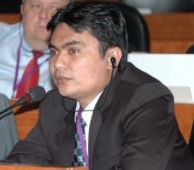
Uli Parulian Sihombing, a former public interest lawyer at the Legal Aid Office of Jakarta (LBH Jakarta), Executive Director of LBH Jakarta 2003-2006, Executive Director of Indonesian Legal Resource Center (ILRC). Obtaining a Bachelor Degree in Law (SH) at the University of Jenderal Sudirman in Purwokerto Indonesia, a Master of Law Degree (LLM) in Human Rights Central European University in Budapest Hungary, a Master of Law (MH) Degree in Law University of Pancasila in Jakarta Indonesia. Doctor in Law Candidate (Dr) Law School University of Brawijaya Indonesia.
Follow Uli on Twitter: @ulisihombing

Rebecca Wood is the Executive Director of AdvocAid, a Sierra Leonean organization providing holistic support to women and girls in conflict with the law. Prior to joining AdvocAid in September 2018, Rebecca worked for BBC Media Action, the international development charity of the BBC. From 2013 – 2018 Rebecca was BBC Media Action’s Senior Projects Manager in Sierra Leone, managing a portfolio of national media and communication projects on a wide range of issues – from women’s rights and youth empowerment, to the Ebola responses and malaria behavior change. She holds a Master’s Degree in Conflict, Security and Development from the War Studies Department at King’s College London, and an undergraduate degree in Philosophy from the University of Edinburgh.

China’s Zhang Wanhong earned his Ph.D. in Law from Wuhan University School of Law, Wuhan, where he now holds the position of Professor of Jurisprudence. He has mainly been working on legal issues related to human rights, public interest, and civil society. The courses he offers include Jurisprudence, Comparative Law, Human Rights Law, Legal Empowerment Clinic, and others. He is the author and translator of a number of books, and has published articles in both international and Chinese publications. As the Director of Wuhan University Public Interest and Development Law Institute, Professor Zhang founded the Access to Justice in Rural China project. This project aims to provide citizens with access to relevant, effective, affordable, and independent legal advice and services all rural counties of Hubei province.
The biennial Grassroots Justice Prize is the world’s only competition recognizing grassroots organizations and institutions that are working to put the power of law into people’s hands. And now you have the chance to choose one of the winners!
We received nearly 200 applications from around the world for the Grassroots Justice Prize. A panel of judges shortlisted five candidates for the public vote award. These pioneering organizations use legal empowerment to tackle some of the most pressing issues of our time—land rights, women’s rights, children’s rights, and migrant rights. They work every day to narrow the justice gap that has left billions of people behind. Which one will win is up to you.
Learn about the five candidates below, and vote for your favorite to win!

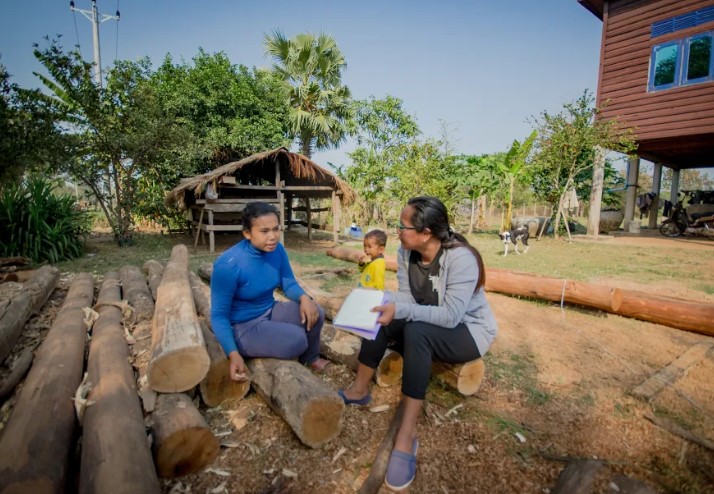
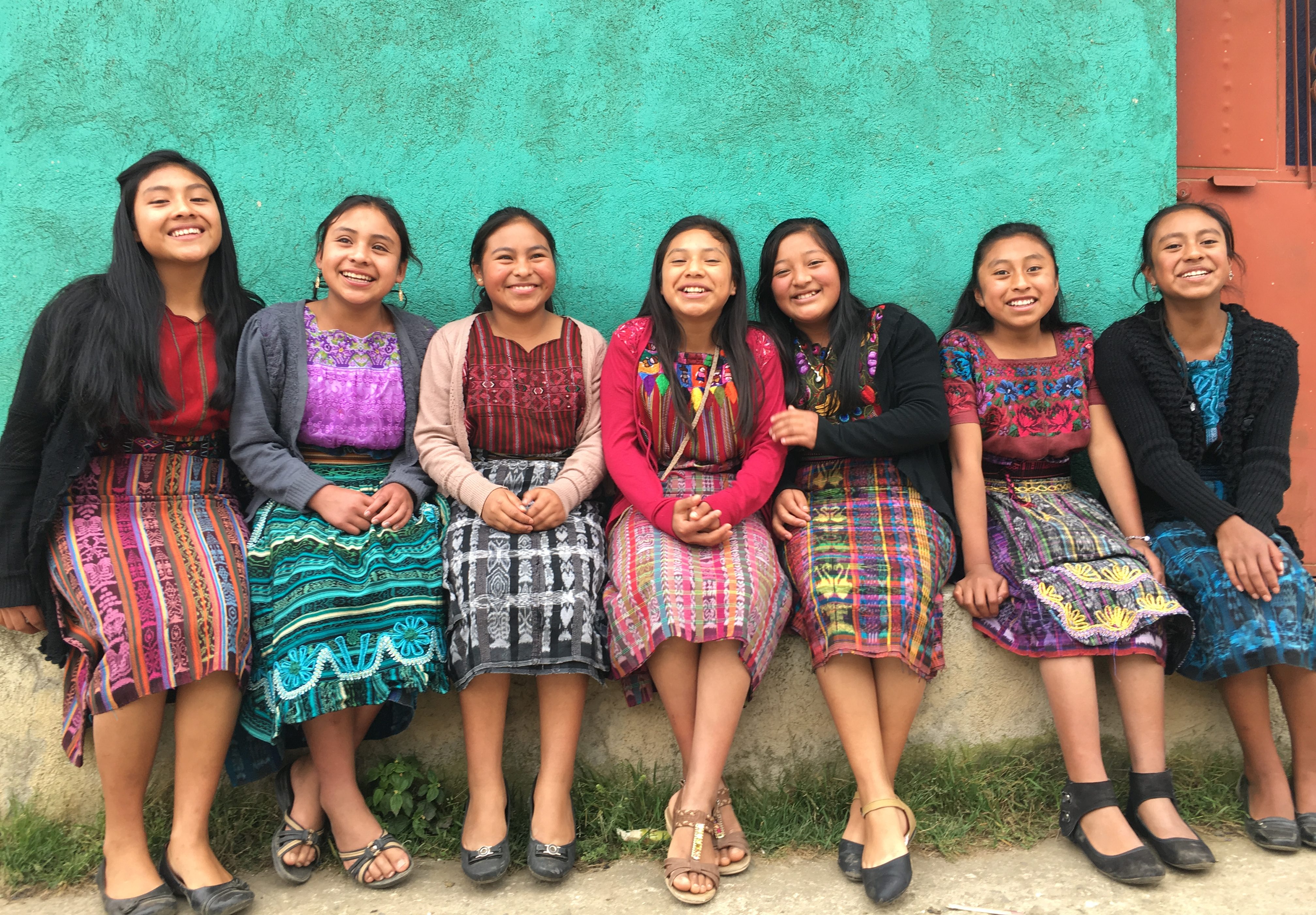
We’ll announce the winner of the public vote—along with the winners of the Grassroots Justice Prize’s three main awards—at a special event on July 15, 2019, during the High-Level Political Forum in New York. The public vote winner will also receive an award of $1000 USD and a seat at the 2019 Legal Empowerment Leadership Course.
Country or region
Central America/North America
A quick look
In this 90-second video, founder and executive director, Cathleen Caron, explains why and how Justice in Motion is empowering migrants to defend their rights.
The justice challenge
In the face of overwhelming legal and practical barriers, many migrants who have suffered exploitation or abuse at the hands of employers or government officials give up their rights after leaving the United States. Other migrants who flee abuse, violence, and persecution are unable to remain in safety due to lack of evidence to support their claims. These migrants need “portable justice”: the right and ability to access justice across borders.
Organization and/or project’s mission
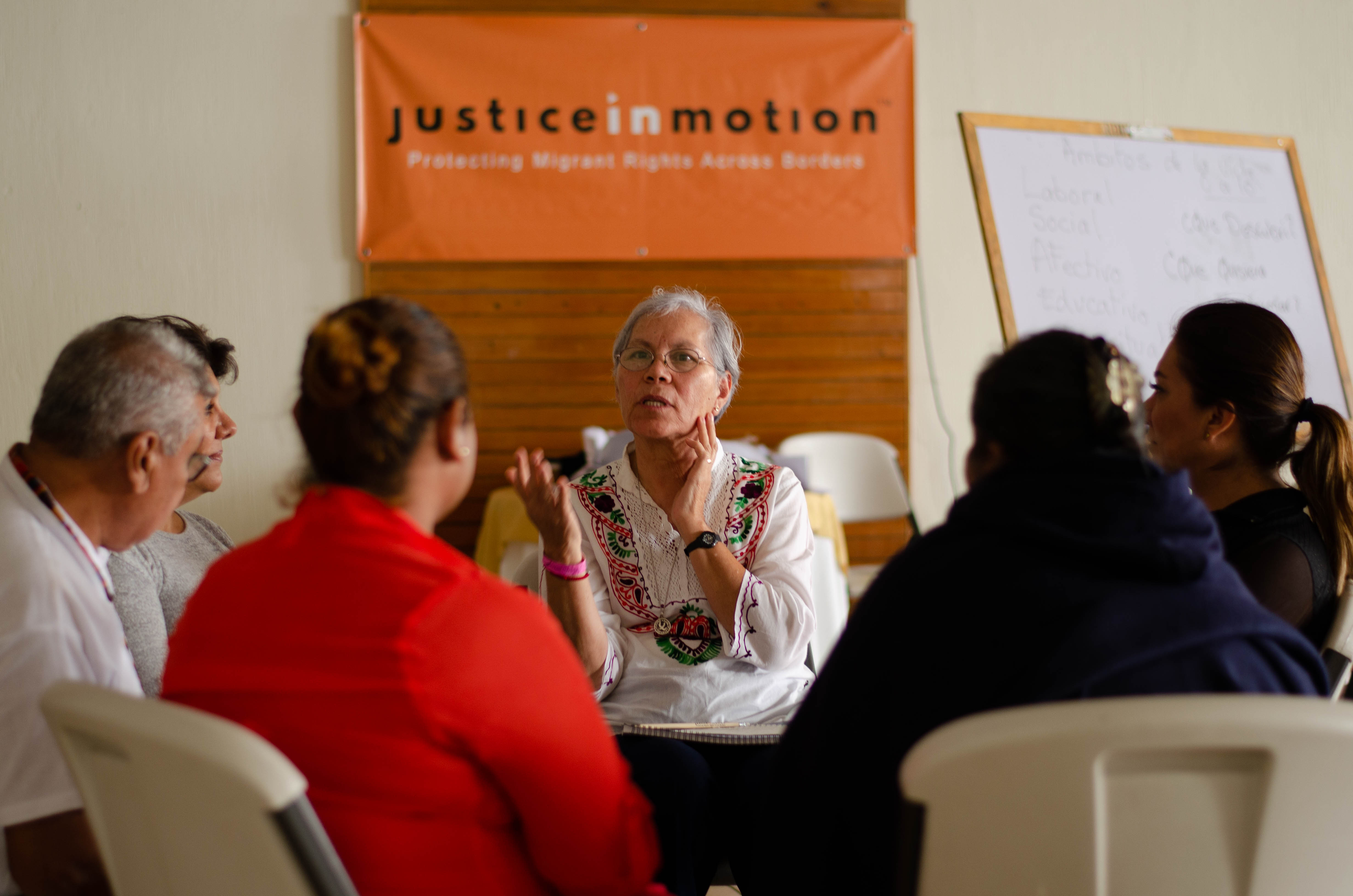
Justice in Motion (JiM) is dedicated to securing portable justice through legal, educational, and policy initiatives in the U.S., Canada, Mexico, and Central America. Essential to this transnational model is their Defender Network, a unique partnership of on-the-ground human rights organizations in Mexico and Central America. Justice in Motion makes sure that wherever migrants go their rights will follow.
How legal empowerment is used to address the injustice
Legal empowerment has been core to Justice in Motion’s mission since it’s founding 14 years ago. Our Defender Network, an alliance of 43 human rights organizations across Mexico and Central America, is now the primary vehicle for this work.
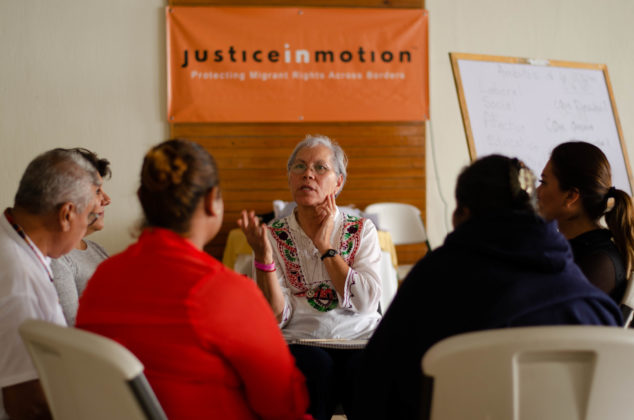
We support Defenders—on-the-ground lawyers and community—by providing them with in-depth trainings and resources on U.S. and Canadian legal frameworks. Defenders then provide accurate information and refer legal cases for people in their communities, whether they are evaluating the legitimacy of a work visa offer, or seeking justice for a civil rights violation during detention or deportation. Defenders work closely with these migrants to equip them with the knowledge, resources, and connections to defend their rights, no matter the borders they have crossed.

Project’s impact
In 2018, the U.S. separated more than 2,000 migrant families at the U.S. border. They deported more than 400 parents without their children and had no plan to reunite them, declaring the parents “ineligible” for reunification because they were no longer in the U.S. JiM’s cross-border model and Defender Network uniquely positioned us to respond to the crisis. Through a massive mobilization of the network and other allies, all 400 parents were found. The parents could decide if they wanted their children to return to their country of origin or stay in the U.S.
JiM accompanied 28 families as they reunified with their children and helped more than 24 parents denied a fair asylum process to connect with U.S. lawyers, document their claims, and submit them to the government. Now, Defenders are working with U.S. lawyers on civil rights claims for the families, and we are exploring advocacy projects to make sure the policy is never repeated.
“[The service provided by Justice in Motion] is invaluable. Without in-country contacts who know the system and understand the conditions on the ground, we wouldn’t be able to obtain evidence that we need to seek the relief our clients are looking for. It’s key. It’s important that actors based in the U.S. have relationships with human rights actors in Central America because our clients are migrants and folks who are engaged in traveling across borders, and our representation has to reflect that experience and history.” – Laura Rivera, Southern Poverty Law Center, United States

Country or region
Kenya
A quick look
In this 90-second video, program officer Lengoisa John Samorai provides a brief description of the Ogiek People’s Development Program’s work and recent achievements.
The justice challenge
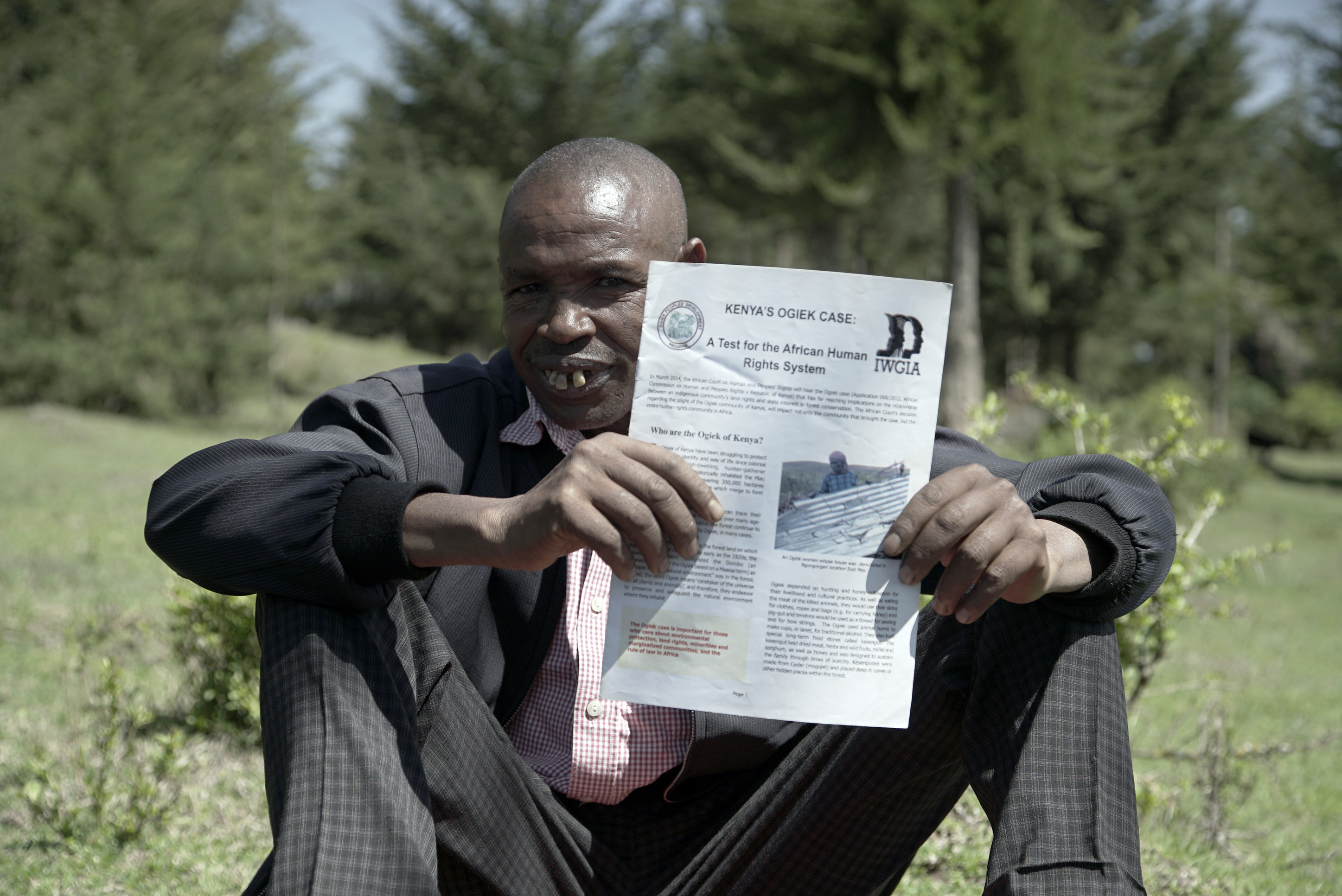
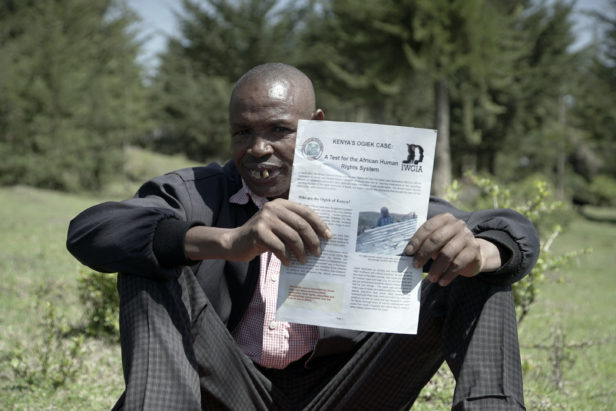
The land rights of Kenya Ogiek community have been violated over time through dispossessions and ejection from the Mau Forest Complex for conservation purposes. The communities impacted have sought to resist through activism and litigation as this was going to deny them access to resources such as water, pastures for grazing their livestock, and the denial of their cultural practices. Despite a court ruling in their favor, members of the Ogiek community still face land grabs and related challenges which include threats of eviction, harassment, arrest, court charges, and destruction and loss of property and lives in the event of evictions.
Organization and/or project’s mission
To empower the Ogiek community in a Kenyan society that embraces equality and diversity, Ogiek Peoples’ Development Program (OPDP) strives to promote and advocate for the participation, self-determination, and improved human rights through enhanced inclusivity and of equal opportunity in the economic, social, cultural, and political spheres.
How legal empowerment is used to address the injustice
The Ogiek have been using legal means to challenge their denial of rights and access to resources. In 2009, following a mass eviction notice by Kenya Forest Service, the Ogiek community, with support from OPDP, lodged a case with the African Commission on Human and Peoples Rights (ACHPR) arguing that the intended eviction will have far-reaching consequences on the political, social, and economic survival of the Ogiek community. In 2012, the ACHPR referred the Ogiek’s case to the African Court on Human and Peoples Rights (ACtHPR), on the basis that it demonstrated serious and mass human rights violations.
On 26 May 2017, the ACtHPR finally delivered its landmark judgment in the case. The Court found the Kenyan Government had violated articles of the African Charter on Human and People’s Rights, with the violations amounting to a persistent denial of Ogiek land rights and their religious freedoms.
OPDP has been conducting community-level awareness, sensitization, and training to support the Ogiek community’s understanding of the human rights issues as well as mechanisms to protect their human rights including the constitution, laws and policies. This has helped the community to prevent as well as report violations meted on them. Further, OPDP’s capacity building has enhanced the community’s dialogue with the government in making appropriate demands in regards to resources and government opportunities.
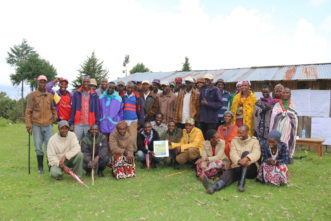
About 50 community paralegals have been trained between 2012 and 2018. They play the role of human rights monitors and community mobilizers, giving legal education and documenting violations as well as reporting on community issues. Between 2015 and 2016, they supported two communities to map their land in parts of the Mau forest.

Project’s impact
To over 40,000 Ogiek in Kenya, the favorable 2017 case ruling provides a mechanism for the recognition and restoration of their ancestral lands of the Mau forest. However, the ruling is also significant to thousands other minority and indigenous peoples in Kenya and in Africa as it provides them with a unique platform to seek recognition of their rights as well as to advocate for changes in the law, policy, and practice governing the rights of indigenous peoples.
The government of Kenya formed a task force mandated to look into the issues of the Ogiek and other indigenous peoples. The task force will also research and conduct country sensitization about indigenous peoples.

Country or region
Liberia
A quick look
In this 90+-second video, Daniel Wehyee describes Sustainable Development Institute’s mission and how it has advanced land rights in Liberia.
The justice challenge
Liberia is a predominantly agrarian nation; most families make their livelihoods as rural small-scale farmers. However, most rural communities do not have a formal title to their customary land. At the same time, the Liberian government regards all land that is not deeded to be public land, thereby further weakening the customary land tenure rights of most of the citizens who live and work on these lands.
Meanwhile, the government’s economic growth agenda, outlined in a number of policy documents including the Poverty Reduction Strategy Paper and the President’s National Vision, is based on private-sector-driven investment in the natural resource sector, specifically forestry, agriculture, and mining. This system has enabled large-scale land acquisitions to occur, which has contributed to the dispossession of communities through the long-term transfer of user rights, and sometimes ownership rights, to foreign investors or local elites. This has, in turn, led to greater competition for fewer resources and a breakdown of the customary rules that have governed the equitable and sustainable use of common resources.
Organization and/or project’s mission
The Sustainable Development Institute (SDI) works to transform decision-making processes in relation to natural resources and to promote equity in the sharing of benefits derived from natural resource management in Liberia. Its activities cover a range of cross-cutting issues including governance and management; the environment; state and corporate social responsibility; economic and social justice for rural populations; and the democratic participation of ordinary people in government management of natural resources.
The organization’s vision is a Liberia in which natural resource management is guided by the principles of sustainability and good governance and benefits all Liberians.
How legal empowerment is used to address the injustice
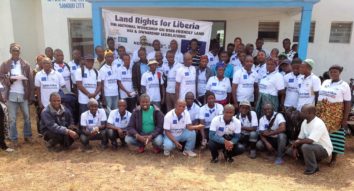
To address Liberia’s weak land tenure system and resulting land-based conflicts, SDI supports communities, civil society organizations (CSOs), and national and local government to recognize and protect customary land rights. More specifically, SDI has been engaged with the following activities:


Project’s impact
SDI received the Goldman Environmental Prize, the world’s largest prize honoring grassroots environmentalists for outstanding environmental achievements, in 2006.
SDI’s work has meaningfully contributed to the forest and land reform processes of the country. For example, SDI played a leading role in ensuring the passage of the Land Law which secures the rights of over 3 million Liberians to own and manage their land, particularly those in rural areas that have been historically marginalized and denied formal legal recognition of their customary land and resources.
SDI has supported over 60 communities across 500 towns and villages to identify and map their customary and natural resources, including setting land use and management systems (bylaws and land management committees). These communities have met the necessary requirements to legal recognition.
SDI has also empowered communities to manage and protect their customary land against external threats. For example, through SDI’s Early Warning and Response System (a system that provides real-time on phone support to communities), some communities are now taking actions to ensure the protection of their customary land.
In addition, through SDI’s work, many fraudulent land transactions have been exposed, including the infamous Private Use Permits (PuP) scandal, in which commercial forestry stakeholders, the national elite, and high-level government officials colluded on a massive scale with local leaders to defraud the country of over 40 percent of its rich forest land to commercial logging interest.
Country or region
Cambodia
A quick look
In this 2-minute video, This Life Cambodia explains the context and need for their domestic violence work, and why they deserve your support in the Grassroots Justice Prize public vote.
The justice challenge
While we provide a range of legal empowerment services and advice, our main focus for this award is our legal empowerment of women and children facing domestic violence.
Domestic violence is a profound problem in Cambodia. At least 1 in 5 women experience violence from a spouse or partner, while 50% of children report violence from adults in their lives. The problem is compounded by social attitudes which make people believe this to be normal – indeed, until recently, the “Chbab Srey” (or “Women’s Law”) was taught in Cambodian schools, and demanded subservience and obedience from women towards their husbands. While this practice has now ended, the attitudes linger. This is one reason why only 1 in 4 women who experience violence seek any help: 40% of those who do not say it is because they consider the violence “normal”.
Organization and/or project’s mission
This Life Cambodia’s vision is for vulnerable children, families, and communities in Cambodia to be supported to access and create opportunities in this life. Our mission is to listen to, engage with and advocate alongside children, families, and communities as they define and act on their own solutions to complex social challenges.
How legal empowerment is used to address the injustice
Our legal empowerment work is split into two areas: public campaigning at a national level and direct, grassroots action at a local level.
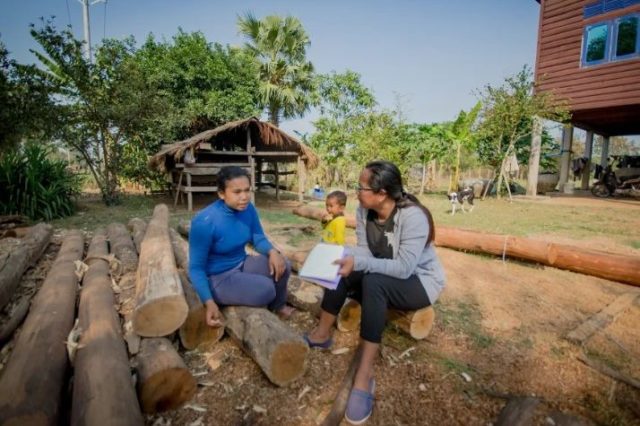
Nationally, we launched a major campaign raising awareness of the law in November 2018. We created a set of online legal resources including a readable copy of the law, the first audio version of the law for people who could not read, and a list of places to go to seek intervention, help, and support. We believe this to be the best legal resource on domestic violence in Cambodia. We promoted these resources through a creative short film and a 16-day online campaign of endorsements and messages against domestic violence from highly influential and famous Cambodians. This campaign included creative elements such as a digital protective helmet full of legal advice for people to download and save to their smartphones. The campaign was backed by widespread media coverage in newspapers and events in the community, helping reach women who are not online.
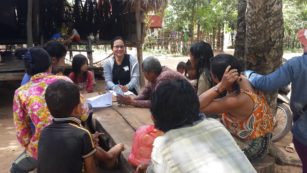
At the grassroots level, we have worked informally over many years to advise women on their legal rights as part of our community-based work to strengthen families facing difficulties including poverty, criminal activity, and violence. We began properly researching the issue of domestic violence and how to tackle it in 2014 and published a report exploring the problem in depth. Following the research, we piloted a program which included legal empowerment as a key component, and the results were so successful that in 2018 we rolled out a full program called ‘This Life Without Violence.’
Our ‘This Life Without Violence’ program works on several levels to provide legal advice and support to women, including monthly meetings attended by hundreds where advice and information are offered, training on violence and the law for local authorities including police, and work with secondary school students to teach them about the law and gender equality at an early age.
Project’s impact
For our national campaign, the scale of the impact was vast. Our video informing people of the law was seen by more than 1 million Cambodians, and the campaign materials were shared on Facebook more than 9,000 times. In all, the Facebook campaign alone reached over 1,800,000 people—which is more than 1 in 10 of the population. Most importantly, more than 13,000 people visited our web page of legal advice and resources. All of this will have led to greatly increased awareness of the law, which we will continue to measure this year through formal surveys. In addition, we received messages publicly and privately from people who said they had been inspired by the information to take action.
At the grassroots level, more than 900 women have now attended our monthly meetings and received legal advice, though we believe our work to educate 100 local authority members will mean that many thousands of women stand to benefit from authorities who understand their legal obligations to protect them. We know of many women who were facing violence and did not seek any kind of intervention who, upon learning their rights, went on to do so, and are now living free of violence as a result. Our program has just been expanded thanks to the success of what has been achieved so far and we now have the funding to reach 7,389 direct beneficiaries over the next 3 years.
Sabay News, perhaps Cambodia’s most popular news outlet, wrote: “This campaign can raise awareness of laws and save Cambodians from the suffering caused by violence.”
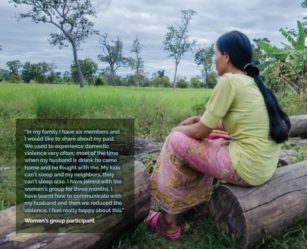
“We used to experience domestic violence very often; most of the time when my husband is drunk he came home and he fought with me. My kids can’t sleep and my neighbors, they can’t sleep also. I have joined with the women’s group for three months. I have learnt how to communicate with my husband and then we reduced the violence. I feel really happy about this.” – Women’s group participant
We have [received] a letter from the District Governor of Soutr Nikom requesting the expansion of ‘This Life Without Violence’ to encompass the whole district, an additional eight communes.
The Department of Women’s Affairs is very supportive of the ‘This Life Without Violence’ program in its current operations and has stated in discussions with TLC that they would like to see an increase in scale to support a larger number of local communities to deal with this pervasive issue.

Country or region
Guatemala
A quick look
In this 2-minute video, Women’s Justice Initiative outlines its mission and methods for reducing violence against women and girls, and why they deserve your support in the Grassroots Justice Prize public vote.
.
The justice challenge
Guatemala faces some of the highest levels of violence against women and girls (VAWG) in the world: 27.9% of women suffer from intimate partner violence in their lifetime and the country has the third highest femicide rate globally.
Rural, indigenous women are disproportionately impacted due in part to their social isolation and limited access to resources. Social services and government institutions are concentrated in Guatemala’s cities; they rarely reach indigenous women living in rural areas.
Those women who leave their communities to seek assistance often face discrimination due to their ethnicity in addition to the challenge of navigating a system that does not offer bilingual services. Administrative and geographic barriers are further compounded by social norms that view violence against women and girls as acceptable.
Organization and/or project’s mission
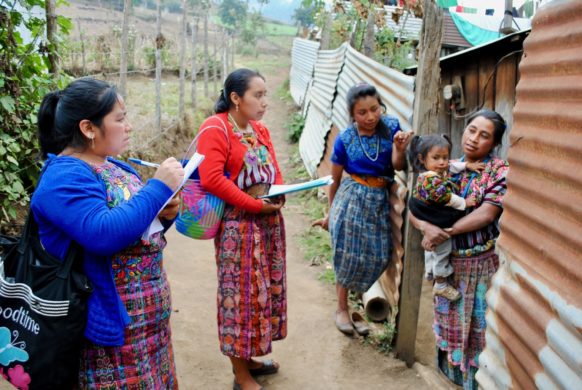
Women’s Justice Initiative (WJI) works in rural Maya communities in Guatemala where women face extreme poverty and have little or no access to social services, making them especially vulnerable to violence, inequality, and discrimination.
Their mission is to improve the lives of indigenous Guatemalan women and girls through education, access to legal services, and gender-based violence prevention.
WJI envisions a Guatemala in which women:
How legal empowerment is used to address the injustice
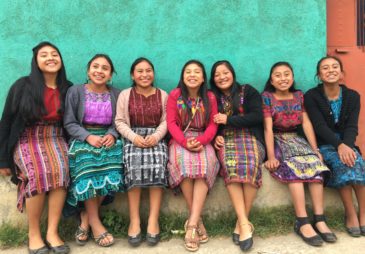
WJI addresses the challenges indigenous Maya-Kaqchikel women face by providing free, culturally-grounded, legal support; bilingual legal education; and leadership training in 32 communities in rural Guatemala through its 4 programs: Women’s Rights Education, Legal Services, Community Advocates, and Adolescent Girls.
The Women’s Rights Education Program is a six-month legal empowerment course that educates women about their rights, including the right to live free from violence, sexual and reproductive rights, and property and inheritance rights. The program also fosters the women’s leadership, decision-making, and communication skills so they can better assert their rights.
The Community Advocates Program is a grassroots legal advocacy program that provides intensive human rights and leadership training to graduates of the Women’s Rights Education Program, enabling them to become local leaders and grassroots legal advocates for women and girls in their communities. These Community Advocates support WJI in facilitating legal literacy workshops and providing accompaniment to women seeking legal services.
The Legal Services Program provides free legal aid directly to women in need by bringing lawyers and paralegals to their communities and providing bilingual Maya Kaqchikel-Spanish resources.
The Adolescent Girls Program supports girls ages 10 to 17 in asserting their rights, delaying marriage, and achieving their personal goals.

Project’s impact
Women’s Justice Initiative has reached over 13,000 individuals since 2011. Annually, WJI directly benefits 2,500 indigenous women and girls between the ages of 10 and 65, who live in 32 rural communities.
Last updated: April 26, 2024
Welcome to the grassrootsjusticenetwork.org website (the “Site”), the Grassroots Justice Network Academy (the “Academy”), and the Grassroots Justice Network Forum (the “Forum”) operated by Namati, Inc., a Delaware corporation (“Namati”, “we”, “us” or “our”). We share your concern about the protection of your personal information online.
This privacy policy (“Policy”) describes how we maintain the privacy of the personal information we collect online in connection with the Site. Our processing of personal data of people who are in the EEA is governed by EU General Data Protection Regulation 2016/679 (EU GDPR) and for those who are in the United Kingdom by the UK version of the EU GDPR (UK GDPR) and by the UK Data Protection Act 2018. Namati is the data controller for this website and for our contact information , see the section in our general Privacy Statement headed “Your Rights under the Policy”.
This Policy describes our privacy practices and sets out your obligations and ours with respect to your use of the Site, the Academy, and the Forum. This Policy applies only to the Site, the Academy, and the Forum and does not necessarily apply to our offline collection of information.
By using the Site, the Academy, and the Forum, you agree to abide by the terms of this Policy and the terms of use (the “Terms”) and you consent to our using any information that you provide to us or that we collect, in accordance with the terms of use and the terms and conditions of this policy. If you do not agree to this policy and the terms, do not use the site.
Namati may collect and retain two types of information about Site visitors: (i) personal information that individual visitors voluntarily provide when interacting on the Site or on certain other occasions (such as via forms or in emails); and (ii) tracking data, which is data that is automatically collected from every Site visitor as they use and browse the site.
We may, from time to time, store and archive the information you submit to or through the Site. The information that we gather may include your name, title and address, telephone number, email address, credit card number or other elements of personal information. In addition, if you contact us, we may keep a record of your correspondence, including any information contained therein.
You may decline to provide any personal information, but please realize that you thereby may be unable to register or to participate in activities or services offered on the Site and/or Forum.
In addition to the information you submit to or through the Site, we also may collect and store data from and about you gathered in the course of your use of the Site. We call this “tracking data.”
Such tracking data may include, but is not limited to, information regarding the number and frequency of visits to the Site, the websites that you access before and after you visit the Site, the software and operating system used to access the Site and your IP address and Internet service provider.
The information that you provide to us and that we may collect in the future is used for our legitimate interests and the purpose for which you provided it only, subject to the terms of this Policy and the Terms.
Our use of your Information involves various forms of communication with you, including:
We will not disclose any personal information to third parties, except:
Information provided to third parties is limited to the information needed to perform their functions. We seek to limit third-party use of information and our service providers have entered into contracts with us that restrict what they can do with your personal information. If you would like specific information about our service providers who have received your information, please contact us at privacy@namati.org and we will provide that information to you.
We retain the right to transfer or assign all information pursuant to a merger, purchase or other transaction relating to Namati or our assets.
The current list of third party service providers we use include:
| COOKIE NAME | PROVIDER | CATEGORY | DESCRIPTION |
|---|---|---|---|
| wp_lang | grassrootsjusticenetwork.org | necessary | |
| wordpress_test_cookie | grassrootsjusticenetwork.org | necessary | Cookie set by WordPress to check if the cookies are enabled on the browser to provide appropriate user experience to the users |
| _gat | grassrootsjusticenetwork.org | analytics | Used to monitor number of Google Analytics server requests when using Google Tag Manager |
| lidc | linkedin.com | advertisement | Used by the social networking service, LinkedIn, for tracking the use of embedded services. |
| __hssrc | grassrootsjusticenetwork.org | analytics | Used to determine if a session is a new session |
| li_sugr | linkedin.com | analytics | Used to make a probabilistic match of a user’s identity outside the Designated Countries |
| UserMatchHistory | linkedin.com | advertisement | These cookies are set by LinkedIn for advertising purposes, including: tracking visitors so that more relevant ads can be presented, allowing users to use the ‘Apply with LinkedIn’ or the ‘Sign-in with LinkedIn’ functions, collecting information about how visitors use the site, etc. |
| YSC | youtube.com | functionality | Registers a unique ID to keep statistics of what videos from YouTube the user has seen. |
| _ga | grassrootsjusticenetwork.org | analytics | ID used to identify users |
| bcookie | linkedin.com | advertisement | Used by LinkedIn to track the use of embedded services. |
| _ga_W3R156NSLL | grassrootsjusticenetwork.org | analytics | Used to persist session state |
| IDE | doubleclick.net | advertisement | This cookie is used for targeting, analyzing and optimisation of ad campaigns in DoubleClick/Google Marketing Suite |
| __hs_do_not_track | grassrootsjusticenetwork.org | necessary | Prevents the tracking code from sending any information to HubSpot |
| __cf_bm | grassrootsjusticenetwork.org | necessary | Cloud flare’s bot products identify and mitigate automated traffic to protect your site from bad bots. Cloudflare places the __cf_bm cookie on End User devices that access Customer sites that are protected by Bot Management or Bot Fight Mode. The __cf_bm cookie is necessary for the proper functioning of these bot solutions. |
| _gid | grassrootsjusticenetwork.org | analytics | ID used to identify users for 24 hours after last activity |
| hubspotutk | grassrootsjusticenetwork.org | analytics | Contains visitor’s identity |
| __hstc | grassrootsjusticenetwork.org | analytics | Analytics tracking cookie |
| __cf_bm | vimeo.com | necessary | Cloud flare’s bot products identify and mitigate automated traffic to protect your site from bad bots. Cloudflare places the __cf_bm cookie on End User devices that access Customer sites that are protected by Bot Management or Bot Fight Mode. The __cf_bm cookie is necessary for the proper functioning of these bot solutions. |
| _gcl_au | grassrootsjusticenetwork.org | advertisement | Used by Google AdSense for experimenting with advertisement efficiency across websites using their services. |
| bscookie | linkedin.com | advertisement | Used by LinkedIn to track the use of embedded services. |
| VISITOR_INFO1_LIVE | youtube.com | advertisement | Tries to estimate the users’ bandwidth on pages with integrated YouTube videos. |
| AnalyticsSyncHistory | linkedin.com | functionality | Used to store information about the time a sync with the lms_analytics cookie took place for users in the Designated Countries |
| __hssc | grassrootsjusticenetwork.org | analytics | Analytics session cookie |
| vuid | vimeo.com | analytics | This first party cookie created by Vimeo is used to assign a Vimeo Analytics unique id. |
| __hs_cookie_cat_pref | grassrootsjusticenetwork.org | necessary | The HubSpot Cookie Banner’s consent preferences cookie. |
| ar_debug | google-analytics.com | ||
| VISITOR_PRIVACY_METADATA | youtube.com | ||
| NID | google.com | necessary | This cookies is used to collect website statistics and track conversion rates and Google ad personalisation |
| cf_clearance | vimeo.com | ||
| __cf_bm | hsforms.com | necessary | Cloud flare’s bot products identify and mitigate automated traffic to protect your site from bad bots. Cloudflare places the __cf_bm cookie on End User devices that access Customer sites that are protected by Bot Management or Bot Fight Mode. The __cf_bm cookie is necessary for the proper functioning of these bot solutions. |
| JSESSIONID | nr-data.net | functionality | JSESSIONID is a platform session cookie and is used by sites with JavaServer Pages (JSP). The cookie is used to maintain an anonymous user session by the server. |
| _cfuvid | vimeo.com | necessary | This cookie is used to apply rate limits to traffic. It allows the Cloudflare WAF to distinguish individual users who share the same IP address. |
Personal information you submit via your member account, other than information provided or content posted by you to public areas of the Site as described below, is deleted from Namati’s records following the deletion of your account. However, such information may continue to be retained by third-party service providers to which it has been disclosed for one of the reasons listed above. Any financial records will be kept in accordance with Namati’s data retention policy.
Your Information is stored on Digital Ocean servers in New York, USA. When you provide personal information to us, we request your consent to transfer that personal information to the USA. The USA does not have an adequacy decision from the European Commission, which means that the Commission has not determined that the laws of the USA provide adequate protection for personal information. Although the laws of the USA do not provide legal protection that is equivalent to the EU GDPR, we safeguard your personal information by treating it in accordance with this Policy. We take appropriate steps to protect your privacy and implement reasonable security measures to protect your personal information in storage. We use secure transmission methods to collect personal data through our website. We also enter into contracts with our data processors that require them to treat personal information in a manner that is consistent with this Policy.
We have put in place appropriate security measures to prevent your personal data from being accidentally lost, used or accessed in an unauthorized way, altered or disclosed. In addition, we limit access to your personal data to those employees, agents, contractors and other third parties who have a business need to know. They will only process your personal data on our instructions and they are subject to a duty of confidentiality.
We have put in place procedures to deal with any suspected personal data breach and will notify you and any applicable regulator of a breach where we are legally required to do so.
You should be aware that any information provided or content posted by you to public areas of the Site, including but not limited to interactions on the Site and information posted to the Member Directory (via your profile), the Academy, the Resource Library, and the Forum, may be read, collected or used by other visitors of the Site, who may not need to log in as a member to view the information. Namati is not responsible for the third-party use of any information provided in such manner. By participating in the use of the Site’s interactive features, you consent to Namati’s use or disclosure of any content that you submit. For more information on posting content, please see our Terms.
The Forum uses data about your posts and other activity to make automated decisions about whether your posts are spam.
The Forum may also use data about your posts and activity to award you badges and calculate a trust level for your account. Your trust level may affect how you can participate in the Forum, such as whether you can upload images, as well as give you access to moderation and management powers in the Forum. Your trust level therefore reflects Forum administrators’ confidence in you, and their willingness to delegate community management functions, like moderation.
From time to time, we may email users of the Site information regarding important developments affecting Namati. We may also email users on occasion regarding the Site. Such emails may be sent to users of the Site if they have given their consent previously or if they have requested information from us or acquired goods or services from us in the past and have not opted out of receiving marketing communications. You can ask us to stop sending you marketing messages at any time by (i) logging into the website and checking or unchecking relevant boxes to adjust your marketing preferences; or (ii) by following the opt-out links on any marketing message sent to you; or (iii) by contacting us at any time.You may choose to unsubscribe from future emails by using the unsubscribe link included in all mass email correspondence from Namati.
If a user elects to use our referral service to inform a friend about the Site, the Academy, and the Forum, we request the name and email address of the friend. Namati will automatically send the friend a one-time email inviting the friend to visit the Site. Namati stores this information for the sole purpose of sending this one-time email, and, while a third-party mail service provider may retain the information in its database, no additional emails will be sent by Namati without further action by the friend.
The Site, the Academy, and the Forum may contain links to websites owned and operated by other parties. We are not responsible for and have no control over the privacy policies of those sites. We encourage you to review the privacy policies and terms of use of those sites prior to providing them with any information.
Namati uses cookies. Cookies are small pieces of information that a website transfers to your computer’s hard drive for record-keeping purposes and may have unique identifiers and transmit information about you and how you use the Site. Such information may include your search preferences, your browser type and the date and time of use. If you choose, you can disable some (but not all) Cookies in your device or browser settings, but doing so may affect your ability to use the Site.
Namati does permit several non-advertising third parties to set third-party cookies in order to enhance Site functionality. These third parties may include, but are not limited to: Facebook, Google, and Vimeo. For more information on the cookies that these third parties set, users are encouraged to consult the privacy policies and terms of use of these third parties.
Namati is concerned about the privacy protection of children who access the Internet and this website is not intended for children and we do not knowingly collect data relating to children. Accordingly, the Site and Forum are not intended for use by anyone under the age of 16, and we do not knowingly collect information from anyone under 16 years of age without the consent of a parent or guardian.
We reserve the right to disclose any information to comply with any law, regulation, decree, judgment, order, subpoena or any other governmental order (“Order”) without any obligation to contest or verify the accuracy of such Order.
This Policy will be governed by and construed in accordance with the laws of the State of New York, without regard to any principles of conflicts of law. You agree that any action at law or in equity that arises out of or relates to any use of the Site may be filed:
The section titles in this Policy are for convenience only and have no legal or contractual effect. The Site, the Academy, and the Forum, and any third-party services they use, may be subject to additional terms and conditions regarding privacy and use of information. Your use of the Site, the Academy, and the Forum is subject to those terms and conditions, which are incorporated into this Policy by reference. In the event of an inconsistency between this Policy and any additional posted conditions, the provisions of the additional conditions shall control.
We may need to change the Policy from time to time in order to address new issues and to reflect changes on the Site or in the law. We reserve the right to revise or make any changes to the Policy, and your continued use of the Site subsequent to any changes to this Policy will mean that you agree to and accept such changes. You can tell if the Policy has been updated by checking the last revised date posted on the top of this page. Historic versions can be obtained by contacting us at privacy@namati.org
You can access, remove, update or correct your information in your Site profile (https://grassrootsjusticenetwork.org/connect/member/YOUR USERNAME HERE/?edit=1) and your Forum profile (https://connect.grassrootsjustice.network/u/YOUR USERNAME HERE/preferences/account).
You can also access, remove, update or correct your information, and raise any questions or concerns regarding the Site or the Policy, by emailing privacy@namati.org, or mailing:
Namati Data Protection Officer 1616 P Street NW, Suite 101 Washington, DC 20036, USA
It is important that the personal data we hold about you is accurate and current. Please keep us informed if your personal data changes during your relationship with us.
You have the right to:
Request access to your personal data (commonly known as a “data subject access request”). This enables you to receive a copy of the personal data we hold about you and to check that we are lawfully processing it.
Request correction of the personal data that we hold about you. This enables you to have any incomplete or inaccurate data we hold about you corrected, though we may need to verify the accuracy of the new data you provide to us.
Request erasure of your personal data. This enables you to ask us to delete or remove personal data where there is no good reason for us continuing to process it. You also have the right to ask us to delete or remove your personal data where you have successfully exercised your right to object to processing (see below), where we may have processed your information unlawfully or where we are required to erase your personal data to comply with local law. Note, however, that we may not always be able to comply with your request of erasure for specific legal reasons which will be notified to you, if applicable, at the time of your request.
Object to processing of your personal data where we are relying on a legitimate interest (or those of a third party) and there is something about your particular situation which makes you want to object to processing on this ground as you feel it has an impact on your fundamental rights and freedoms. You also have the right to object where we are processing your personal data for direct marketing purposes. In some cases, we may demonstrate that we have compelling legitimate grounds to process your information which override your rights and freedoms.
Request restriction of processing of your personal data. This enables you to ask us to suspend the processing of your personal data in the following scenarios:
Request the transfer of your personal data to you or to a third party. We will provide to you, or a third party you have chosen, your personal data in a structured, commonly used, machine-readable format. Note that this right only applies to automated information which you initially provided consent for us to use or where we used the information to perform a contract with you.
Withdraw consent at any time where we are relying on consent to process your personal data. However, this will not affect the lawfulness of any processing carried out before you withdraw your consent. If you withdraw your consent, we may not be able to provide certain products or services to you. We will advise you if this is the case at the time you withdraw your consent.
You will not have to pay a fee to access your personal data (or to exercise any of the other rights). However, we may charge a reasonable fee if your request is clearly unfounded, repetitive or excessive. Alternatively, we could refuse to comply with your request in these circumstances.
We may need to request specific information from you to help us confirm your identity and ensure your right to access your personal data (or to exercise any of your other rights). This is a security measure to ensure that personal data is not disclosed to any person who has no right to receive it. We may also contact you to ask you for further information in relation to your request to speed up our response.
We try to respond to all legitimate requests within one month. Occasionally it could take us longer than a month if your request is particularly complex or you have made a number of requests. In this case, we will notify you and keep you updated.
If you live in an EEA Member State, all of which have adopted the EU GDPR and national , you have a right to lodge a complaint with your relevant supervisory authority about this policy and its application. The European Commission has a list of EU national data protection authorities here:
http://ec.europa.eu/justice/article-29/structure/dataprotectionauthorities/index_en.htm
If you live in the United Kingdom, you have a right to lodge a complaint with your relevant supervisory authority, the ICO, about this policy and its application:
https://ico.org.uk/make-a-complaint/
Se supone que la ley es un hilo sagrado que nos une y protege a cada uno de nosotros. Pero para miles de millones de personas en todo el mundo la ley se ha roto. Es una abstracción, o peor, una amenaza, pero no algo que podemos usar para ejercer nuestros derechos básicos.
Namati está construyendo un movimiento global de defensores legales de base que dan a la gente el poder de entender, usar y dar forma a la ley. Estos defensores forman una línea de frente dinámica y creativa que puede exprimir la justicia de incluso los sistemas rotos.
Los defensores legales del empoderamiento tratan a sus clientes como ciudadanos más capacitados que a las víctimas que requieren un servicio experto. En lugar de “Voy a resolver este problema para usted”, nuestro mensaje es: “Vamos a resolver esto juntos, y usted se hará más fuerte en el proceso.”
Namati y sus socios despliegan abogados legales de base para asumir algunos de los mayores desafíos de nuestros tiempos:
Namati convoca la red global de empoderamiento legal, que está compuesta por más de 1.000 grupos de todo el mundo. Estamos aprendiendo unos de otros y trabajando juntos para traer justicia en todas partes. Únase a nuestra red.
Rastreamos datos en todos los casos y, junto con nuestros clientes, utilizamos esa información para abogar por cambios sistémicos, como mejores políticas de gobernanza de la tierra en Liberia, regulación ambiental en la India y prestación de servicios de salud en Mozambique. Ver nuestros recursos

Desplácese por nuestros Valores Culturales para aprender más sobre la forma en que operamos.
Last updated January 30, 2013.
Welcome to the grassrootsjusticenetwork.org website (the “Site”), operated by Namati, Inc., a Delaware corporation (“Namati”, “we”, “us” or “our”). Your use of the Site or use of any of the services offered on or via the Site (collectively, the “Services”) is subject to these terms of use (the “Terms”). We may modify the Terms at any time without notice to you by posting revised versions of the Terms on our Site. Your use of the Site and any Services constitutes your binding acceptance of the Terms and Namati’s Privacy Policy, including any modifications that we make. If you do not agree to the Terms, do not use this website.
You must register in order to upload Tools to the Tools Database, obtain full access to Tools, participate in discussion forums and fully utilize any networking functions on the Site. To register, you must be 18 years or older, have the requisite power and authority to enter into the Terms, truthfully and accurately provide all required information, including a legitimate email address, and obtain a unique username and password.
You are responsible for maintaining the confidentiality of your account and password, and you agree to accept responsibility for all activities that occur under your account or password. Furthermore, you are strongly advised to maintain and to protect your privacy by choosing carefully what personally identifiable information you provide on the Site.
Your use of the Site is at your own risk, including the risk that you might be exposed to Content that you find offensive or that is inaccurate, objectionable or otherwise inappropriate. Your use of the Site constitutes your acknowledgment that you bear all risks associated with using such Content.
Our Site includes a combination of content that we, our users and other third parties create (collectively, the “Content”). All of the Content available through the Site including, but not limited to, written content, photographs, graphics, images, illustrations, marks, logos, sound or video clips, and animations, is trademarked or copyright protected. Content posted to the Tools Database at grassrootsjusticenetwork.org/tools (such content, the “Tools”) is intended to be used as part of a platform provided for practitioners to share experiences and resources, including, but not limited to, research, training materials, monitoring and evaluation tools, case management systems and advocacy strategies. You may use a Tool to assist in performing issue advocacy consistent with the mission of Namati as published at https://grassrootsjusticenetwork.org/about/our-mission (the “Mission”), provided that your use of a Tool must in no way violate any law of the jurisdiction in which such Tool is used. Except as permitted herein, you may not use, store, display, modify, reproduce, publish, transmit, participate in the transfer or sale of, create derivative works of, distribute, publicly perform, publicly display or in any way exploit any of the materials or content on the Site in whole or in part.
You are solely responsible for all materials, whether publicly posted or privately transmitted, that you upload, post, email, transmit or otherwise make available on the Site (“Your Content”). You represent that you own or have the necessary permissions to use and authorize the use of Your Content as described herein. You may not imply that Your Content is in any way sponsored or endorsed by Namati. You assume all risks associated with posting and sharing Your Content, including anyone’s reliance on its quality, accuracy or reliability. Prohibited content includes, but is not limited to, and you represent that you will not post Content that is:
We may from time to time, examine the Content on the Site or at the point of upload. We have the right, but not the obligation, to remove or decline to post any Content that may, in our sole discretion, violate these Terms or that is otherwise objectionable to us. We are not responsible for the loss, deletion, failure to store, misdelivery or untimely delivery of any Content submitted to or transmitted through the Site. We have no obligation to retain or provide you with copies of Your Content, nor do we guarantee any confidentiality with respect to Your Content. You may not post, or attempt to post, Content that interferes with our normal operations or with the use and enjoyment of another user. You may access the Site and the Content only through the interfaces provided by us. You agree to use the Site and the Services only for their intended lawful purpose and in accordance with applicable laws.
You certify that either (i) you own all intellectual property rights in Your Content, or (ii) in posting or transmitting Your Content, you are acting with the permission of the owners of such Content to both (a) post such Content and to (b) grant any further licenses to such Content or permissions to use such Content as described herein. When you post or transmit Your Content on or through the Site you grant Namati a perpetual, worldwide, irrevocable, royalty-free, nonexclusive and sublicensable license (the “License”) to use, reproduce, create derivative works of, distribute, publicly perform, publicly display, transfer, transmit, distribute and publish Your Content and subsequent versions of Your Content for the purposes of (i) displaying Your Content on the Site, (ii) distributing Your Content, either electronically or via other media, to users seeking to download or otherwise acquire it, (iii) storing Your Content in a remote database accessible by end users, and/or (iv) providing Services through and outside of the Site, including, but not limited to, implementing interventions expanding legal empowerment, offering technical assistance to development organizations, governments and civil society actors and hosting workshops for members. The License shall apply to the distribution and the storage of Your Content in any form, medium or technology now known or later developed.
When you post or transmit Your Content on or through the Site you also irrevocably grant the users of the Site the right to access and use Your Content in connection with the use of the Site.
If we request registration information from you, you will provide us with true, accurate, current and complete information. If you are registering on behalf of an organization, you represent that you have the necessary permissions and/or authority from that organization to (i) register the organization as a member of the Site and (ii) act on behalf of and in the name of that organization in any interactions with the Site, including, but not limited to, posting of Content to the Tools Database and discussion forums. You will promptly update your registration or that of your organization to keep it accurate, current and complete. If we issue you a password, you may not reveal it to anyone else and you may not use another person’s password. You agree to immediately notify us of any unauthorized use of your passwords or accounts or any other breach of security. We will not be responsible for any loss or damage that may result if you fail to comply with these requirements. The technology and the software underlying the Site and the Services is the property of Namati and our contractors. You agree not to copy, modify, rent, lease, loan, sell, assign, distribute or reverse engineer any of the technology or software underlying the Site or the Services. You agree not to modify the software underlying the Site in any manner or in any form or to use modified versions of such software, including, without limitation, for the purpose of obtaining unauthorized access to the Site.
Without limiting the foregoing, you agree that you will not use our Site to take any of the following actions:
If you choose a username that, in our sole discretion, is obscene, indecent or abusive, we reserve the right, without prior notice to you, to automatically change your username, delete your posts from the Site, deny you access to the Site or employ any combination of these options. Unauthorized access to the Site is a breach of these Terms and a violation of the law. You agree not to use any automated means, including, without limitation, agents, robots, scripts or spiders, to access, monitor or copy any part of the Site, except those automated means that we have approved in advance and in writing. Use of the Site is subject to existing laws and legal process. Nothing contained in these Terms shall limit our right to comply with governmental, court and law-enforcement requests or requirements relating to your use of the Site.
We have the right, but not the obligation, to take any of the following actions, in our sole discretion, at any time and for any reason without giving you any prior notice:
You agree that we will not be liable to you or any third party for taking any of these actions. You understand and agree that our Services may include communications such as service announcements and administrative messages from us and that these communications are considered part of the Services. We may also contact you via email to notify you about special events available to Site registrants. By becoming a Site registrant you consent to the receipt of these communications. You will be able to opt out of receiving these messages.
The Site is intended to provide general information about Namati, its mission of legal empowerment and programs and research which we support and to provide practitioners with an online network for the sharing of resources and experiences, including research, training materials, monitoring and evaluation tools, case management systems and advocacy strategies. The Site is not engaged in the provision of professional advice or information. Content posted on the Site should be considered as opinion only and should not be taken as a substitute for, without limitation, legal or other professional advice from a qualified service provider. We make no representations or warranties concerning any action taken by any person in reliance on the information provided through the Site. We will not be liable for any damages that may result, including but not limited to direct, indirect, consequential, special or other damages or economic loss, illness, injury or death.
The Site provides access and contains links to third-party Internet sites and services. Inclusion of these links and services on the Site does not constitute our endorsement of the materials on those third-party sites and does not signify any association with the owners or operators of those third-party sites and services. Your use of such third-party sites and services is subject to the terms and conditions set by the third-party site or service in question. We have no control over these third parties, and we are not responsible for their activities. You may receive email communications from third parties if you utilize a third-party service provided through the site. We do not sell, resell or license any of the products or the services related to any third-party sites, and we disclaim any responsibility for or liability related to them. Your correspondence or related activities with third parties, including payment transactions and goods-delivery transactions, remain solely between you and that third party. You agree that we will not be responsible for or liable for any loss or damage of any sort incurred as the result of any of your transactions with third parties. Any questions, complaints, or claims related to any third-party product or service should be directed to the appropriate vendor.
You represent that you have read, have understood and accept our Privacy Policy (the “Privacy Policy”). Note that we may disclose information about you to third parties if you have requested or authorized the disclosure or if we have a good faith belief that such disclosure is reasonably necessary to (i) take action regarding suspected illegal activities, (ii) enforce or apply our Terms and Privacy Policy, (iii) comply with legal process or other government inquiry, such as a search warrant, subpoena, statute, judicial proceeding or other legal process served on us or (iv) protect our rights, reputation and property, or that of our users, affiliates or the public. Please click here to see our full Privacy Policy.
The Site and Services are offered from the United States. We make no representations or warranties that the Site or Services are appropriate or available for use in countries outside of the United States. Visitors who choose to access the Site and Services from outside of the United States do so at their own initiative and are responsible for compliance with any and all local laws and regulations that may apply to such access. If you use the Site outside of the United States, you consent to having your personal data transferred to and processed in the United States. Access to the Site and the services is prohibited where such access or use violates applicable laws or regulations.
We disclaim any and all responsibility and liability for (i) the deletion, the failure to store, the misdelivery or the untimely delivery of any information or material; (ii) any harm resulting from downloading or accessing any information or material on the Internet using search results from our Site; and (iii) any service outages that are caused by our maintenance on the servers or the technology that underlies the Site, failures of our Service providers (including telecommunications, hosting and power providers), computer viruses, natural disasters or other destruction or damage of our facilities, acts of nature, war, civil disturbance or any other cause beyond our reasonable control. WE DO NOT WARRANT THAT THE SITE WILL BE UNINTERRUPTED OR ERROR FREE. IN ADDITION, WE DO NOT MAKE ANY REPRESENTATION OR WARRANTY AS TO THE CONTENT ON THE SITE. THE SITE AND THE CONTENT ARE DISTRIBUTED ON AN “AS IS, AS AVAILABLE” BASIS. ANY MATERIAL THAT YOU DOWNLOAD OR OTHERWISE OBTAIN THROUGH THE SITE IS DONE AT YOUR OWN DISCRETION AND RISK, AND YOU WILL BE SOLELY RESPONSIBLE FOR ANY POTENTIAL DAMAGES TO YOUR COMPUTER SYSTEM OR LOSS OF DATA THAT RESULTS FROM YOUR DOWNLOAD OF ANY SUCH MATERIAL. WE MAKE NO WARRANTIES THAT (i) THE SITE WILL MEET YOUR REQUIREMENTS, (ii) THE SITE WILL BE UNINTERRUPTED, TIMELY, SECURE OR ERROR FREE, (iii) THE RESULTS THAT MAY BE OBTAINED FROM THE USE OF THE SITE WILL BE ACCURATE OR RELIABLE, (iv) THE QUALITY OF ANY PRODUCTS, SERVICES, INFORMATION OR OTHER MATERIAL THAT YOU OBTAIN THROUGH THE SITE WILL MEET YOUR EXPECTATIONS, OR (v) ANY ERRORS WILL BE CORRECTED. WE MAKE NO REPRESENTATIONS OR WARRANTIES OF ANY KIND, EITHER EXPRESS OR IMPLIED, INCLUDING, WITHOUT LIMITATION, WARRANTIES OF TITLE OR IMPLIED WARRANTIES OF MERCHANTABILITY, FITNESS FOR A PARTICULAR PURPOSE OR NON-INFRINGEMENT WITH RESPECT TO THE SITE, ANY CONTENT OR ANY OF OUR SERVICES, TOOLS, PRODUCTS OR PROPERTIES. YOU EXPRESSLY AGREE THAT YOU WILL ASSUME THE ENTIRE RISK AS TO THE QUALITY AND THE PERFORMANCE OF THE SITE AND THE ACCURACY OR COMPLETENESS OF ITS CONTENT. IN ADDITION, WE DO NOT GUARANTEE THE ACCURACY, INTEGRITY OR QUALITY OF THE CONTENT ON THE SITE, AND YOU MAY NOT RELY ON ANY OF THIS CONTENT. WITHOUT LIMITATION, WE ARE NOT RESPONSIBLE FOR POSTINGS BY USERS IN ANY INTERACTIVE SECTIONS OF THE SITE, INCLUDING, BUT NOT LIMITED TO, THE TOOLS DATABASE. WE SHALL NOT BE LIABLE FOR ANY DIRECT, INDIRECT, INCIDENTAL, SPECIAL OR CONSEQUENTIAL DAMAGES ARISING OUT OF THE USE OF OR INABILITY TO USE THE SITE, EVEN IF WE HAVE BEEN ADVISED OF THE POSSIBILITY OF SUCH DAMAGES. SOME STATES DO NOT ALLOW EXCLUSION OF IMPLIED WARRANTIES OR LIMITATION OF LIABILITY FOR INCIDENTAL OR CONSEQUENTIAL DAMAGES, SO THE ABOVE LIMITATIONS OR EXCLUSIONS MAY NOT APPLY TO YOU. IN SUCH STATES, OUR LIABILITY SHALL BE LIMITED TO THE FULLEST EXTENT PERMITTED BY LAW.
By utilizing the Site, you agree to indemnify, defend and hold Namati and all of its officers, directors, employees, representatives, Advisory Council members, Network Guidance Committee members, agents, information providers and licensors (collectively, the “Namati Parties”) harmless from and against any and all liability, losses, costs and expenses (including attorneys’ fees) incurred by any Namati Party in connection with any claim, including, but not limited to, claims for defamation, violation of rights of publicity and/or privacy, copyright infringement or trademark infringement arising out of:
You also agree to take sole responsibility for any royalties, fees or other monies owed to any person by reason of any Content you post or transmit through the Site or the Services we provide. We reserve the right, at our own expense, to assume the exclusive defense and control of any matter for which you are required to indemnify us, and you agree to cooperate with our defense of these claims.
By visiting or using the Site, you agree that the laws of the State of New York, without regard to principles of conflicts of law, will govern our Privacy Policy and these Terms and any dispute of any sort that might arise between you and Namati. You agree that any action at law or in equity that arises out of or relates to any use of the Site will be filed only in the state or federal courts located in New York County, and you hereby consent and submit to the personal jurisdiction of such courts for the purposes of litigating any such action.
Materials may be made available through the Site by third parties who are not under our control. Namati respects the copyright interests of others and, as such, requires our users to comply with all Terms regarding copyrights. It is our policy to terminate user accounts for failure to comply with our copyright policy. If you believe that any Content shown on or transmitted through the Site violates these Terms or your copyright please report the violation. In the case of a copyright violation please provide a written notice with a physical or electronic signature and the following information:
All notices should be sent to our designated agent as follows:
It is often difficult to determine if your intellectual property rights have been violated. We may request additional information before we remove allegedly infringing material.
We may be required by state or federal law to notify you of certain events. You hereby acknowledge and consent that such notices will be effective upon our posting them on the Site, our delivering them to you through email or your otherwise becoming aware of such notices through other means. If you do not provide us with accurate information, we cannot be held liable if we fail to notify you. Our failure to exercise or enforce any right or provision of these Terms shall not constitute a waiver of such right or provision. You agree that regardless of any statute or law to the contrary, any claim or cause of action arising out of or related to use of the Site or these Terms must be filed within one (1) month after such claim or cause of action arose or it will be forever barred. These Terms, including the Privacy Policy, constitute the entire agreement between you and Namati and govern your use of the Site, superseding any prior agreements that you may have with us. If any part of these Terms is determined to be invalid or unenforceable pursuant to applicable law, then the invalid or unenforceable provision will be deemed superseded by a valid, enforceable provision that most closely matches the intent of the original provision and the remainder of the Terms shall continue in full force and effect.
A chapter from the Guide that introduces Namati and how we work.
______
This resource is one chapter from Namati’s Community Land Protection Facilitators Guide, which can be accessed here. To view all the individual chapters and supporting resources, refer to the interactive online version of the Community Land Protection Facilitators Guide here.
At a refresher training, get paralegals to start sharing their community and case experience by using this icebreaker. The objective is for the paralegals to ask their colleagues questions to find out who matches the criteria listed in the boxes… and each person can only sign a maximum of two boxes on each sheet!
Whoever gets the most signatures in a given amount of time “wins” the exercise and can share a few anecdotes of what they learned about the other paralegals in the process. This exercise was used by Namati and Council of Minorities in a paralegal refresher training in Bangladesh.
This resource is part of a Namati Documentation Guide that aims to assist legal empowerment organizations in documenting their work. There are three parts to this Documentation Guide: Story Writing, Case Studies, and Basic Photography.
Using pictures is a wonderful way to tell stories and to help your audience connect with the subject of your story! People are more likely to read your words when they’re accompanied by a nice picture or picture story too, so it’s a useful skill to practice too.
This resource is part of a Namati Documentation Guide that aims to assist legal empowerment organizations in documenting their work. There are three parts to this Documentation Guide: Story Writing, Case Studies, and Basic Photography.
Case studies are a good way to share information about complex cases or specific aspects of legal empowerment work in a more detailed way than stories. This case study template gives examples of the kinds of questions to ask to build a detailed case study that closely demonstrates how your organization undertakes its mission. A case study may have the purpose of informing potential donors, operational partners and other specialist stakeholders who need a lot of detailed information about your work.
This resource is part of a Namati Documentation Guide that aims to assist legal empowerment organizations in documenting their work. There are three parts to this Documentation Guide: Story Writing, Case Studies, and Basic Photography.
Story writing is an important skill that can communicate specific cases and aspects of legal empowerment work to a variety of audiences. A story can be shown to many specialist readers, but can also be used to appeal to a much wider, less specialist, readership than a case study. They may be members of the public, journalist, interested professionals in unrelated fields, or officials whose support you need, such as parliamentarians or regulators.