
CENTER FOR HUMAN RIGHTS AND COMMUNITY SECURITY SABAH (ASASI) is a resource center for community security and human rights development in Sabah. The Center’s core function is to facilitate and manage community development projects and provide professional services including capacity building as well as legal and technical assistance on various community issues and need in Sabah. The Center will also coordinate and conduct research and advocacy on community security and human rights issues at the macro level. ASASI envisions a resilient and prosperous society that is free from violence, fear and insecurity.
In the face of lawlessness and impending destruction, the Monk’s Community Forest has empowered Cambodia’s poorest villagers to protect their local forest, and has allowed them to benefit from its resources. By lobbying for “community forest” status, attained in 2009, it has enabled forest-dependent communities to manage their forests sustainably to support their livelihoods.
Network Spotlights are short profile articles focusing on members of the Global Legal Empowerment Network. Spotlight articles use case studies and ‘key lessons’ to provide useful insights into the work of other network members. Whether you are working in the same country, with similar issues or want to understand new legal empowerment approaches, the Network Spotlight is a useful learning resource.
This publication highlights the non-compliances to environmental regulation and the impacts it has on the lives and livelihoods of affected communities due to coal mining projects undertaken by Mahanadi Coalfields Limited (MCL) in Hemgir block of Sundargarh district in the state of Odisha. A participatory process called “groundtruthing” was initiated with the cooperation of community leaders, activists from the Centre for Integrated Rural and Tribal Development (CIRTD), Sundargarh and researchers from the Centre for Policy Research (CPR)-Namati Environmental Justice Program, New Delhi.
Through the process of groundtruthing, it was found that conditions that environmental regulatory authorities have fixed for mining projects are not complied with. As a result, a number of issues and adverse impacts have emerged, impacting the lives and livelihoods of people living in the areas surrounding the mines. It was learned that affected people, community representatives or activists could collect information and data from the field as well as from the concerned authorities to find the gap between regulatory conditions and compliance with them. They cooperated with each other to find out the gaps and then sought remedial measures by approaching the concerned regulatory authorities. Through this groundtruthing process the people of affected communities were empowered as they learnt the law, how to collect evidence of non-compliance and which institution to approach. It could go on to help in strengthening not only the regulatory mechanism to frame new rules and conditions for redressing grievances of aggrieved people,. We are thankful to the concerned authorities who provided the required information and their subsequent responses towards providing remedial measures.
In 2013, Duah village in Liberia faced a serious challenge. Private company Lion Growth Ltd. was interested in the acquisition of Duah customary land. Duah’s local leaders struck a deal with the company without consulting the community. As a result, Duah community mobilised and rallied around their new mechanisms for inclusive, participatory land governance and, with the support of Namati and the Sustainable Development Institute (SDI), held their leaders accountable. The community convinced their elders to cancel the deal, and this victory protected the Duah’s customary land and livelihoods and legitimised the community’s new participatory, people-focused land governance system.
For additional land resources, visit the International Land Coalition’s Database of Good Practices at: http://www.landcoalition.org/en/good-practices
Despite significant investment by governments and donors in many poor countries, development indicators remain abysmal. There is increasing evidence that strengthening the accountability of these services to local communities and end users can play a critical role in improving both access and quality. Innovations that provide people with more information about essential services and the ways in which they can participate in shaping how these services are delivered have been shown to improve development results. In rural India, “social audits” – the process by which details of the resources used by public agencies for development initiatives are shared with their beneficiaries – have been successful in exposing and recovering misappropriated funds and have consequently been incorporated into the national job creation scheme.
A recent randomized controlled trial found that a “community score card” intervention applied in health clinics in Uganda reduced child mortality by 30 per cent in one year. Such social accountability efforts tend to focus exclusively on the nexus between community and service provider or between community and local government, without the possibility of seeking remedies from the broader network of state authority when local pressure fails. On the other hand, while the protection of rights and the pursuit of redress is the core business of legal empowerment programs, those programs usually focus more on solving disputes and less on failures in public services such as health and education.
Our hypothesis is that a model that draws on the strengths of these two approaches – social accountability and legal empowerment – could better integrate accountability for service delivery into national governance structures and lead to significant, life-saving improvements in the delivery of essential services. Namati is engaged in a two-country experiment, which aims to explore the synergies between social and legal approaches to accountability for health services. Through our work in Sierra Leone and Mozambique, we hope to generate lessons that will inform and strengthen both government and civil society efforts on a broader scale. Specifically we aim to:
In both Sierra Leone and Mozambique, Namati and its partners are bringing together health workers, village health committees and community members to analyze aggregate data and encourage collective action, including compacts aimed at improving health service delivery outside of formal reporting channels. Namati has developed standardized case forms that are being used by paralegals and health advocates to document both individual and collective grievances. These are initiated by clients and collected during discussions with village health committee members, clinic staff, and community members. These forms are then entered into a central database, enabling comparative analysis within and across countries and communities.
For most rural and indigenous people in Kenya, land is their greatest asset — their source of food, water, and livelihoods, and the basis of their history, culture, and community. But increasingly, large-scale infrastructure projects like LAPPSET, conflict, population growth, climate change, and other forces are putting pressure on their land. The pressure continues to negatively affect local communities by limiting their access to natural resources for survival.
The increasingly negative effects of climate change in particular are leading to environmental hazards and risks that are directly hurting indigenous communities’ livelihood practices. These hazards include biophysical changes (i.e. unpredictable rain patterns, prolonged droughts, drying of water sources, raising temperatures, etc.), as well as socio-economic or political changes (i.e. conflicts with neighbors). Nevertheless, over the years, rural and indigenous communities in Kenya have adopted survival strategies to adapt to aggressive environmental pressures. They have developed various forms of adaptation as well as coping strategies to the impacts of climate change and variability. Such strategies are closely guided and informed by the communities’ customs.
The Kenya Constitution (2010), and the Community Land Act (2016) give rural and indigenous communities the legal right to own the land they live on and use for their livelihoods, culture, and homes. The Community Land Act provides a clear process which communities should follow to be able to register and govern their lands. The Community Land Act enables communities to register and acquire legal title to their lands and offers an opportunity for communities to strengthen their internal governance mechanisms. The law requires communities to organize themselves and determine their land claim, develop bylaws to govern their land and natural resources, elect a committee to manage their land, and then complete and submit the respective application forms for registration.
This toolkit provides detailed guidance on how facilitators can work with local communities to leverage the implementation of Kenya’s Community Land Act (2016) to address the climate change challenge. This toolkit does not seek to replace the traditional/customary climate change resilience practices the communities have adopted over time, but rather to build on and strengthen them.
The W.K. Kellogg Foundation is interested in proposals that both improve the community and strengthen the applicant organization. The authors’ experience indicates that proposals which connect with and engage a wide range of community resources are more effective than those which involve only the staff of the lead organization. This document shows how non-profit organizations are much more powerful community actors when they are not exclusively focused on needs, problems, and deficiencies but are effectively connected to the resources, or assets, of the local community.
The following pages are divided into three sections to help applicants connect with community assets.
Cuernavaca, Mexico – May 20-22, 2025
From the Andes to the Amazon, and from community observatories to feminist legal collectives, women defenders across Latin America are building powerful strategies to protect their lands, their bodies and their rights. Last month, 15 leaders from Argentina, Chile, Colombia, Mexico and Peru gathered in Cuernavaca for the Regional Workshop on Legal Empowerment and Community Evidence for Environmental Justice, organized by Namati.
Over the course of two and a half days, lessons learned from first-hand experiences were shared, new tools were explored and reflections were made on how evidence can be used for legal processes, strengthening community organization, advocacy in participatory processes and decision making.
The meeting explored key topics and issues, such as:
Each session drew on experiences from across the region. For example, we learned from people defending Páramo ecosystems in Colombia, reclaiming water rights in Chile, documenting urban injustice in Mexico and Argentina, and amplifying indigenous memory in the Peruvian Amazon.
Data is never “just technical. It carries memory, risk and power. As participants reflected, we must distinguish between evidence that convinces an authority and evidence that strengthens collective dignity and resilience.
“We only defend what we know. Memory becomes a political tool of territorial defense.” – DAR
Strategic evidence gathering requires clarity from the outset: What do we want to prove, with whom, with whom, with what tools? Participants stressed that without clear hypotheses, validation strategies and risk analysis, even the most accurate data can fail to transform realities.
Successful strategies built power from the ground up, training communities in the use of tools, designing joint campaigns and linking data to lived experiences and rights.
In many cases, the damage develops slowly or inconspicuously. That does not make it any less real. We must find ways to document absence, uncertainty and risk, especially when formal systems require damage to be complete before action is taken. We want to push for a preventive, not reactive, approach.
The challenge between technical rigor and the legitimacy of ancestral knowledge and cultural practices persists. Evidence helps in legal and judicial processes, but also strengthens community organization and serves as a transformative educational tool.
In an increasingly digital and fragmented world, the time spent in Cuernavaca reaffirmed that regional convenings create a political and emotional infrastructure, where ideas become strategy and strategy becomes action.
“Being together in person allows us to speak from the body, the land and shared experience. These regional spaces help us break out of isolation and build the trust needed to defend our rights collectively.” – FIMA
This meeting is part of a broader effort by Namati and its partners to strengthen regional knowledge exchanges and collective learning. In the coming months, we will:
Evidence is power. But only when it is built with communities, not for them. Only when it is aligned with culture, care and collective vision.


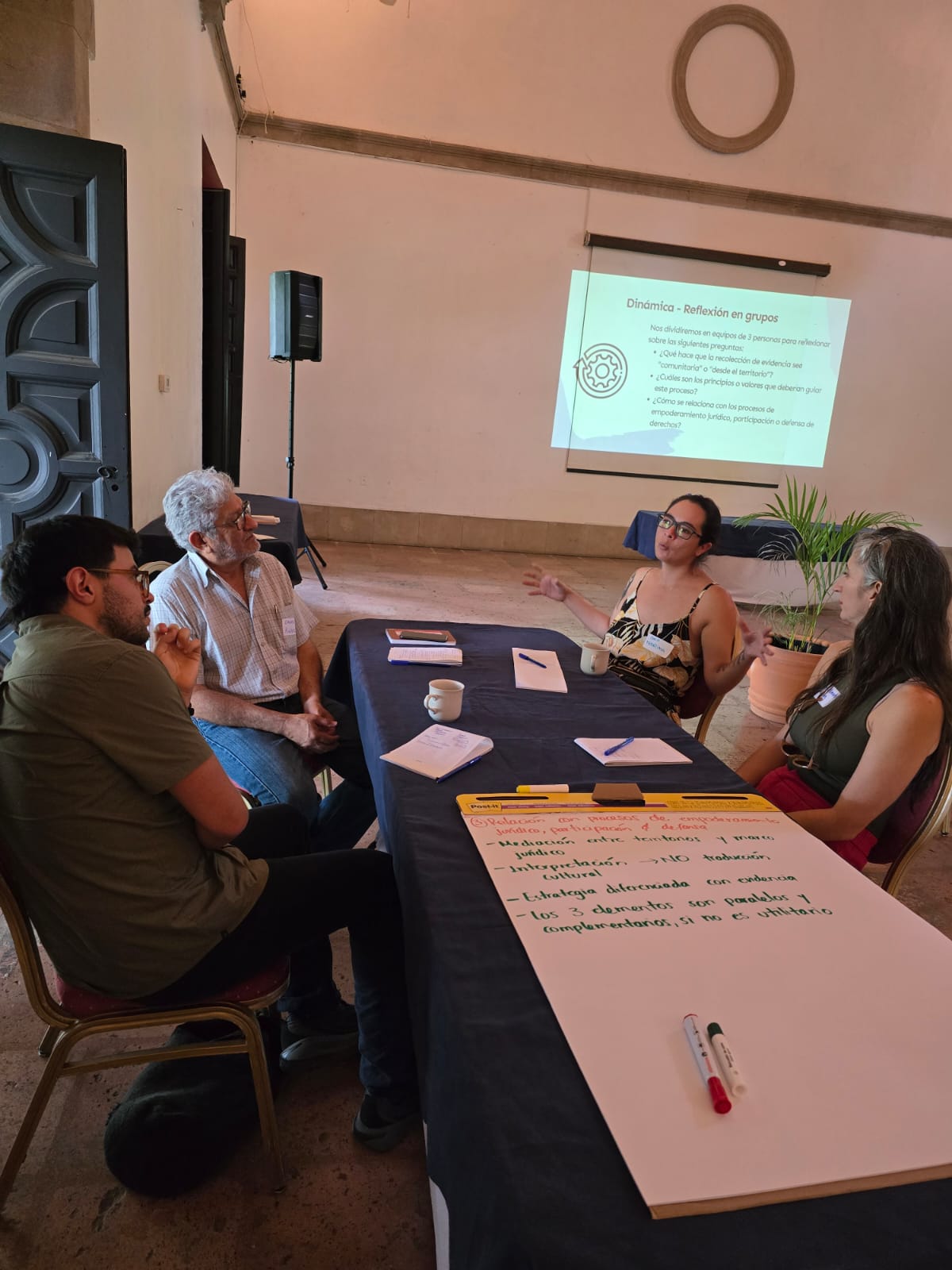
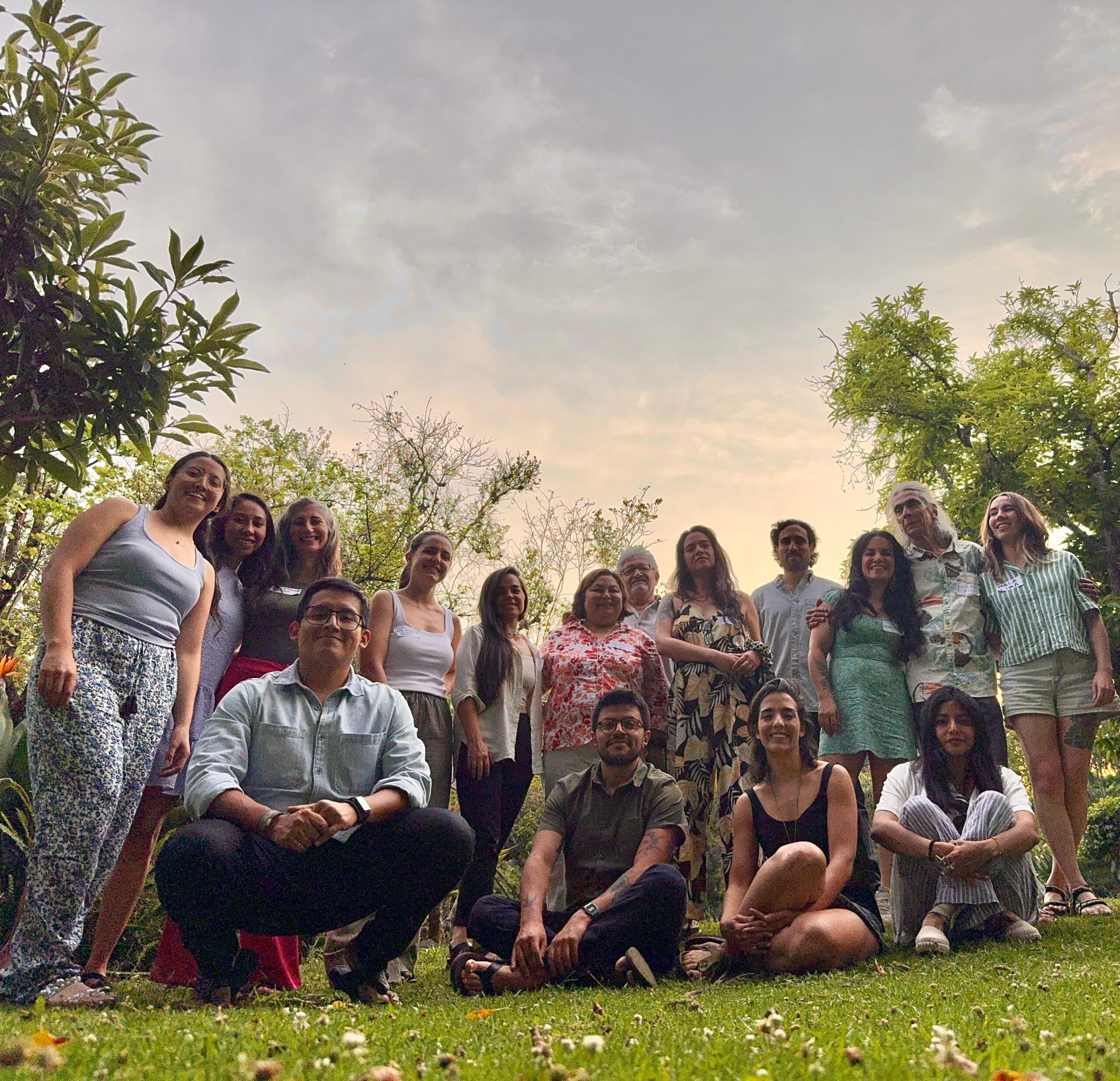
This convening was supported by Global Affairs Canada.
Namati has worked for over a decade to live up to the ‘empowerment’ side of legal empowerment. The question has been: how do we provide legal support to people facing injustice and do so in a way that builds their power, both individually and collectively? The result has been a gradual evolution that has come through experimenting with new ways to do casework, stopping to reflect on our impacts, and infusing our training for staff and partners with an orientation towards building collective power.
This publication marks a 12-year journey that Namati continues to travel, distilling and sharing learnings from Namati staff, partners, organizers, and communities along the way. In these pages you will find a synthesis of insights drawn from over 90 interviews with people in Myanmar, Kenya, and India who were directly affected by an injustice and partnered with paralegals to address it.
In addition to capturing lessons from individual justice seekers, the publication presents two case studies from Namati teams in Mozambique and Kenya. The case studies distill lessons from efforts to build community-driven movements capable of addressing the root causes of injustice. Together, they demonstrate what community power looks like in action. The chapters that follow first define how the legal empowerment cycle can build community power, then offer practical insights and hard-won lessons from Namati’s 12-year journey.
You can access the report chapters here:
This manual is intended to be a practical learning aid and helpful reference guide for community-based paralegals and organizations running community-based paralegal programs.
It should be helpful to paralegal program management staff that supervise and support paralegal services, as well as to those who are interested in learning more about the operations of such programs. Moreover, this manual aims to contribute to developing mechanisms and materials to support sustainable community-based paralegal programs and provide support for a better understanding of the model.
This manual has been prepared as a hands-on document for community-based paralegals to guide them with basic messages about paralegalism, tackling justice issues, and the delivery of quality services. It provides a framework to ensure that community-based paralegal services can be provided in an efficient and quality-assured manner.
This guide is also available in Burmese, Spanish, and French.