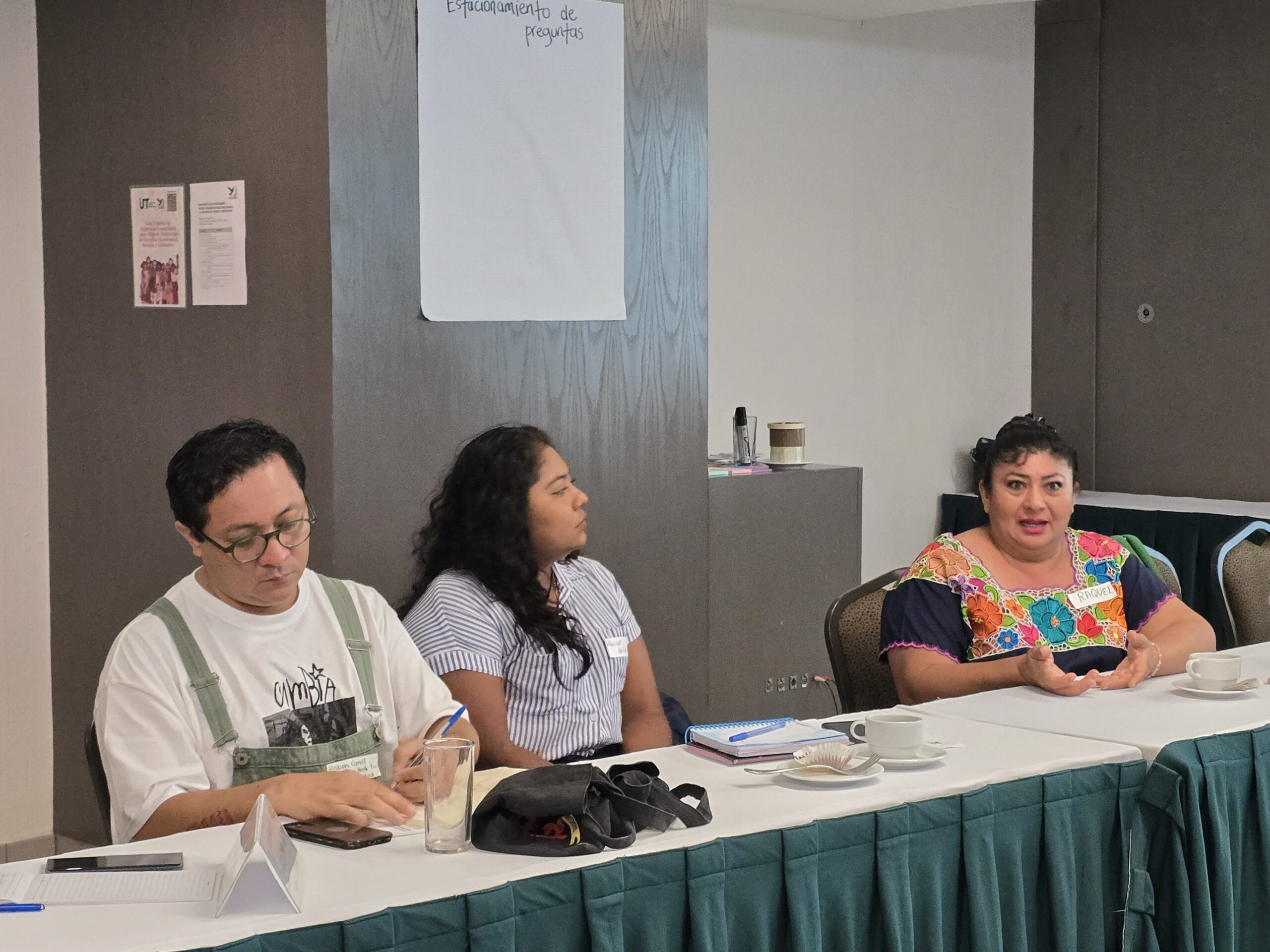
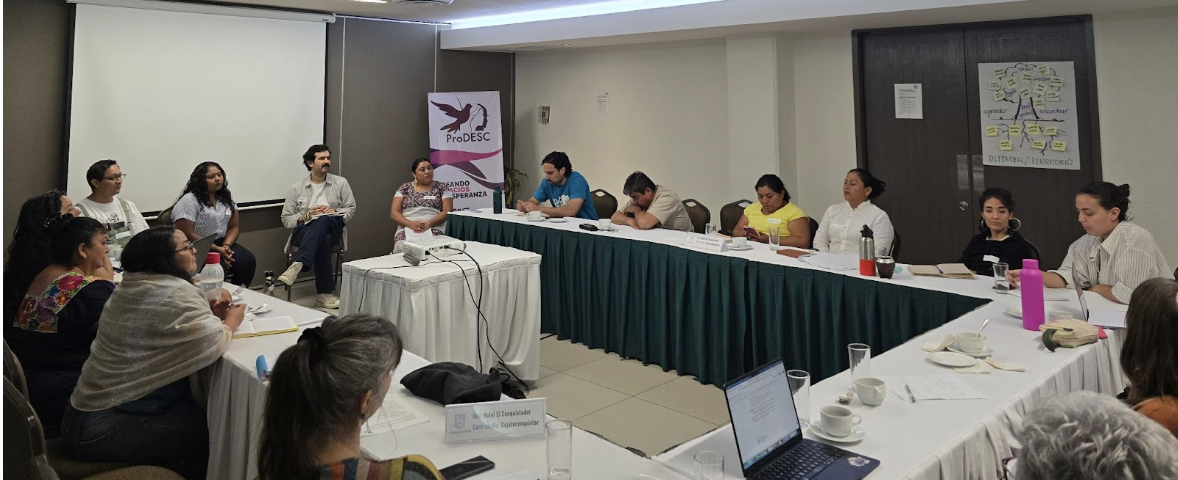
Since 2023, Namati has accompanied three organizations -ACIJ (Argentina), FIMA (Chile) and ProDESC (Mexico)- to weave a collective process that puts legal empowerment at the service of communities defending their territories. We met in Buenos Aires, Argentina (2023), Magallanes, Chile (2024) and Mérida, Mexico (2025), with a shared certainty: environmental justice is not decreed from above, it is built from below with organization, memory and strategy.
During these three years of Participatory Action Research, we asked ourselves many questions:
The three organizations agree: law is a tool, not an end in itself. Sometimes it helps stop megaprojects. Sometimes it orders the State to protect. But other times it arrives late, is not implemented or fails outright. What is important is how communities make it their own, adapt it and integrate it into their organizational strategies.
In Magallanes, a defender said it clearly: “It’s not just about winning a lawsuit, but about continuing to live in our territories without fear”.
Cartographies, ejido regulations, community radios, surveys, security protocols, oral archives, peer-to-peer training processes. These are not products; they are living processes that arise from local needs. Tools that do not come from outside, but are built with the communities, in their languages, from their knowledge.
In Mérida, we heard how Mayan women are creating spaces to train other women leaders. In Magallanes, we learned about FIMA’s work with Kawésqar communities building evidence on the impacts of salmon farming. In Buenos Aires, neighborhood leaders tell how they used a decades-old court case to make their history of resistance visible.
Without community there is no sustainable defense. The regional meetings showed that legal issues cannot be dealt with separately: they require the collective fabric, trust, and sustained political work. Strategic litigation alone does not transform realities.
We also learned that community processes take their own time; they have contradictions and are not linear. Therefore, flexibility, listening and care are key. Legal empowerment is not a toolkit, it is a commitment to transformation from below.
At each meeting, women and diversities raised their voices to remind us that the defense of territory is also a defense of the body, of time, of daily life. Strategies must integrate care, integral security, memory and the right to participate in equality.
From Yucatán to Buenos Aires, we heard stories of women defenders criminalized, excluded or overburdened. We also heard their proposals for transforming organizational spaces and legal tools into something more just and collective.
In the three countries, we face the same dilemma: we collect data, documents, experiences, but how do we systematize these experiences without falling into epistemological extractivism? How do we return them to the communities? Systematizing is a political act, a way of circulating knowledge in the territories. Whether through a radio, workshop or mural, the process and final product matter. This process must be useful, appropriate and respectful. In Chile, for example, FIMA is currently working on a legal empowerment guide for territories and communities based on the insights and lessons learned over these three years.
In a world where extractivism is disguised as green, where women defenders are criminalized and where territories are fragmented, we need more than ever regional processes, feminist and community care.
The defense of the territory cannot be done alone or quickly. We need to be together, listen to each other and remember that we are building something bigger than a legal strategy: we are building community.