

Cuernavaca, Mexico – May 20-22, 2025
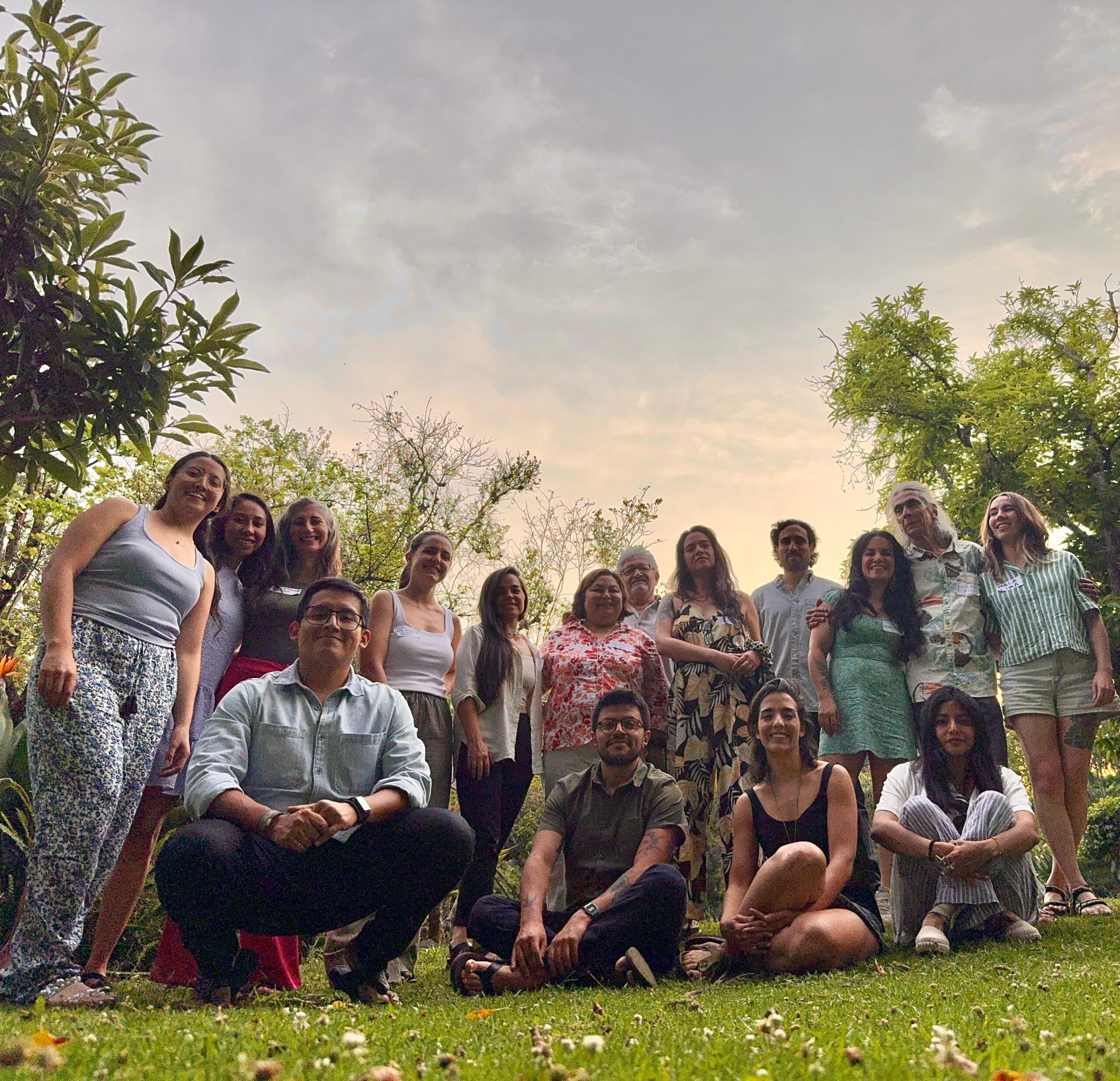
From the Andes to the Amazon, and from community observatories to feminist legal collectives, women defenders across Latin America are building powerful strategies to protect their lands, their bodies and their rights. Last month, 15 leaders from Argentina, Chile, Colombia, Mexico and Peru gathered in Cuernavaca for the Regional Workshop on Legal Empowerment and Community Evidence for Environmental Justice, organized by Namati.
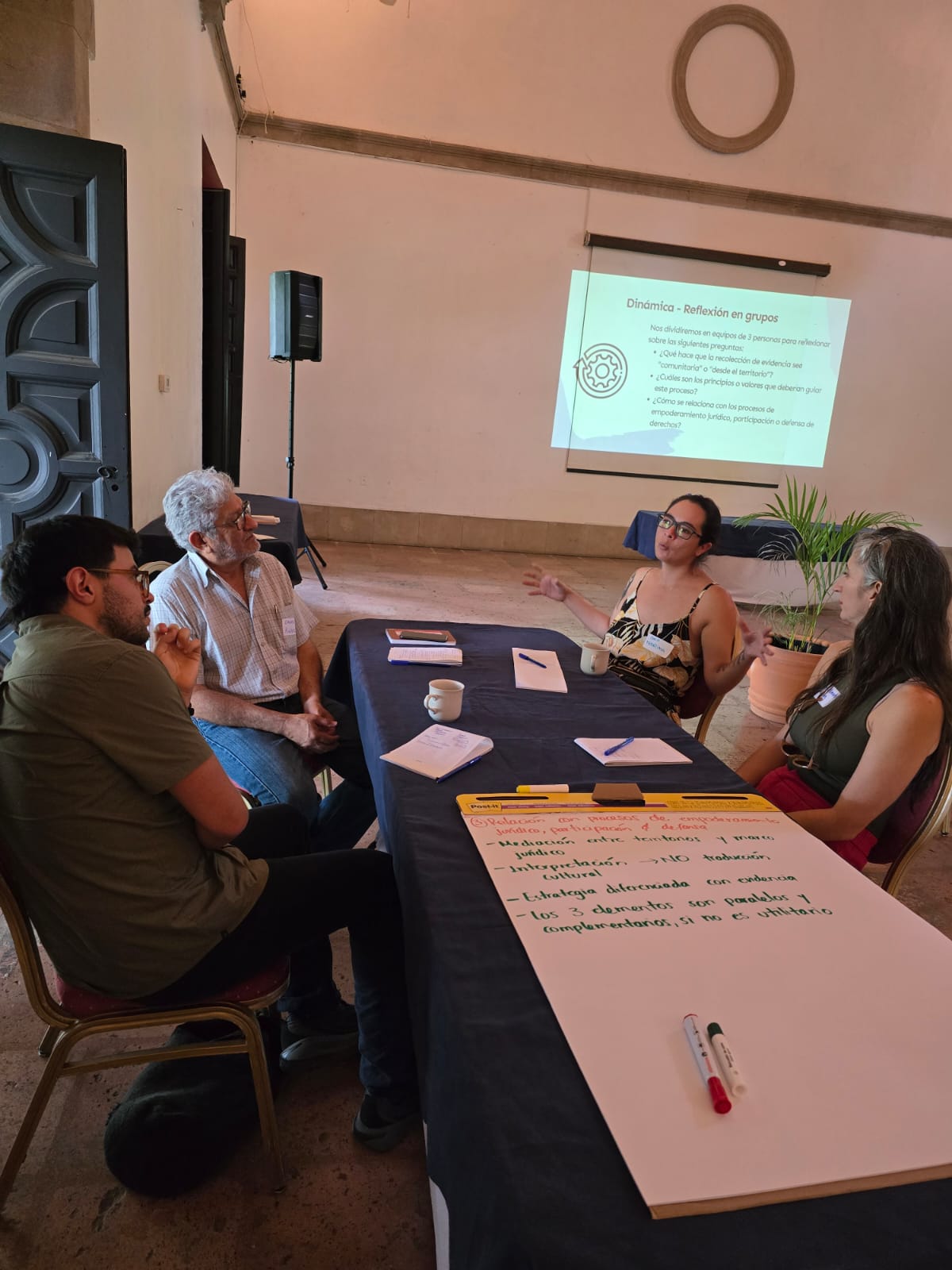
Over the course of two and a half days, lessons learned from first-hand experiences were shared, new tools were explored and reflections were made on how evidence can be used for legal processes, strengthening community organization, advocacy in participatory processes and decision making.
The meeting explored key topics and issues, such as:
Each session drew on experiences from across the region. For example, we learned from people defending Páramo ecosystems in Colombia, reclaiming water rights in Chile, documenting urban injustice in Mexico and Argentina, and amplifying indigenous memory in the Peruvian Amazon.
Data is never “just technical. It carries memory, risk and power. As participants reflected, we must distinguish between evidence that convinces an authority and evidence that strengthens collective dignity and resilience.
“We only defend what we know. Memory becomes a political tool of territorial defense.” – DAR
Strategic evidence gathering requires clarity from the outset: What do we want to prove, with whom, with whom, with what tools? Participants stressed that without clear hypotheses, validation strategies and risk analysis, even the most accurate data can fail to transform realities.
Successful strategies built power from the ground up, training communities in the use of tools, designing joint campaigns and linking data to lived experiences and rights.
In many cases, the damage develops slowly or inconspicuously. That does not make it any less real. We must find ways to document absence, uncertainty and risk, especially when formal systems require damage to be complete before action is taken. We want to push for a preventive, not reactive, approach.
The challenge between technical rigor and the legitimacy of ancestral knowledge and cultural practices persists. Evidence helps in legal and judicial processes, but also strengthens community organization and serves as a transformative educational tool.
In an increasingly digital and fragmented world, the time spent in Cuernavaca reaffirmed that regional convenings create a political and emotional infrastructure, where ideas become strategy and strategy becomes action.
“Being together in person allows us to speak from the body, the land and shared experience. These regional spaces help us break out of isolation and build the trust needed to defend our rights collectively.” – FIMA
This meeting is part of a broader effort by Namati and its partners to strengthen regional knowledge exchanges and collective learning. In the coming months, we will:
Evidence is power. But only when it is built with communities, not for them. Only when it is aligned with culture, care and collective vision.


This convening was supported by Global Affairs Canada.