
SAILS is a regional centre of excellence that focuses its efforts on conducting rigorous research and offering advanced post-graduate education in South Asian law and human rights. Its mission is to further the potential of South Asia by identifying the contemporary problems that slow the development of human rights in the region and to promote an understanding of the common trends and traditions of legal systems in South Asian countries. SAILS intends to devise appropriate means for using law as a catalyst of change for stakeholders; adopts innovative ways to implement the economic and social rights of citizens; and identifies ways to use the law to remove obstacles and legally empower the people.
The following is a blog by Nant Thi Thi Oo, a data entry associate with Namati’s program in Myanmar.
In November 2015, I had the chance to participate in a learning exchange hosted by Namati and the Bangladesh National Woman Lawyers Association (BNWLA). I was very grateful to be selected to go. The exchange focused on women’s empowerment and the use of paralegals in improving women’s access to justice. Namati’s land rights program in Myanmar, where I work, does not focus on women and child rights and I was excited to learn about this topic of women’s empowerment.
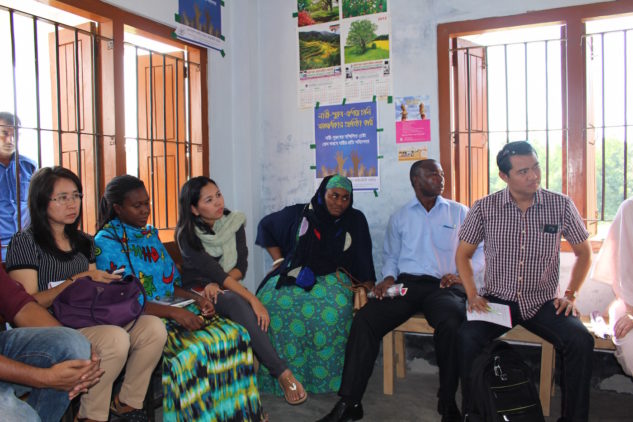
The exchange was for two weeks in Bangladesh and we had more than enough time to visit local organizations and government departments. We learned about the organizations’ work, challenges they faced, and how they tackle those challenges.
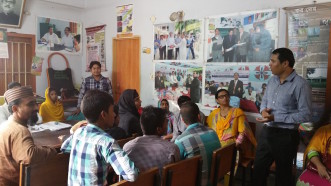
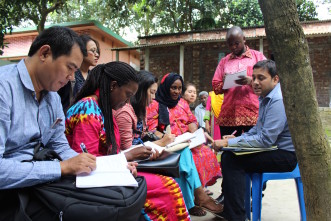
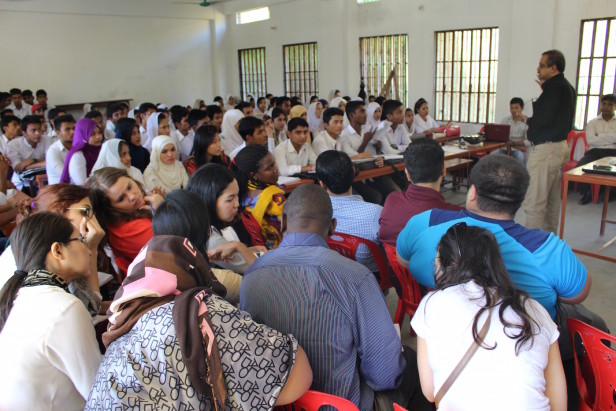
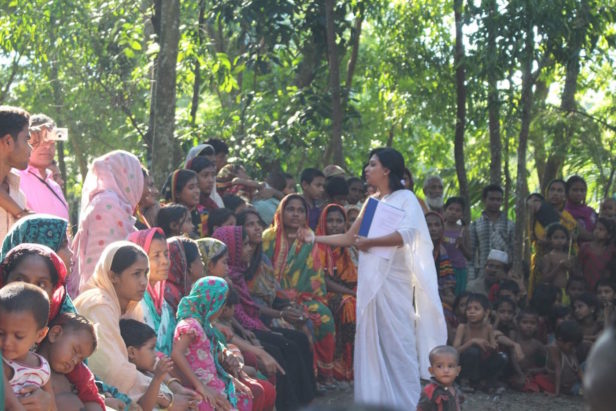
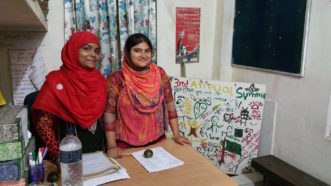
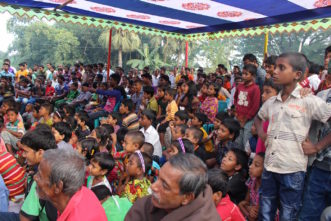
I shared my challenges and received opinions from other participants too. One of the challenges I shared was about advocacy. We do not have a strong relationship with the government in Myanmar and therefore there are some challenges when we do advocacy work.
I learned many things about advocacy, monitoring and evaluation, and more. But what I learned about women’s rights really impressed me and it encouraged me to do more women empowerment work in Myanmar. Before the exchange, I did not know how there could be a link between women’s empowerment and our land rights work. I just thought that I could learn about women’s rights in other countries’ contexts but did not think that these learnings can apply to my work.
After the exchange, I shared the experiences and learning that I gained from the participants and activities in Bangladesh with my colleagues in Myanmar. My team members were so inspired by my exchange and understood that we need to include gender aspects in our land rights work. My colleague Caitlin Pierce and I decided to work together to research and publish a policy brief on the topic. We published the brief, called “Gendered Aspects of Land Rights in Myanmar: Evidence from Paralegal Casework”, in April 2016. The brief recommends actions the Myanmar government can take to help increase women’s engagement in land use management and access to tenure rights.
When I was developing the brief, I reflected on the learning experiences from Bangladesh to help me think of more gender aspects to research and include. For example, I always believed that in every sector in Myanmar, women’s involvement is lesser than men’s. They are not in favored positions; most of them stays behind the curtains to support the men. I did not agree with this and my disagreement became stronger during the exchange visit in Bangladesh. I saw there that most of the women suffer a lot and carry too much of the family workload. But when I visited the Victim Support Centre, I saw most of the police officers are women. I realized that women can do like men. They are not different. I was so inspired to see these policewomen – I want it to become more like that in my country. That is why in the brief I had included recommendations for more women to be involved in land-related government sectors in higher positions. Our research showed that in Myanmar, only 42 out of 16,758 village tract administrators are women and there is not one female Township Administrator.
When the brief was published, I tried out the best ways to approach the government – just like we discussed in the exchange. I learned there that when doing advocacy work you need to approach the right persons in the right way. If your way of approach is wrong, the advocacy is not effective. I learned that having a good relationship with government is a kind of support for advocacy. Then, when we are meeting with government officials and sending our brief, they will pay more attention to our recommendations.
The things I learned about advocacy worked well. I was invited as a special guest to talk about the experiences of gender and land rights to members of parliaments in the capital, Nay Pyi Taw. Other organizations also found that our women and land rights policy brief is useful for them. I was so honored to present our work to MPs and other organizations. They all agreed on what I said about needing to have more women empowerment in our country. I included my learning exchange experiences when I talked to the government officials and partners – it helped to make my recommendations stronger.
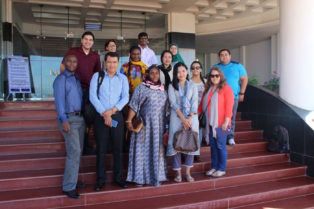
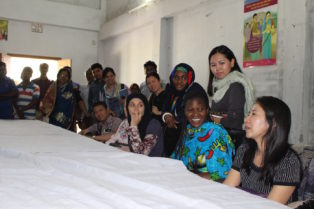
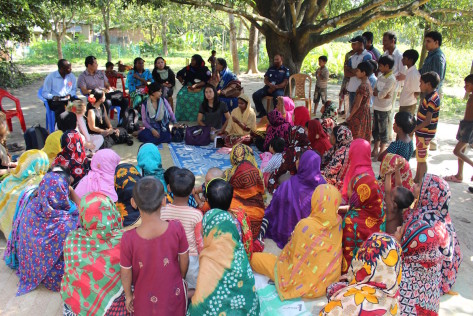
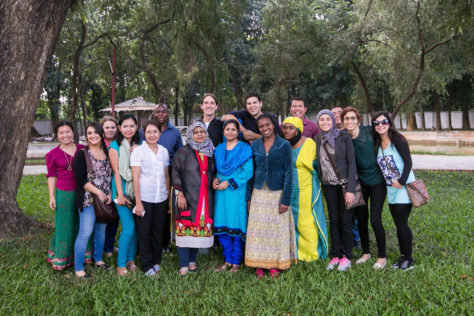
I am really thankful to our Myanmar program staff and participants at the Bangladesh learning exchange. Because of the learning exchange, I was motivated to research about gender and land rights work in Myanmar, and the most inspiring thing is that I can now share that research and learning exchange experiences with other partners and organizations.
This INTERIGHTS Bulletin (Volume 17, Number 3, Autumn 2013) is titled “Lawyering on the Margins.”
Of particular interest are the editorial “Lawyering on the Margins: How Lawyers Are Becoming Important Tools for Advancing Health and Human Rights of the Most Marginalized” by David Scamell, Tatyana Margolin and Constantin Cojocariu (page 106) and the article “Piece by Piece: The Approach of Sex Work Litigation in South Africa” by David Scamell, Stacey-Leigh Manoek and Jennifer Williams (page 143).
We are accredited trainers of professionals in logistics, procurement and supply chain management (SCM). We assist student members to achieve qualifications in the following courses:
Certificate in Procurement and Supply Operations
Advanced Certificate in Procurement and Supply Operations
Diploma in Procurement and Supply Operations
Advanced Diploma in Procurement and Supply
Professional Diploma in Procurement and Supply
We also consult for the public sector in drafting of specifications for infrastructure projects like construction of cities.

Example of DEFAULT Header Tags on Post (news,blog, etc)
Example of DEFAULT Header Tags on Regualar Pages (Who We Are, Our Impact)
If it is necessary to use a particular heading tag but you want to change the size, use the visual mode of the WYSIWYG editor and select the heading, click the formmat button and choose a different “Style” For example, the below shows how you would style an h3 tag in the size of an H1 on a regular page:
Make sure each field has a visible lable (do not use the “hide” Feature in gravity forms). When creating a form in gravity forms you will see lots of notes about accessibility. Gravity forms allows you to override accessibility. Don’t unless you have a very good reason.
Legal empowerment has the potential to enhance sector development work by building the capacity of project beneficiaries to participate in and benefit from development projects. But, to harness its power, development specialists need to understand the ins and outs of this field. This document is designed to be used as a practical guide to undertaking legal empowerment work. It seeks to give program specialists:
(i) a basic understanding of legal empowerment as a concept; and
(ii) practical strategies for designing, implementing, and monitoring legal empowerment projects.
This guide provides a background to legal empowerment work. It contains a conceptual framework that describes the
(i) importance of legal empowerment and its potential role in advancing broader development goals (see page 3);
(ii) constraints that women and other disadvantaged groups face in participating in development initiatives (see page 6);
(iii) different levels of legal empowerment interventions and their benefits (see page 18); and
(iv) role of legal empowerment in sector development initiatives (see page 19).
It also discusses the strategic factors for consideration and suggested approaches to follow in designing and implementing a legal empowerment component to complement a sector development project. The guide uses tables and flow charts to summarize the steps to be followed, and provides guidance on developing and applying rigorous empirical tools to monitor and assess the impact of legal empowerment activities.
This guide is the product of a three-country Asian Development Bank (ADB) technical assistance initiative on Legal Empowerment for Women and Disadvantaged Groups (6248-REG). This project sought to enhance the institutional capacity, knowledge base, and practical experience of ADB, other international agencies, and domestic legal service and development organizations in designing, implementing, and assessing the impact of legal empowerment activities. Its activities aimed to advance the rights and interests of women and other disadvantaged groups. The Asia Foundation (TAF) implemented the project in Bangladesh, Indonesia, and Pakistan. The project built on a seven-country study by ADB in 2001 on legal empowerment’s role in advancing governance and poverty reduction. The project:
(i) reviewed experiences in legal empowerment in the three countries;
(ii) tested legal empowerment strategies to increase access to basic social services and productive resources by women and disadvantaged groups; and
(iii) developed recommendations for incorporating legal empowerment components within ADB loans.
Since its founding in 1916, the Bloomberg School has advanced research, education and practice to create solutions to public health problems around the world.
Faculty, staff and students have helped eradicate smallpox, made water safe to drink, improved child survival, reduced the spread of HIV and uncovered the dangers of tobacco smoke.
Researchers and scientists are now discovering ways to eliminate malaria, increase healthy behavior, reduce the toll of chronic disease, improve the health of mothers and infants, and change the biology of aging.
Every day, the Bloomberg School works to keep millions around the world safe from illness and injury by pioneering new research, deploying knowledge in the field and educating tomorrow’s public health leaders.
Recording information about individual cases is extremely important for an effective, organized paralegal program. This exercise provides a sample client story based on a real case in addition to a blank case intake form and action log for paralegal training purposes.
This exercise and form are used by Namati and Timap for Justice paralegals in Sierra Leone to document cases. They may be used and adapted to other contexts for the purposes of training and documenting paralegal casework.