

Vesna is a lawyer and a civil society activist. She, and colleagues, founded LET Station in 2018, a grassroots organization that promotes human rights among marginalized communities in Pelagonia, a region to the Southwest of North Macedonia.

Vesna is a lawyer and a civil society activist.
Tell us about your work.
LET Station is about equal access to justice for all. We are a grassroots org that works on Legal Empowerment for marginalized communities, focusing on improving access to health and social rights but also other rights. Access to justice does not just mean access to the judicial system, but rather for each citizen to realize their rights equally. We work primarily with the Roma community and people living in rural areas, working together with lawyers, paralegals, and other field activists.
Use the law to help the people directly, and you can see that change in people’s lives (…) you see these successful stories every day and you see how you change peoples’ lives. It’s not just the idea. You change their whole life.
Bringing services to remote rural areas represents a challenge for LET Station, located in Prilep—the fourth largest city in Macedonia. Thanks to our paralegal program, we are able to engage paralegals from rural communities to spread their work. But we did not stop there. Two years ago, we established three mobile offices providing services directly to communities.
There are certain regions that are 50 or 60 kilometers away from town, they’re really lacking these basic services, and they cannot travel 100 kilometers to just get their request filed, you know. So, we realized that sometimes it’s not enough to just educate people [about] how to realize their rights, but you have to directly go into the communities and make sure that they receive services properly.
To fund the mobile offices, LET Station has been working with local governments to provide them with free space. But mobile offices generate other expenses like traveling costs, salaries that had to be covered by other sources. The organization has access to funding from different donors, but one of the challenges of using that money is that donors often have strict rules for how the money needs to be spent, which sometimes does not align with the direct needs of communities.
We realized that donors are not very happy to support direct payment for documents and so on (…) [But] we cannot just leave these people without that support because sometimes it’s about four or five euros. You know, it’s like six to seven dollars to get a birth certificate or a personal ID. But there are cases where people cannot issue these documents for years, because they lack that kind of money, because if they get that document for, like, three children, they will stay hungry for a week.
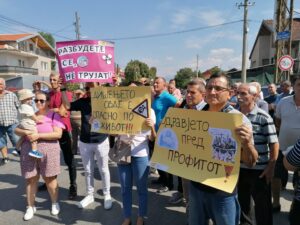
To address these challenges, colleagues at LET Station innovated once more. We developed a form of social enterprise. A self-generated income in our organization. The last three years, we have equipped part of our office, which is a very big space in the center of town. We equipped it and we are renting the space for events. Also, we rent part of our space as a co-working space and civil society organizations and some businesses use our space to organize events. It’s going well! And we aim those funds to support the mobile offices. Particularly for the lawyers and the paralegals, and the documentation fees.
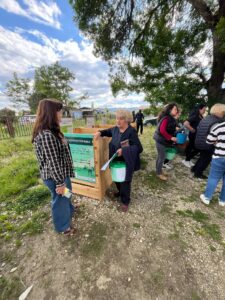
I joined in 2019. My first activity with the network was a webinar on innovative financing. I engaged and learned new things – like how orgs can become more financially stable and work toward sustainability. Financial security, I learned, was an issue that other orgs found challenging. At the end of 2019 I was part of the Legal Empowerment Leadership Course that the Network co-organized in Budapest, where I had the unique opportunity to learn about the most important aspects of the LE by sharing experiences and peer learning with more than 60 representatives from 30 countries worldwide.
This event helped me realize the importance of the Network — it’s very refreshing to get out of the community you work in and see the bigger picture. Working so closely with your communities can make you feel isolated but getting out of that and connecting with others in the field, you see the common challenges, that you aren’t alone, and you see the importance of your work. The importance of your work can be hard to see unless you step into these bigger conversations. I recognized the importance of connecting with people working on similar themes — I remain in touch with members that are based in my region. I also keep in touch with other members through social media and follow the work of other members. Also the colleagues from Africa and South America.
Definitely the development of a network of paralegals. I knew about the idea of paralegals when I first started engaging with the Network but this was not yet established. The network of paralegals was established in July 2020. Realizing how important the engagement with paralegals is. The network is very active and recognized and liked by communities they work with. Development of the mobile office for paralegals, the telephone service called Emergency Legal Aid. Before the above mentioned expansion of services, many parts of the rural communities and some parts of Roma communities believed they had no place to come to with their legal problems. There were a lot of stereotypes about NGOs. This hostility is not present today but there are still some lasting consequences from this campaign.
We grew our skills in data collection, having and using data to advocate for changes. When developing the mobile aid office, there was no plan to do a needs survey, the idea was developed based on what people were mentioning in the field. But then, we realized that having official data on the needs of the citizens and what needs a mobile office meets, makes it more official. The mobile office is a result of a needs survey we did. I was also in touch with Yevgen (leading regional member based in Ukraine) about this as the idea was developing. Realizing the loss of legal knowledge because it’s not accessible to them in rural areas. Having the data, we got support from the Ukrainian Legal Aid office for a pilot of 4 months and co-financing from the EU (support to continue the mobile office in the coming year). Having the data was really important when engaging with officials at the municipal level.
Seeing legal empowerment through the perspective of the Global Legal Empowerment Network has significantly influenced how STANICA PET approaches its work in the field. It has helped broaden the understanding of access to justice beyond the formal judicial system and legal procedures. Instead, legal empowerment is increasingly seen as a process through which individuals and communities become aware of their rights and gain the confidence and knowledge to claim them in everyday life.
In the context of STANICA PET’s current work, particularly in the areas of environmental protection and the development of local activism, this perspective has been especially important. Environmental issues are not only technical or ecological questions; they are closely connected to social justice, public health, and community participation. For many local communities, environmental problems such as pollution, waste management, or degradation of natural resources directly affect their health, livelihoods, and quality of life. Through the legal empowerment approach, these issues are framed as matters of rights and accountability, encouraging citizens to see themselves not only as affected individuals but also as rights holders who can demand action and transparency from institutions.
This shift in perspective has also strengthened LET STATION’s efforts to foster local environmental activism. By working with communities to understand how environmental harm intersects with social and economic inequalities, the organization supports citizens in organizing collectively, raising their voices, and participating in local decision-making processes. Legal empowerment therefore becomes a tool not only for resolving individual problems, but also for building stronger, more informed communities that can advocate for sustainable and just environmental policies.
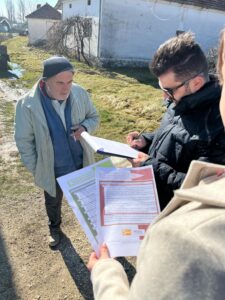
Importantly, this approach begins with a change in perspective within the organization itself. Recognizing the interconnectedness of environmental, health, and social justice issues allows LET STATION to transmit this understanding to the communities it works with. In this way, legal empowerment becomes both a method and a mindset—one that supports long-term community resilience and the development of locally driven environmental initiatives.
It is important to continue strengthening the Network by welcoming new members and openly sharing challenges and experiences.