

Mtendela Ngena Danny is a young leader from the Mbuti Pygmy community in Eastern DRC, where civic restrictions and conflict threaten indigenous survival. He serves as project manager at Vision des Filles Leaders pour le Développement (VIFILED ASBL), an organization led by Pygmy girls and women advancing human rights, gender equality, and climate justice.
VIFILED is pioneering approaches like community forestry to secure land rights while protecting biodiversity and building climate resilience. The organization also champions innovative tools such as the NAPASHA app, which helps survivors of violence safely report cases and seek justice.
In this interview, Danny shares VIFILED’s journey, the challenges of organizing under conflict, and the power of collective leadership in fighting for dignity and inclusion.
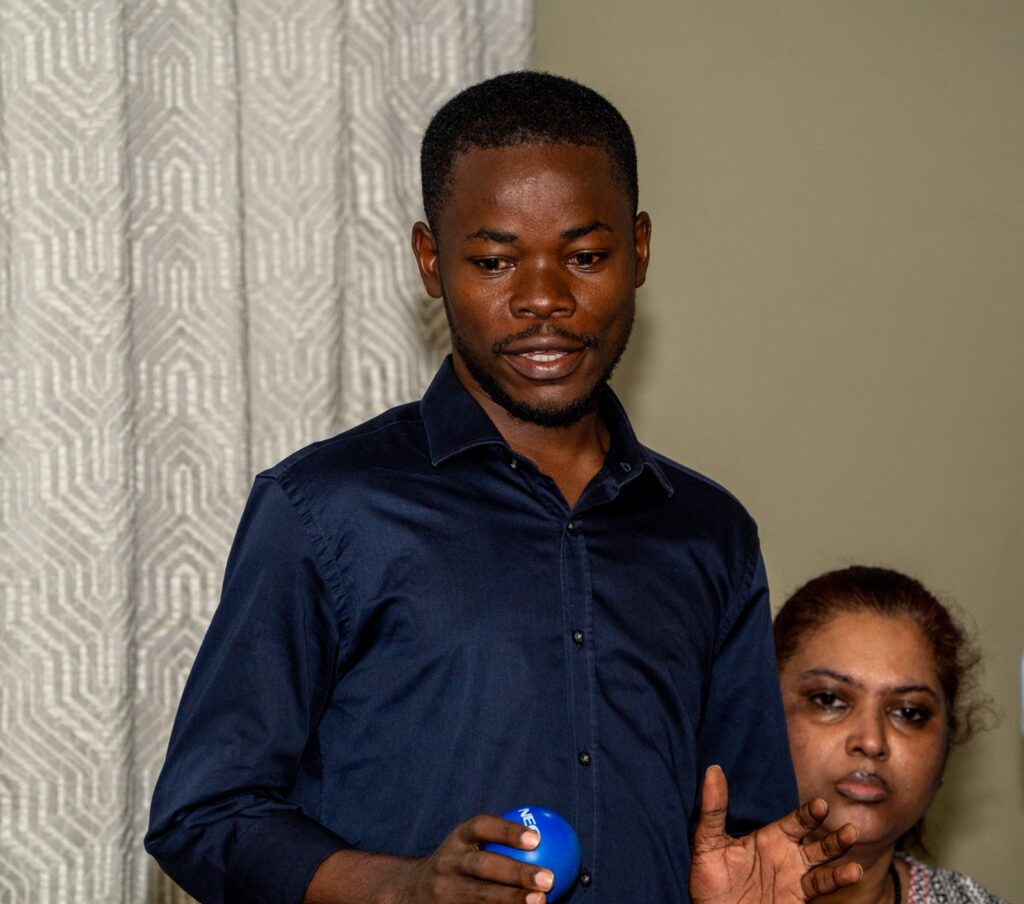 Hi, Danny, it’s great to connect and understand how you are progressing in relation to the political situation , the conflict in DRC. How are you doing?
It is a crucial moment to shed light on our current situation, what we have learnt, what we are implementing, and our adaptations to the security situation currently in Eastern DRC. Since our inception, we have never experienced such a terrible period. However, despite the challenges, human rights defenders continue to defend the rights of the community, indigenous people and victims of violence.
As an organization we have analyzed, and re-strategised to adapt to the situation, but it remains extremely difficult.Personally, the support from family, community roots, and network mentors has strengthened my emotional and psychological resilience.
Yes, free movement and gathering have been restricted. In addition to frequent constraints and election-related tensions between political players, the civic space in the DRC has become unstable. This has caused a detrimental effect on our joint efforts, advocacy, and mobilization. As a human rights advocate and community leader, my organization shifted its attention to more discrete, effective strategies
Using local radio stations to raise awareness, strengthening community networks, and enhancing paralegal capacity are some of our adaptable initiatives. In light of the arbitrary arrests and restrictions, we implemented security measures to document cases of violence while protecting the privacy and safety of the victims.
The creation and release of the mobile application NAPASHA, which stands for “support community,” is a significant advancement by VIFILED. Through NAPASHA, users can connect, report violent crimes, receive alerts, and acquire legal education.
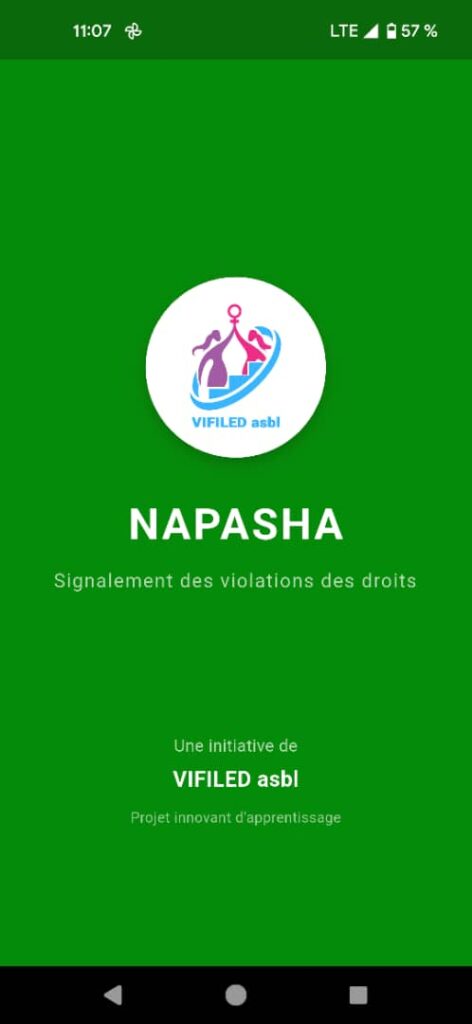 This is a great advancement for VIFILED! How is the community embracing and utilizing Napasha? What unique aspects does it offer to victims of violence?
Indeed it is! especially Gender Based Violence cases, which are concering, particularly those with an element of rape. Victims often hesitate to report this injustice because of the stigma and fear of retaliation from the reported offenders.
From where we are now, anyone can discretely report and share information about a GBV instance by using NAPASHA. Neither the officers, nor the perpetrators of this act would ever know the report’s source.
NAPASHA gives us a voice, and amplifies our message without any direct confrontation with authorities. As an organization, our paralegals’ work is safeguarded, and they are able to effectively collect data and evidence discretely.
Given the level of sensitive information we collect, yes! Interception is a possibility. However, the app functions with limited or no connection at all; it synchronises data, and submits it as soon as connectivity is established. During the design process, connection disruption was a factor we had in mind, thus including a function that allows paralegals to input and record data in the event of a connection failure .
The information security on the app is definitely a challenge using technology, but we have integrated a number of underlying factors into its design, to promote safety, community, learning and effective remedies.
What also drives me is legacy. I believe every initiative we plant today—in land rights, climate justice, and legal literacy—is a seed for the future Zambia we want. One where dignity isn’t debated, and justice isn’t selective.
Reflecting on my community’s situation before joining the Grassroots Justice Network, and where we are today, it’s difficult to narrate in a few words, because the impact is a lot. Its huge impact.
First, I learnt how to organize. How to organize my community on the ground to realize their potential and work towards a much greater goal.
The Building Community Power course has been beneficial in strengthening the capacity of our community leaders. Prior to this course, we did not know how to advocate for our rights. But after being integrated in working groups, and learning how other organizations are strengthening their leadership, we learnt how to support our community leaders, in forming strategic allies, and advocating for community rights.
At the organization level, the network widened our vision. We learnt how to grow and scale our work, and developed diverse skills that opened doors to other opportunities, and collaborations. Today, we have about 7 programs that we are working on with various global partners including; The Legal Empowerment Fund, and Global Human Rights Forum. These collaborations were made possible by the experiences gathered from the network, their guidance in the design of our projects, and in the mobilization of resources to finance our actions on the ground.
All these projects are a result of engagements with the network. After each training, I would organize my team and institute the learnings. Together, we started to build a variety of projects that we are now in the process of implementing.
For example, during the recent exchange in Nairobi, we explored injustices around nationality and documentation across regions, and how to legally advocate for these injustices.We learnt of various strategies adopted when a community is in a difficult situation, i.e considering collaborative measures with authorities through strategic networking.
For Dakar, we were enlightened on what community power is, how to obtain community power, and how the power of law combined with community power can destabilize pillars of injustice.
Aside from these learnings, the network WhatsApp group allows us to be part of a community, to learn and orient our actions on the ground. I have learnt how to organize on the WhatsApp platform, how to approach a community that is facing injustice, and how to support community leaders. The learnings have been instrumental in knowing what the law is, how to identify an injustice, and how to move from injustice to justice.
Aside from these learnings, the network WhatsApp group allows us to be part of a community, to learn and orient our actions on the ground. I have learnt how to organize on the WhatsApp platform, how to approach a community that is facing injustice, and how to support community leaders. The learnings have been instrumental in knowing what the law is, how to identify an injustice, and how to move from injustice to justice.
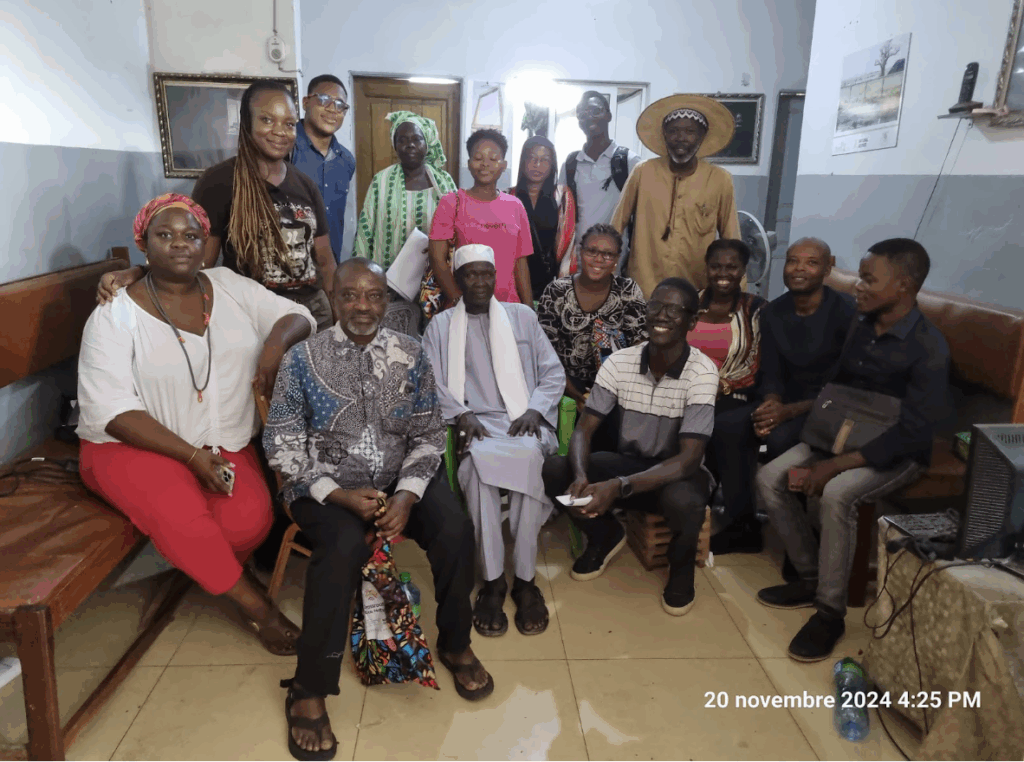
Yes! Especially from the friends I have in Nairobi. I successfully applied for an online training on storytelling, took part in the program activities and was selected to participate in an in-person program in the United States scheduled for October, 2025. The benefits are many!
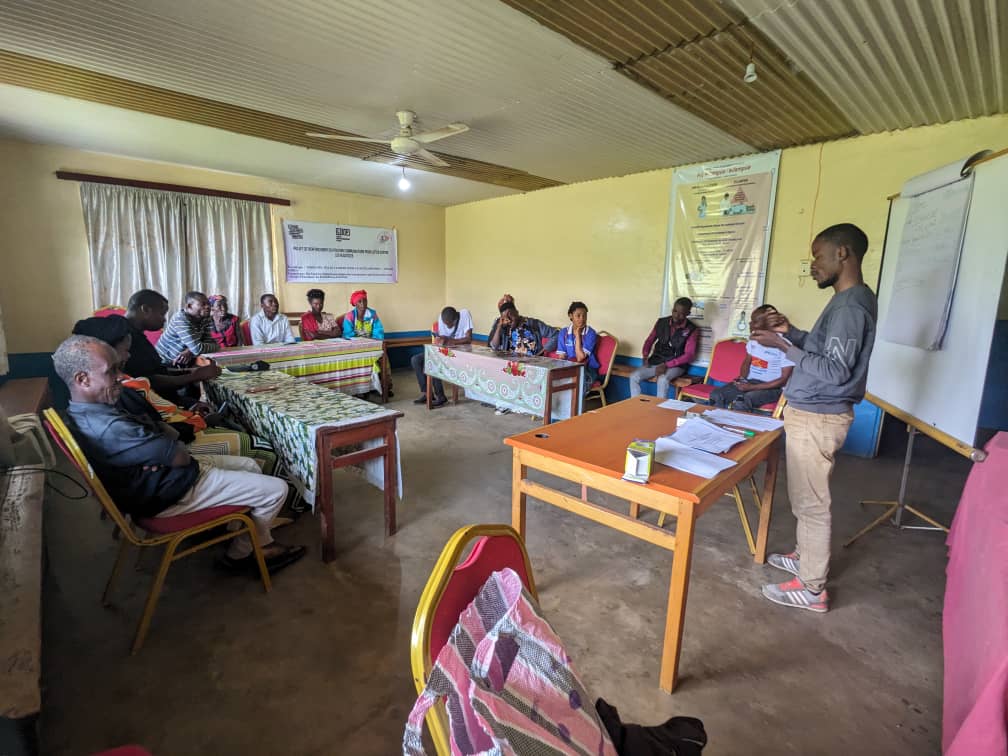 Definitely how to organize. When I left Nairobi, and came back to DRC, I understood that I had to bring my community together, to understand the exact problems we are facing. The problem is already in our community, so it is the community that is in danger. This was the first thing I learnt; successfully organizing the community around a cause
The second, was the idea of community ambassadors. We were unaware of this strategy, and we did not have this in our community. But after the exchange, we explored certain concepts in greater depth, selected certain leaders as community ambassadors and introduced them to our activities.
The community ambassadors have been very helpful, because they originate from the community and understand how to approach and empower their communities. By developing leadership at the grassroots level, the community ambassadors become committed to the cause.
Today we have more than 35 ambassadors who act as a link between the organization and the community. We strengthen their capacity through legal empowerment education, and guide them as they work in the community. Previously, the community did not have power to denounce the injustices they face, but now with this support system the community is empowered to denounce injustices. Our engagement has deepened and we now have 30 paralegals from a count of 15.
At the community level members were reluctant to report cases- out of fear, or lack of accurate information regarding redress. Community ambassadors have been beneficial in this process; from identifying injustices, to educating provisions of the law against injustices, and guiding victims to report cases of injustice.
The ambassadors and paralegals are also victims of the injustices they advocate for, building trust and understanding when approaching communities. In the case of advocacy on land injustices, communities were not equipped with the right ownership documents to stop mining companies from stealing their land.
In such cases, community led advocacy efforts have successfully led to discussions on land rights between communities and the Ministry of Land affairs. The community ambassadors now work directly with the office of land affairs, producing evidence on land injustices, land cases, and supporting members in registration of land titles.
 How many cases have been forwarded to the Ministry of Lands so far?
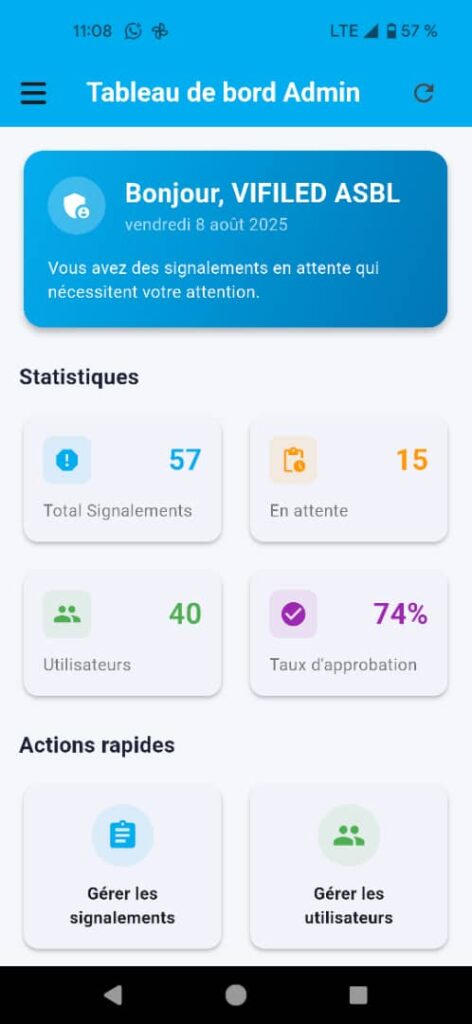
At this stage, due to lack of proper information on the criteria of collecting cases, we have managed to report 57 cases; 34 are land title issuance, while 23 are on land violations. These cases are coming through from community ambassadors working in the community, and about 20 from NAPASHA.
To bridge the information gap, we organized a capacity-building workshop between paralegals, ambassadors and authorities from the land office, on proper data collection, documentation , application of land registration, and process of reporting land violations.
The app combined with skilled ambassadors has been a great recipe to counter land injustices and seek redress.
Yes, during the awareness campaign, the officials inquired if we had done the preliminary work to initiate setting up of an office in the community, and if the people had the capacity to register their land. Our response was yes, since this was an ask by the community itself- asking for their territories to be registered, and our role was to amplify that message.
You see, when the Ministry of Mines and the Ministry of the Environment sends people to the land to exploit it, and to mine it, we are the ones who suffer. And if our land doesn’t have title deeds, we’ll always be victims. So it’s important at the least to send a representative to their offices so that our land can be registered.
The greatest impact has really been on scaling our work; not only through technology, but also through more paralegals, and a whole group of community ambassadors. We are also engaging the national government to try to find a resolution for a large number of cases. The community also has an easier time reporting violations through these ambassadors.
In each village, the community ambassadors are organised in groups, and these groups are led and guided by paralegals. Depending on the severity, some cases are handled at the community level, by the local committee, while others are forwarded to judicial bodies.
I would like to share that we in DRC are dealing with restrictions at the community level. But this should not be considered a limitation.
We had to think beyond that, because as leaders, we must adapt to whatever situation arises with the organization. We have to be prepared. The political situation in many countries is changing day by day, but the resilience gets stronger, and we have to develop tools that will allow us to work, even if we do not have freedom to gather.
Additionally, organizations should not be content with working alone, but to involve other local actors in institutions of power. Learning from other organizations and actors is key to knowing how to achieve your goals. It helps us understand the reality- what is achievable.
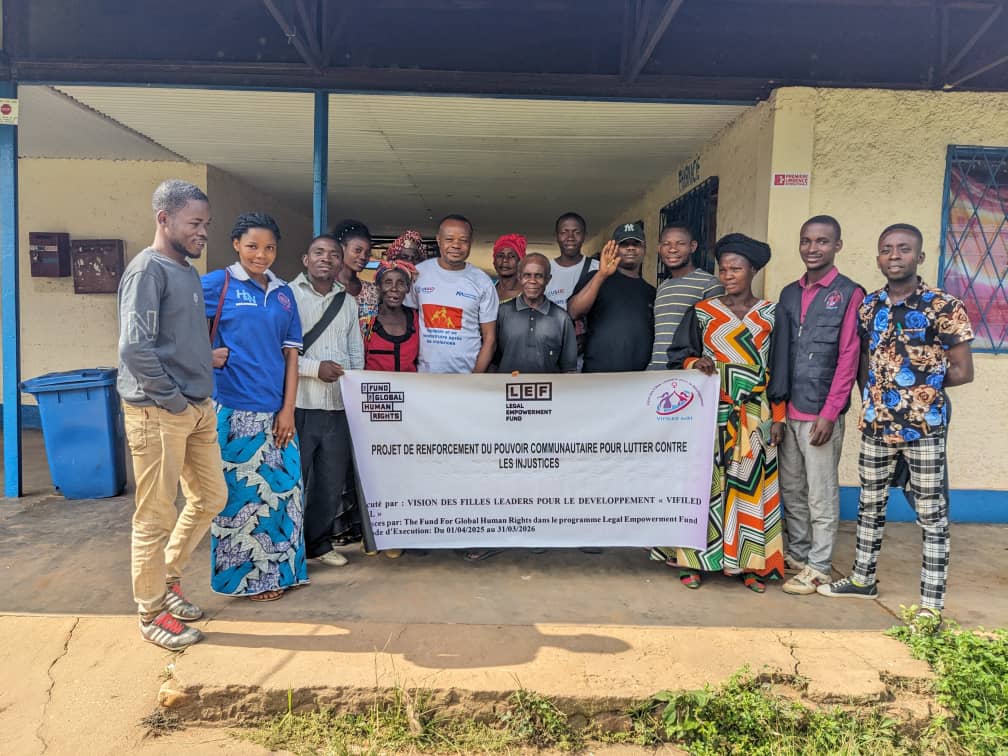
What inspires me, especially in these times, is witnessing success even in the smallest ways- a woman reporting a case at the organization center, community ambassadors finding solutions, and getting along with community members. The experience doing this work is also inspiring.
This interview has been edited for clarity